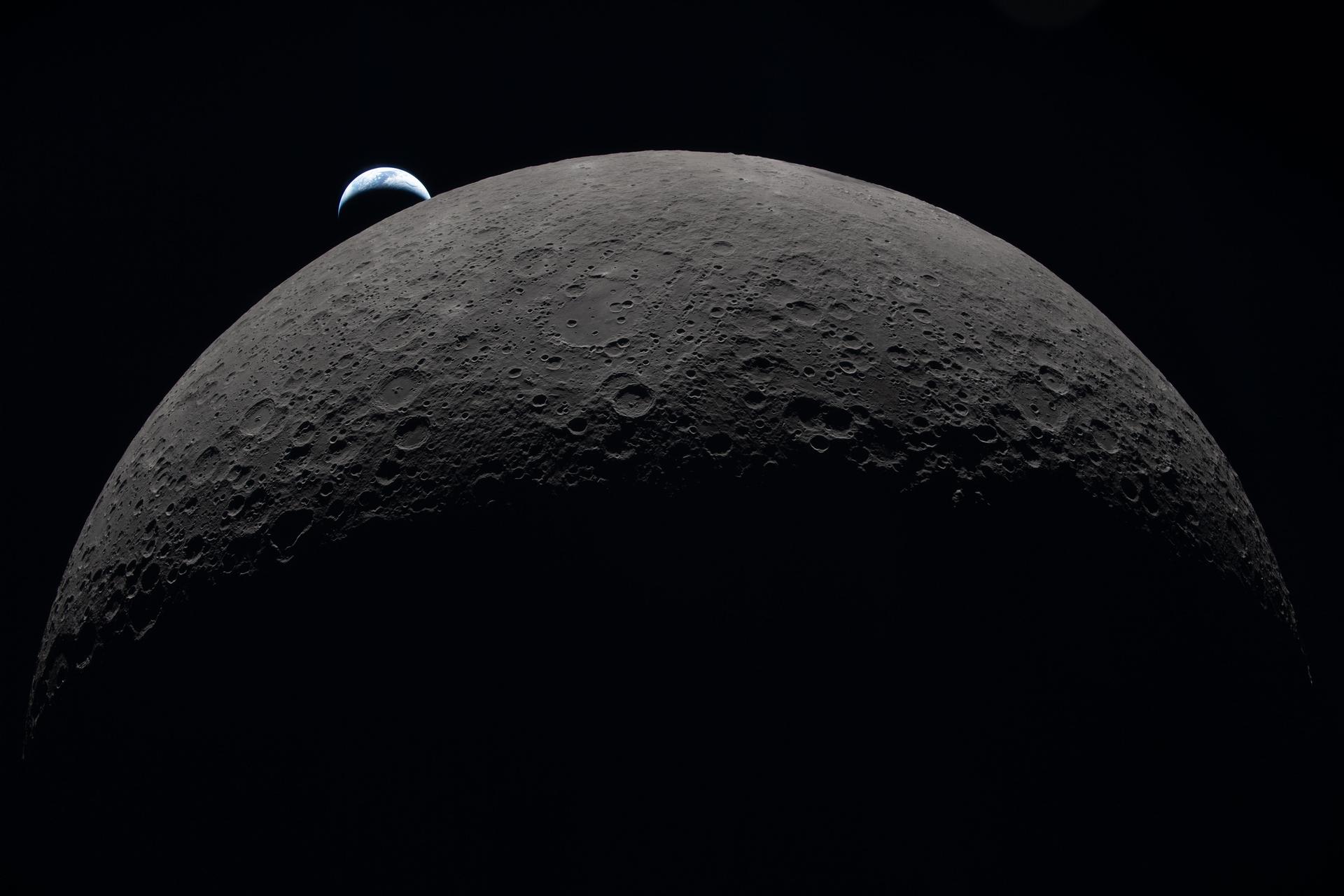
To support long-duration missions to the Moon and Mars, NASA and industry are developing technologies that can extract resources such as hydrogen and helium-3 from lunar soil, known as regolith. This capability, known as in-situ resource utilization (ISRU), allows explorers to use what is already available on other planetary bodies, from water ice to minerals. These resources could eventually support propulsion, energy production, life support systems, and other needs for astronauts living and working in deep space.
To advance ISRU technologies, NASA has awarded a firm‑fixed‑price contract of $6.9 million over the next year and a half to Interlune of Seattle, a company focused on developing natural resources beyond Earth.
Funded through a Phase III NASA Small Business Innovation Research (SBIR) award, a contracting mechanism focused on transitioning technology into NASA missions or the private sector, the company will pursue validation of critical resource‑prospecting tools to make future lunar missions more self‑sufficient, reducing the need to transport supplies from Earth.
This effort builds on prior work with NASA’s Flight Opportunities program, in which Interlune built and tested payload prototypes on parabolic flights that replicated lunar gravity.
Under the SBIR Phase III contract, Interlune will design, build, and test engineering development units and flight hardware. The payload is designed to collect lunar regolith samples, sort particles by size, extract solar wind volatile gases, and measure their quantities. The company’s design includes a mass spectrometer inspired by NASA’s Mass Spectrometer Observing Lunar Operations (MSOLO) technology to measure the concentration of gases released from lunar soil.
Developed at NASA’s Kennedy Space Center in Florida, MSOLO is a compact, rugged mass spectrometer designed to analyze gases and the chemical makeup of landing sites on the Moon. The MSOLO technology, developed by NASA’s Game Changing Development program, demonstrated its hardware in lunar conditions during the Intuitive Machines 2 mission to the lunar South Pole in 2025.
“A major goal of NASA is to mature transformative technologies so they can be confidently adopted by industry,” said Michael Johansen, Deputy Program Manager for NASA’s Game Changing Development Program. “The evolution of MSOLO into a robust, flight-ready instrument is a perfect example of that success. We are thrilled to see this proven technology leveraged by an industry effort, marking a significant step forward in commercial resource prospecting.”
NASA’s MSOLO technology is available for commercial use and adaptable for ground tests and variable flight configurations. The instrument’s internal architecture includes a hybrid computer for onboard processing and a calibration gas system that allows the device to check and adjust its readings directly on the lunar surface. This data can benefit both commercial developers and NASA’s Artemis program. Its software has already been adapted to interface with four different CLPS (Commercial Lunar Payload Services) lander designs, reflecting its flexibility and increasing applicability to commercial lunar missions.
Investments by the agency in lunar surface technology from commercial partners represents an important step toward establishing a sustainable presence on the lunar surface. By advancing resource‑prospecting instruments and maturing technologies that enable the use of lunar materials, these efforts will help reduce the cost and complexity of future exploration missions.
NASA’s Small Business Innovation Research (SBIR) and Small Business Technology Transfer (STTR) program is managed by the agency’s Space Technology Mission Directorate. Through this program, entrepreneurs, startups, and small businesses with fewer than 500 employees can receive funding and non-monetary support to build, mature, and commercialize their technologies, advancing NASA missions and helping solve important challenges facing our nation.
This year, NASA’s SBIR/STTR program is adopting a Broad Agency Announcement framework to increase opportunities for small businesses while enhancing agility for the agency. The 2026-2027 BAA appendices, outlining topics and subtopics for desired technology proposals, closes May 21. Interested businesses and institutions are encouraged to visit the information hub for helpful details on applying.
To learn more about working with NASA Technology, visit