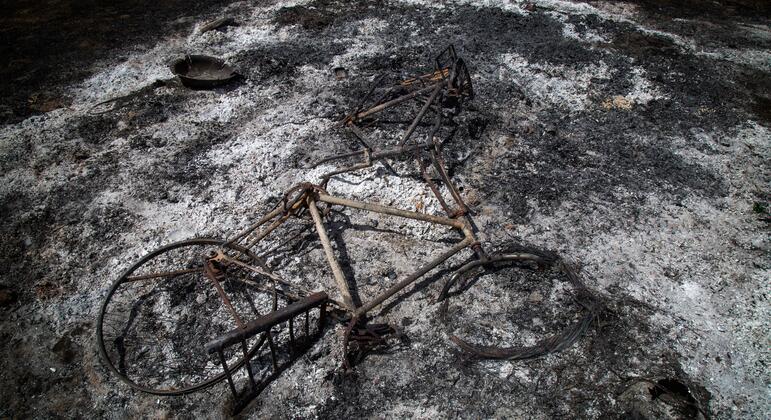
The violence, which erupted on 25 and 26 April, saw large-scale attacks launched on multiple cities and towns by various Islamist and separatist rebels who oppose the military government – including the capital, Bamako – resulting in heavy civilian casualties and forcing many to flee their homes.
“We are deeply troubled by the worsening human rights situation across Mali,” said OHCHR spokesperson Seif Magango.
Subsequent clashes between Malian security forces and armed groups – including the Tuareg-led Azawad Liberation Front and Al-Qaeda-linked Jamaat Nusrat al-Islam wal Muslimin (JNIM) – have continued in recent days, particularly in central regions with “disastrous consequences for civilians.”
Top UN officials – including Secretary-General António Guterres and High Commissioner for Human Rights Volker Türk – have called on all parties to respect international law, including protection of civilians.
Reports of abuses
There are also allegations of serious human rights violations in the aftermath of the attacks, including reports of extrajudicial killings and abductions.
On 2 May, lawyer and politician Mountaga Tall was abducted from his home by unidentified armed men, while his wife was assaulted. His whereabouts and those of several others reportedly abducted remain unknown.
Authorities have announced an investigation into the attacks. OHCHR urged that any inquiry be comprehensive and conducted in full compliance with international human rights law, including guarantees of due process.
Mounting humanitarian concerns
Beyond the violence, humanitarian conditions are worsening, with growing fears of hunger in parts of the country.
In Mopti, central Mali, local officials warned that communities risk running out of food amid blockades imposed by armed groups. Diafarabe village and Bamako are reportedly under a blockade by JNIM militants, restricting the flow of essential supplies.
“Such blockades have unacceptable consequences for civilians and must end immediately,” OHCHR spokesperson Magango said, calling for safe and unimpeded humanitarian access.
Children pay ‘highest price’
The crisis is taking a heavy toll on children, with the UN Children’s Fund (UNICEF) warning that “it is children who are paying the highest price of ongoing violence in Mali.”
A school in Mopti was reportedly affected by the presence of armed elements and explosive devices, impacting at least 300 children, while an attack on a community health centre in Gao has undermined access to care for nearly 2,700 children.
“Schools and health facilities should be safe havens and must never be targets,” UNICEF said in a statement, calling for the protection of civilian infrastructure and an end to violations against children.
Hospitals overwhelmed
Medical facilities are struggling to cope with the influx of casualties.
The International Committee of the Red Cross (ICRC) has stepped up support to hospitals in Bamako, Kati, Mopti and Gao, providing emergency supplies, fuel and technical assistance.
Red Cross teams have delivered medical kits, supported surgical teams and supplied fuel to ensure hospitals can stay operational, particularly in conflict-affected regions.