

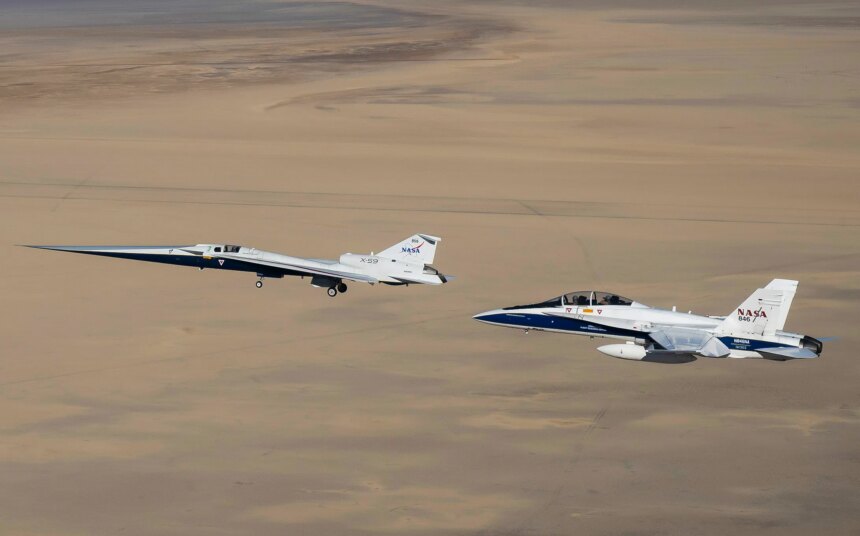
NASA’s Armstrong Flight Research Center in Edwards, California, is enhancing its capabilities by adding new aircraft to its high-performing fleet. These additions will bolster support for science and aeronautics test missions, building upon the center’s rich history of flight research, a legacy that honors pioneers like Neil Armstrong.
This year, the center has integrated several new assets, including two F-15 supersonic jets, a Pilatus PC-12 utility plane, and a T-34 turboprop trainer. These aircraft are set to advance the agency’s aerospace research endeavors.
Throughout its history, NASA Armstrong has operated a diverse range of aircraft, from the massive 747 Shuttle Carrier Aircraft and rocket-powered X-15 to high-speed F-18 fighter jets. After nearly 80 years, the center remains a vibrant hub for flight research in the desert.
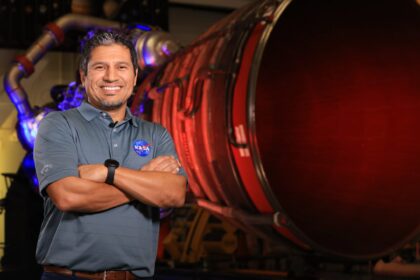
“Armstrong has a rich history of flight research, but it’s the multidimensional skills of the people we have here, and the knowledge they’ve built to handle very unique aircraft maintenance and modifications, that stands out,” said Darren Cole, capabilities manager for the Flight Demonstrations and Capabilities project at NASA Armstrong.
Darren Cole
Capabilities Manager at NASA Armstrong
The center is integral to global airborne science missions, transporting scientists and equipment from NASA, other government agencies, industry, and academia. These missions collect vital data on factors such as air pollution levels, glacier melt trends, and wildland fire mapping.
Utilizing airborne laboratories like the NASA ER-2, scientists can oversee experiments in real time, gathering critical data with the support of Armstrong’s pilots and airborne science team.
“We all come together to make the science happen,” said Matt Berry, airborne research platforms branch chief at NASA Armstrong. “It is the agility of the Armstrong team that allows us to collaborate with scientists, get their equipment onboard, and to fly them to areas where they need to collect data.”
Situated on Rogers Dry Lake, a vast 44-square-mile flat area, the center leverages this unique environment for aviation research and testing. Rogers and the adjacent Rosamond Dry Lake have historically hosted significant aviation events, including space shuttle landings and emergency test flight recoveries. The Rogers lakebed remains a key asset for Armstrong’s test missions.
NASA Armstrong’s origins trace back to the Bell X-1 program, the first human attempt to exceed the speed of sound. In 1946, 13 individuals from NASA’s predecessor, the National Advisory Committee for Aeronautics (NACA), arrived at Muroc Army Airfield to support the X-1 tests. By 1947, the NACA’s Muroc Flight Test Unit was established as a permanent fixture at the airfield.
The center has undergone several name changes, most recently transitioning from NASA’s Dryden Flight Research Center to NASA Armstrong in 2014. However, its core mission remains unchanged. The Bell X-1E, the final aircraft in the X-1 series, is now displayed at NASA Armstrong, symbolizing the ongoing pursuit of innovation by new generations of pilots, engineers, scientists, and explorers.
“I don’t think there is another place in the world with a more diverse fleet of aircraft. We have everything from a low-altitude powered glider to ER-2s, which are flying at high altitudes, and a multitude of aircraft in between,” Cole stated.
Through sourcing rare components and in-house custom part fabrication, NASA Armstrong’s teams transform aircraft into specialized research tools. The center continues its critical work in leading aeronautics testing, advancing Earth science research, and supporting its government and industry partners.