

With only 10% of all plastics produced being recycled, the vast majority of plastic waste pollutes streets, enters waterways, and ultimately reaches oceans, causing significant environmental harm. Approximately 52 million tons of plastic waste enter the ocean annually, persisting and negatively impacting over 4,000 marine species. Even the blue whale, the planet’s largest mammal, can consume up to 10 million microplastic particles daily, equivalent to about 43 kilograms.
Combating plastic pollution necessitates material innovation, increasing alternatives to single-use plastics, and reducing production. This was highlighted in the latest World Ocean Assessment report released on Monday.
The international community has been working for six years on a global plastics treaty that could limit plastic production and help phase out an industry valued at over $1.1 trillion annually. As negotiations continue, the next round is scheduled for March 13-24, 2027. While sustainable alternatives can aid in reducing global plastic dependency, they face significant hurdles.
Tariffs Impede Alternatives
A primary challenge for sustainable alternatives in competing with conventional plastics is their cost-competitiveness in current markets. Although the global trade of plastic substitutes reached $485 billion in 2023, the sector’s growth requires addressing tariffs and non-tariff measures, limited market access, and weak regulatory incentives.
The United Nations Conference on Trade and Development (UNCTAD) stated, “The main barrier is the imbalance in national and trade policies.” While tariffs on plastic and rubber products have decreased from 34% to 7.2% over the last 30 years, alternatives like paper, bamboo, natural fibers, and seaweed face an average tariff of 14.4%. UNCTAD notes this situation “makes environmentally friendly and preferable alternatives less competitive.”
UNCTAD explained that “plastics have benefited from market maturity, scale, infrastructure, and favorable trade conditions for decades,” leading to continued production growth in this advantageous climate. Ben Taylor, representing Notpla, a UK-based company producing biodegradable packaging from seaweed and plants, which collaborates with UNCTAD, commented, “The challenge is transforming a global packaging system built around cheap, fossil fuel-based plastics for decades.”.
The Biodegradability Conundrum
Another challenge is that alternatives often require very specific conditions to biodegrade, conditions typically not found in the ocean. Ian Butler, a lead editor of the World Ocean Assessment, warned, “Many new biodegradable plastics only truly break down under industrial composting conditions with controlled temperature, humidity, and microbial communities. So, when you put them in the ocean, they don’t behave the same way.”.
Furthermore, concerns exist that some plant-based plastic substitutes could compete with land use for food production, leading to broader indirect impacts. Butler added, “The belief that these biodegradable and plant-based plastics are the solution gives us the idea that we’ve solved the problem, everything is fine, but that’s not the reality.”.
How Can Alternatives Compete?
According to UNCTAD, for sustainable alternatives to challenge plastics at scale and “win back market share,” several key steps are needed: rebalancing tariffs and non-tariff measures, reducing risks in the supply of non-plastic materials, investing in newer materials and rewarding those that provide environmental benefits, and building infrastructure that can scale sustainably. While these changes may incur additional costs, UNCTAD believes the long-term environmental benefits and socioeconomic value in terms of jobs, foreign exchange, and regional development will balance these costs.
Rising Energy Costs Could Accelerate Transition?
Meanwhile, one way this transition could be accelerated is if plastics suddenly become more expensive. Currently, up to 98% of plastics are derived from fossil fuels, and fluctuations in energy and petrochemical prices significantly impact their cost and availability. In European markets, following the closure of the strategically important Strait of Hormuz, the price of polyethylene resin, the world’s most common plastic resin widely used in packaging, increased by an estimated 70-80% between February and April 2026. This spurred momentum for substitutes based on renewable resources.
The Ocean Leads the Way
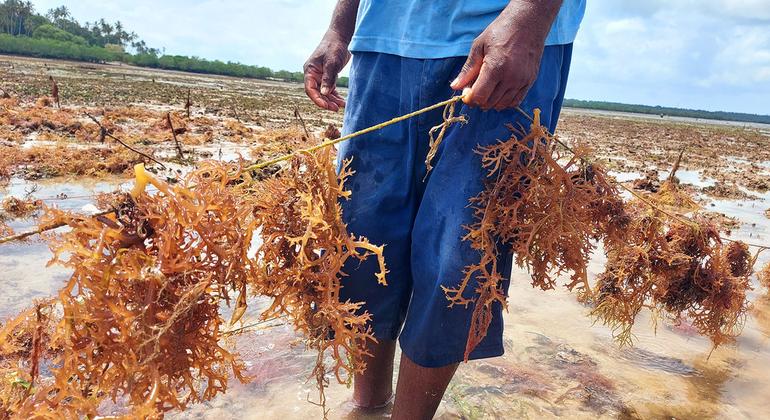
The ocean itself may offer a solution by helping to alleviate the pollution crisis from which it is so deeply affected. Fully compostable seaweed-based materials are emerging as a promising substitute for plastics, particularly in packaging. Seaweed is especially promising as a rapidly renewable resource that grows without requiring freshwater, fertilizers, or agricultural land. Global seaweed production has tripled in the last two decades, with exports quadrupling to reach $3.9 billion in 2022. Taylor stated, “As adoption increases, economies of scale develop, and sustainable solutions become increasingly competitive.”.
Regulatory Gaps Slow Seaweed Trade
However, the path is not easy for many producers; with regulations surrounding seaweed being absent and fragmented, entering the global seaweed trade, especially for novel uses not clearly defined in international trade systems, remains difficult. This leads to confusion and makes it challenging for exporters to comply with requirements, resulting in only 0.75 million tons of the 36.3 million tons of seaweed produced in 2022 being traded internationally. Ultimately, this limits export capabilities by increasing compliance costs, particularly for small businesses looking to leverage the abundance of seaweed in many developing coastal countries.
A Glimmer of Optimism as Momentum Shifts
Without stronger incentives, clearer regulations, and improved market access, sustainable alternatives will continue to struggle against conventional plastics. A shift in momentum and public pressure could help accelerate the transition. Taylor commented, “What gives us optimism is the momentum we’re seeing globally. Consumers are demanding better solutions, businesses are setting ambitious sustainability goals, and policymakers are introducing regulations designed to reduce unnecessary plastic waste.”.