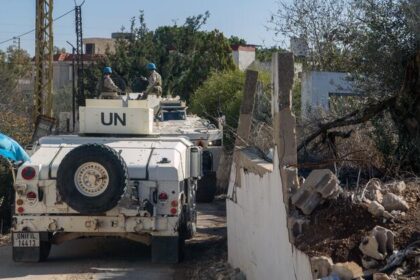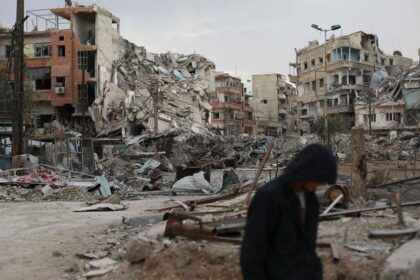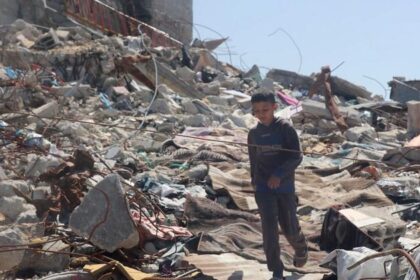


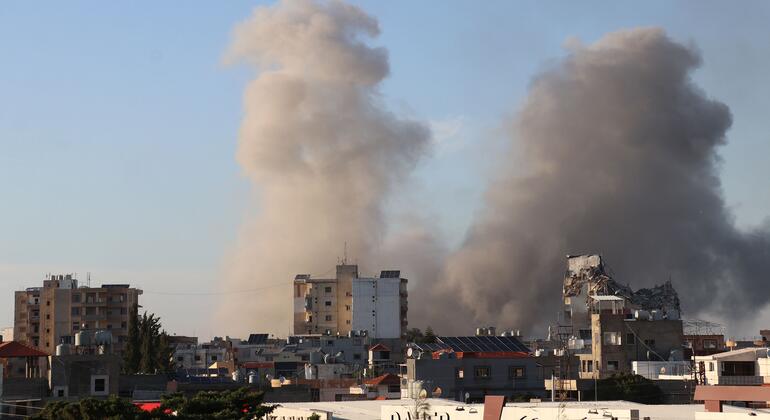
A joint assessment by the United Nations Development Programme (UNDP), in coordination with the Lebanese National Council for Scientific Research and other partners, estimates that approximately 649,000 cubic meters of debris have been generated. These findings emerge amid renewed concerns over escalating casualties and humanitarian suffering in Lebanon. Media reports indicate that Israeli airstrikes targeted the southern coastal city of Tyre, resulting in eight fatalities. The Israeli military issued new evacuation orders, encompassing previously unaffected areas, including the city’s Christian quarter.
Guterres Expresses ‘Deep Concern’
These developments coincide with renewed calls for de-escalation from the UN Secretary-General. In a statement released Monday, the UN chief expressed “deep concern regarding the renewed escalation in the Middle East” and urged all parties to “immediately cease hostilities, exercise maximum restraint, and refrain from any action that could further inflame the already volatile situation.”
Southern Suburbs Heavily Impacted
The damage assessment utilized satellite imagery, artificial intelligence analysis, and field verification to quantify the extent of devastation in Beirut and Mount Lebanon. The evaluation revealed that 146 buildings were completely destroyed, and an additional 264 sustained partial damage. On a residential level, 3,168 housing units were demolished, with 4,437 units damaged. Areas experiencing the most severe destruction include the southern suburbs of Beirut and adjacent areas in Mount Lebanon, such as Haret Hreik, Hadath, Chiyah, Burj el Barajneh, Laylaki, and Choueifat-Amroussieh. The UNDP stated that these findings will assist national authorities and partners in prioritizing rehabilitation and reconstruction efforts and supporting affected communities in their return to normalcy.
Beyond Homes and Hospitals: Broader Impacts
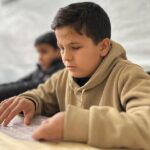
The impact extends beyond physical infrastructure. According to UNESCO, the UN’s educational and cultural agency, approximately 500,000 children have been kept out of classrooms, and over one million students have experienced disruptions to their education. Seventeen schools have been destroyed, and more than 100 schools have been damaged. The agency also reported damage to cultural heritage sites, including a World Heritage Site in Tyre. Concerns have escalated regarding misinformation and hate speech, with reports of journalists being killed, displaced, and deprived of information sources.
Rising Humanitarian Needs
The damage assessment comes as UN agencies and partners warn that conditions continue to deteriorate despite ceasefires reached in April. Over one million internally displaced persons have been registered since March via the Lebanese government’s aid platform, with more than 134,000 still residing in collective shelters; 642 emergency shelters are currently operational. Reports from humanitarian partners indicate worsening insecurity, repeated displacement, and increasing housing instability. Many households face overcrowding, homelessness, or precarious living conditions, with children being among the most affected. Humanitarian organizations report rising levels of fear, anxiety, sleep disturbances, and emotional distress linked to ongoing insecurity and uncertainty. Syrian refugees and other non-Lebanese communities are also vulnerable, facing increased protection risks and barriers to accessing safe shelter.
Strained Healthcare System
The conflict has also placed additional strain on Lebanon’s already fragile healthcare system. According to the WHO and health sector partners, attacks on healthcare services have persisted despite ceasefires. Since March 2, 196 attacks impacting healthcare have been recorded, resulting in 131 deaths and 379 injuries. Approximately 50 attacks since mid-April have affected healthcare workers, facilities, and patients, further eroding the capacity of an already struggling health system.