

NASA has initiated testing of a mobile wastewater treatment system, developed at its Kennedy Space Center, at the University of North Dakota. This initiative is a crucial step in preparing for long-duration missions to the Moon and Mars. Graduate students at the university will evaluate the technology under simulated conditions designed to closely replicate the challenges of operating on another planet’s surface.
The system, named the Divergent Deployable Wastewater Treatment Facility, is engineered to convert crew wastewater into essential resources for future explorers. At the University of North Dakota, teams are integrating this advanced wastewater system with the university’s Integrated Lunar/Mars Analog Habitat. Student operators and NASA researchers will meticulously examine the facility’s performance when connected to a habitat-like environment and subjected to the operational constraints astronauts might encounter on extraterrestrial missions.
Luke Roberson, surface water systems lead at NASA Kennedy’s Mars Campaign Office, stated, “NASA’s Artemis program is paving the way for a sustainable human presence on the Moon, and these habitats will need to operate far from a steady supply chain supporting astronauts in partial gravity.” He added, “To solve this challenge, we are developing the future of sustainable lunar surface systems that will turn wastewater into nutrient feedstock for plants and biomanufacturing.”
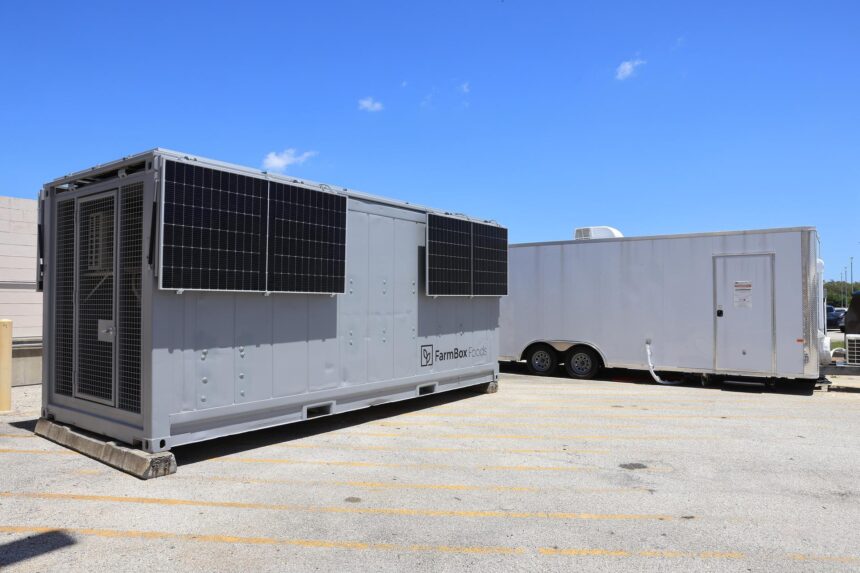
Housed within an 8.5 x 24-foot trailer, the facility integrates three bioreactor systems, a vertical garden, water purification hardware, environmental monitoring, autonomous control software, and safety systems. The trailer is equipped to function as a deployable laboratory at NASA Kennedy and is designed to travel between at least two simulation test sites as the technology matures.
Unlike conventional wastewater systems on Earth, this facility segregates waste streams. This divergent approach is vital for small crews, as wastewater from four to eight individuals can become highly concentrated. Urine, hygiene water, flush water, fecal waste, and food waste contain varying levels of salts, solids, carbon, nitrogen, phosphorus, and other compounds. Treating them separately ensures each stream is processed by the most suitable reactor for its specific composition.
To achieve this, the system employs three distinct bioreactors for waste stream purification. The Anaerobic Phototrophic Membrane Bioreactor processes fecal and food waste, converting it into nutrient-rich effluent that can support plant growth. The Suspended Aerobic Membrane Bioreactor handles urine and flush water. Meanwhile, the Membrane Aerated Bioreactor purifies greywater from hygiene and laundry activities. Collectively, the bioreactors process nutrients to sustain the facility’s vertical garden and prepare water for reuse. Within this garden, produce will be grown hydroponically, using nutrient solutions derived from the bioreactors. Researchers will compare crop performance against plants grown with standard hydroponic nutrients.
In North Dakota, funded by a NASA EPSCoR (Established Program to Stimulate Competitive Research) grant, the facility is connected to the Integrated Lunar/Mars Analog Habitat via a bathroom interface that includes a urine-diverting toilet. This setup allows for the separation of different waste streams at the source and directs them to the appropriate treatment systems. Concurrently, Ali Alshami’s team is developing innovative membrane-based separation technologies designed for future integration with the divergent wastewater facility, aiming to enhance water recovery efficiency, contaminant rejection, and overall system resilience for long-duration habitat missions.
Alshami commented, “The tests will help NASA evaluate real-world operations, crew training needs, system reliability, and how wastewater simulants compare to actual human metabolic waste in an analog mission environment.”
These efforts focus on advancing compact, energy-efficient treatment approaches capable of processing complex wastewater streams generated in closed-loop space environments.
Pablo De Leon, Chair and Professor of the University of North Dakota’s Space Studies Department, noted, “The test campaign in North Dakota supports the maturation of the facility’s technology from laboratory-scale validation to demonstration in the relevant Inflatable Lunar/Mars Analog Habitat environment.”
Lessons learned could inform future higher-fidelity tests, including potential integration with NASA’s next-generation year-long simulated Mars missions through isolation analogs at Johnson Space Center in Houston.
This work is part of NASA’s broader Bioregenerative Life Support Systems efforts, which focus on developing biological approaches to reduce reliance on consumables supplied from Earth. In future lunar or Martian habitats, systems like the wastewater treatment facility could help close life support loops by recovering water, recycling nutrients, supporting produce production, and reducing the amount of waste requiring storage or disposal. NASA’s further research has completed feasibility studies demonstrating how bioregenerative life support becomes more effective in space travel compared to existing life support technologies.
NASA researchers are also investigating how resources derived from wastewater can support in-space manufacturing. One effort examines how nutrient-rich water from bioregenerative wastewater systems can feed microorganisms that produce lactic acid, which can then be converted into polylactic acid. This material could one day serve as a binder for 3D printing with lunar or Martian regoliths (loose, fragmented surface material) or be used for spare parts, extending the value of recovered waste beyond water and food systems.
J.J. Edelmann, surface systems lead for the Mars Campaign Office at NASA Headquarters in Washington, stated, “By sending the facility from NASA Kennedy to North Dakota, the agency is taking a critical piece of this circular economy from the lab to real-world testing.” He continued, “The work may start with wastewater, but its objective is much larger. We want future crews to live sustainably on the Moon, learn how to operate farther from Earth, and carry those lessons to Mars.”
For more information on the agency’s lunar and Mars exploration, visit: https://nasa.gov/esdmd