

The World Health Organization (WHO) has declared the Ebola outbreak in the eastern Democratic Republic of Congo (DRC) a public health emergency of international concern. However, the organization stressed that it is not a global pandemic emergency.
Director-General Tedros Adhanom Ghebreyesus stated that beyond the confirmed cases, there are nearly 600 suspected cases of Ebola Bundibugyo virus, with 139 suspected deaths. “We expect those numbers to keep increasing, given the amount of time the virus was circulating before the outbreak was detected,” he told journalists in Geneva.
Uganda has also reported two confirmed cases of Ebola in its capital, Kampala. The WHO is working with community leaders in the Ituri province, the outbreak’s epicenter, to prevent wider transmission, especially as there are no vaccines or therapeutics for this rare virus, last detected in 2007.
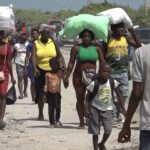
Decades of violence in eastern DR Congo have contributed to the population’s vulnerability, including healthcare workers. The UN refugee agency (UNHCR) reports over two million internally displaced people in the affected provinces of Ituri and North Kivu. WHO’s Dr. Marie Roseline Belizaire emphasized the organization’s continued support to Goma despite ongoing insecurity.
Challenges in Detection and Surveillance
Dr. Mohamed Yakub Janabi, WHO’s Regional Director for Africa, highlighted the challenges of detecting Ebola outbreaks in Ituri province, where reliable community reporting, functioning health facilities, and laboratory confirmation are crucial. “In remote or insecure areas, it can take time for cases to be recognised,” he explained, noting that samples had to be transported over 1,700 kilometers to Kinshasa for confirmation.
Dr. Anais Legand, WHO Technical Officer for Viral Haemorrhagic Fevers, confirmed that WHO provided support to the DRC to investigate the threat as quickly as possible, leading to confirmation late last week. Investigations are ongoing to determine the outbreak’s origin, with preliminary assessments suggesting it may have started a couple of months ago. The priority remains to break the transmission chain.
Understanding Ebola Transmission
The WHO Emergency Committee confirmed the outbreak as a public health emergency of international concern. Professor Lucille H. Blumberg, Chair of the panel, clarified that Ebola transmission occurs through direct contact with blood and body fluids of an infected person, not through casual contact or airborne transmission. “I think we need to be aware of that,” she stated, adding that travel restrictions are not supported under International Health Regulations (IHR) recommendations.
Professor Blumbert pointed to the ongoing humanitarian crisis, security challenges, a highly mobile population, and proximity to multiple borders as significant obstacles to controlling the outbreak. She stressed the urgent need for resources, personnel, and research and development of countermeasures, alongside intensified surveillance and contact identification.
Tedros declared the public health emergency of international concern on Sunday, in accordance with IHR Article 12.