

As NASA gears up for extended lunar missions, the agency is exploring the use of robots to handle routine tasks. This strategic deployment of robotic intelligence would free up astronauts to concentrate on scientific research and exploration, maximizing their time and expertise in space.
However, achieving sophisticated robotic motion control involves complex technological hurdles, including advancements in areas such as autonomous decision-making and precise object recognition.
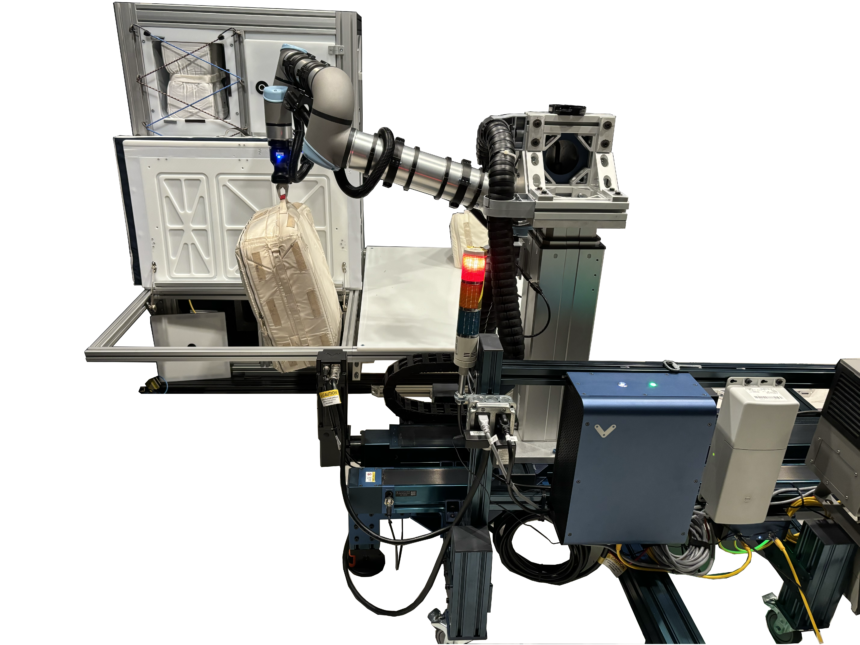
A robotics firm based in Boulder, Colorado, is partnering with NASA to tackle these very challenges. PickNik Inc. collaborated with Shaun Azimi, head of NASA’s Dexterous Robotics team at Johnson Space Center, and other agency roboticists. Together, they successfully tested software that allowed a robotic arm to identify a spacecraft hatch, operate the latch, and open the door. The arm then proceeded to transfer cargo bags between the hatch and a designated bin.
This groundbreaking work took place within NASA Johnson’s new Integrated Mobile Evaluation Testbed for Robotics Operations, supported by funding from NASA’s Small Business Innovation Research program.
PickNik developed and enhanced the robotic software, known as MoveIt Pro, with crucial early government investment. Since its commercial release in 2023, MoveIt Pro has garnered a substantial and diverse customer base.
Leading automotive manufacturer BMW is implementing the software on its robotic assembly lines. Lightspeed is utilizing MoveIt Pro to program large robotic arms for constructing modular panels essential for building affordable housing. Furthermore, Hivebotics has adopted MoveIt Pro to automate its primary product: a sophisticated cleaning robot.
Ezra Brooks, principal software engineer at PickNik, highlighted the company’s reliance on NASA’s early support, stating that their product might not exist without it. He emphasized that refining robotic software algorithms and developing a commercial product requires years of dedicated research and development, much of which was enabled by NASA’s foundational work.
NASA’s technological innovations are unlocking critical capabilities for lunar and deep-space missions, while simultaneously yielding significant benefits for commercial industries on Earth. For five decades, NASA has showcased these everyday advantages of space technology through its Spinoff publication. Discover more about this project here: https://go.nasa.gov/49CNSi7