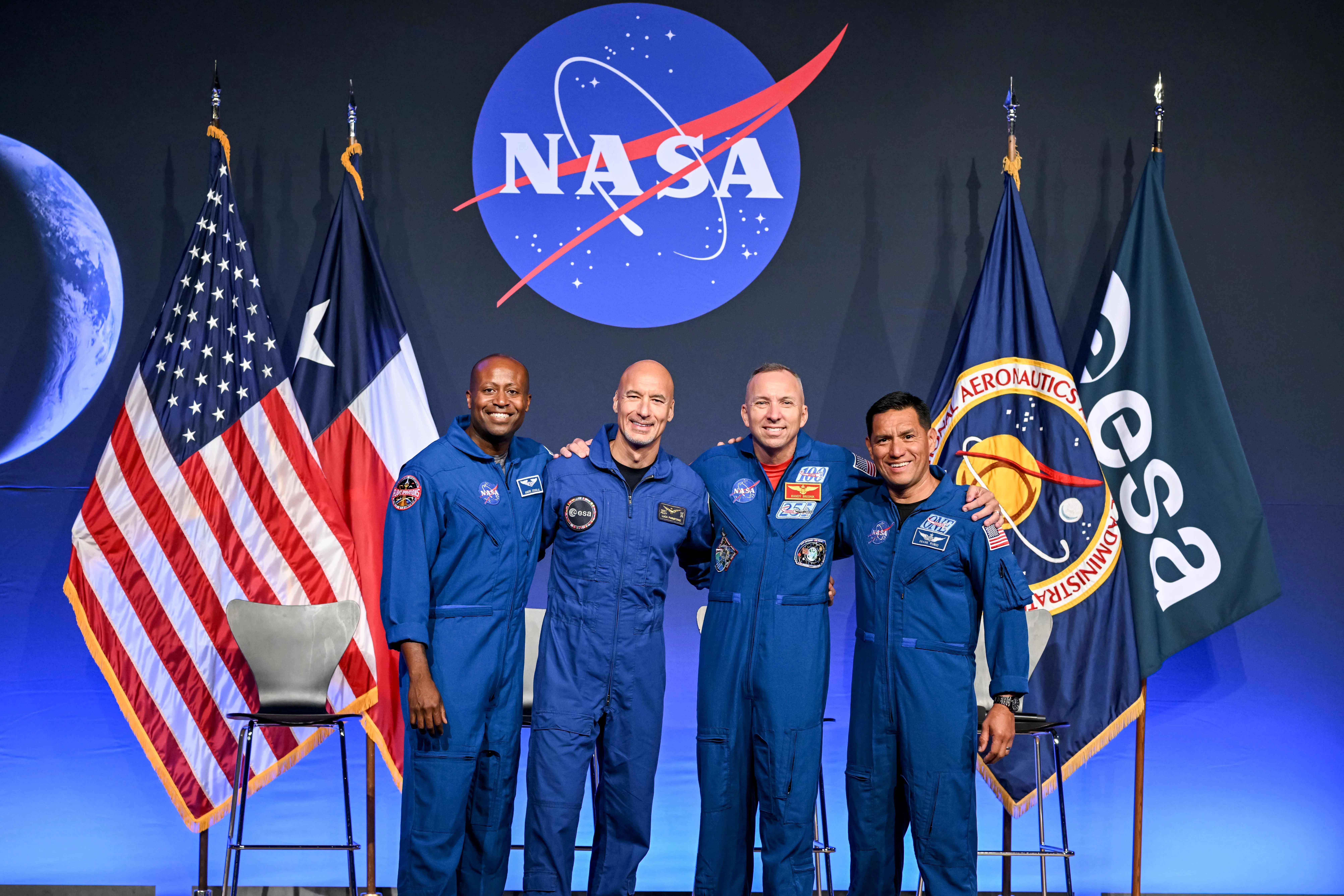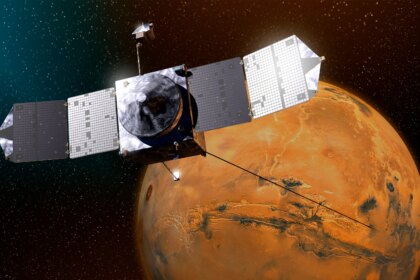


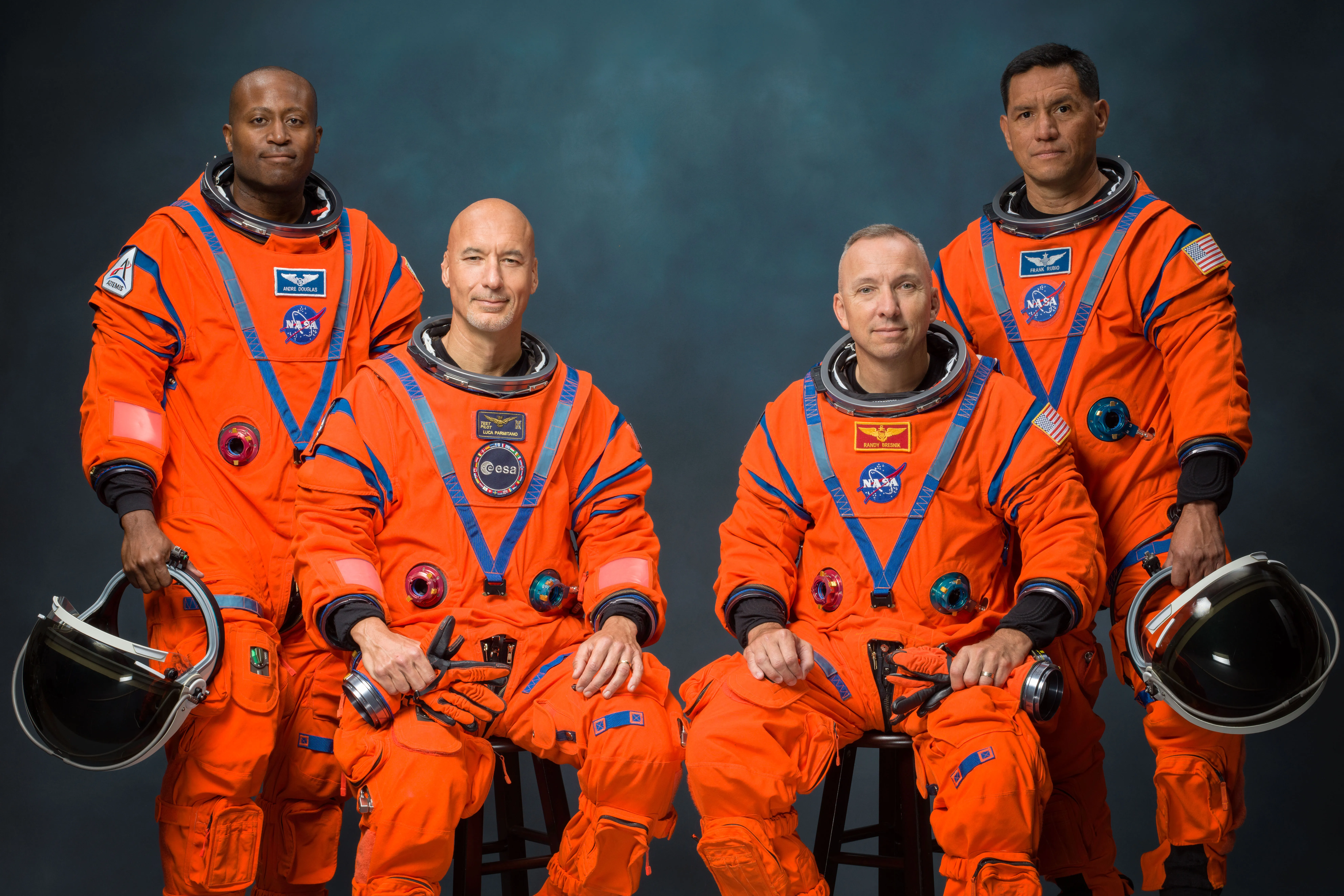
NASA has unveiled crucial details for the Artemis III mission, one of the most complex human spaceflight endeavors to date, announcing the four primary crew members and one backup. The mission is scheduled for a series of challenging tests in Earth’s orbit in 2027, which are vital for the planned human landing on the Moon’s South Pole in 2028, known as Artemis IV.
As part of the Artemis III mission, NASA’s Space Launch System (SLS) rocket will transport the Orion spacecraft and its crew from NASA’s Kennedy Space Center in Florida into low Earth orbit. Following checks of the Orion systems, the spacecraft will demonstrate its capability to rendezvous and dock with test versions of human landing systems being developed by Blue Origin and SpaceX. This precisely choreographed mission involves the coordinated launch of the world’s most powerful rockets, testing integrated hardware such as software, propulsion, and communication systems between Orion and the landers.
The crew assignments are as follows:
NASA astronaut Bob Hines has been designated as the backup crew member. The crew will commence training on Orion spacecraft systems and will also assist in the development and operations of the test versions of the Blue Origin and SpaceX landers.
NASA Administrator Bill Nelson stated, “Today, we take another bold step in humanity’s return to the Moon, building upon the extraordinary foundation laid by the Artemis II astronauts. Their success reignited global excitement for exploration, and now they pass the torch to the Artemis III crew. Artemis III will showcase the power of American innovation and international partnership by testing complex rendezvous and docking operations and advancing technologies that will one day carry us deeper into the solar system. This mission will require the coordination of some of the most impressive heavy-lift rocket launches in history, leveraging the capabilities of teams across government and the spaceflight community. The Artemis III astronauts, along with our ESA and international partners, are embarking on a new Golden Age of exploration, carrying the hopes and dreams of future generations, much like the Apollo astronauts did, alongside tens of thousands of the brightest minds across the agency and industry.”
This mission also marks the first time an ESA astronaut will be assigned to an Artemis mission.
ESA Director General Josef Aschbacher commented, “Artemis III will push the boundaries of orbital spacecraft operations. Luca’s assignment as pilot reflects the depth of European expertise in human spaceflight and draws on his extensive operational experience in high-pressure situations. Furthermore, ESA’s European Service Module will once again provide critical capabilities powering Orion, demonstrating Europe’s enduring role at the heart of the Artemis program. This news from Houston is a strong validation of ESA’s role in enabling humanity’s return to the Moon and a significant step forward in our partnership with NASA. Europeans can be proud to be part of this exciting journey.”
Mission Progress
NASA and its partners are making progress in preparations for the test flight.
Engineers will integrate the Orion crew module and service module this summer, along with the spacecraft’s docking system. Heat shield testing is ongoing, with individual segments undergoing ultrasonic inspections before being mounted to the heat shield structure.
Rocket preparations are also advancing significantly. SLS technicians are integrating the engine section with the rest of the main structure before the assembly of the four RS-25 engines this summer. All solid rocket booster segments are at NASA Kennedy, and with mobile launcher refurbishment proceeding, rocket stacking is planned to begin this summer. NASA is continuing the design and production of an interstage adapter that will be used on Artemis III.
Blue Origin is developing a crewed lunar version of its Blue Moon lander, while SpaceX is developing a crewed lunar lander variant of its Starship. Both companies are producing test vehicles for Artemis III. NASA is supporting both lander providers through their design, development, test, and evaluation processes, sharing institutional experience and capabilities from previous missions.
With updated information from NASA and both commercial partners, the agency discussed details about the planned operations for Artemis III during the event. These operations will support increased mission frequency, drive production, and guide supply chain improvements for the Artemis program.
The Artemis III mission builds upon the successful Artemis II flight, completed in April, which will help pave the way for the agency’s first American astronauts to Mars.
Artemis III involves the launch of the world’s most powerful rockets in quick succession. Blue Origin’s lander prototype will be the first launched, capable of remaining in orbit for multiple weeks, awaiting the crew. NASA will send the astronauts in Orion into Earth orbit via SLS, then they will meet up with the company’s lander test vehicle in space and remain docked for approximately two days for testing and technology demonstrations, during which they will board the lander.
After completing docked operations with Blue Origin, Orion will separate and await Starship. SpaceX’s Starship prototype will be launched and will meet up with Orion, remaining attached for approximately one day for checks and tests. Following this, Orion and its crew will separate and return home, making a safe splashdown in the Pacific Ocean where a U.S. Navy and NASA recovery team will retrieve the astronauts.
In total, the crew is expected to spend approximately two weeks in space, with the exact mission duration to be determined in real-time based on launch, rendezvous, and docked operations.
About the Artemis III Crew Members
This will be Bresnik’s third mission in space. He previously launched aboard the Space Shuttle Atlantis for the STS-129 mission to the International Space Station in 2009. He later flew to the station aboard the Soyuz MS-05 spacecraft from the Baikonur Cosmodrome in Kazakhstan, where he served as a flight engineer for Expedition 52 and commander for Expedition 53. A native of California, Bresnik graduated from The Citadel with a degree in mathematics and was selected by NASA as part of the 2004 astronaut candidate class. A retired U.S. Marine Corps colonel, Bresnik has over 7,000 flight hours in 95 different aircraft types and is a member of the Society of Experimental Test Pilots. Since 2018, he has served as the assistant chief of the Astronaut Office for exploration, overseeing the development and testing of spacecraft and systems that will be worked on during the Artemis missions.
Artemis III will also be Parmitano’s third spaceflight. Selected as an astronaut by ESA in 2009, Parmitano first flew as a flight engineer on the Italian Space Agency’s (ASI) first long-duration mission to the station. He launched to the station on a Soyuz in 2013 from Baikonur. In 2019, he returned to the orbital laboratory aboard Soyuz MS-13, during which he served as commander of Expedition 61, becoming the third European and first Italian to command the station. Parmitano holds a bachelor’s degree in political science from the University of Naples Federico II and a master’s degree in experimental flight test engineering from the Institut Supérieur de l’Aéronautique et de l’Espace in Toulouse, France. A graduate of the Italian Air Force Academy, Parmitano became a test pilot in 2007 and was promoted to colonel in 2019. He has over 2,000 flight hours in 40 different aircraft types.
Rubio is embarking on her second journey to space. She launched aboard the Soyuz MS-22 spacecraft to the station on September 21, 2022, and returned on September 27, 2023. With this return, she broke the record for the longest single spaceflight by an American astronaut at 371 days. Rubio was selected by NASA as part of the 2017 astronaut candidate class. Born in Florida, Rubio graduated from the U.S. Military Academy in 1998, earned her Doctor of Medicine in 2010 from the Uniformed Services University of the Health Sciences, and has served over 28 years in the U.S. Army as a aviator, physician, and astronaut.
This mission will be Douglas’s first spaceflight. Selected by NASA as part of the 2021 astronaut candidate class, Douglas previously served as the backup and closing crew member for the agency’s Artemis II mission. A native of Virginia, Douglas holds four graduate degrees from various institutions, including a bachelor’s degree in mechanical engineering from the U.S. Coast Guard Academy and a doctorate in systems engineering from George Washington University. During her service in the Coast Guard, she conducted search and rescue, maritime interdiction, and counter-narcotics operations. Additionally, her work at Johns Hopkins University Applied Physics Laboratory involved the design and testing of multidomain autonomous vehicles, space exploration systems, and numerous undersea warfare platforms.
Hines, serving as the backup crew member, will train alongside Bresnik, Parmitano, Rubio, and Douglas. Should one of the primary crew members be unable to participate in the mission, he will join the Artemis III crew. Hines previously served as pilot on NASA’s SpaceX Crew-4 mission to the International Space Station. Selected by NASA as part of the 2017 astronaut candidate class, Hines worked as a research pilot at the agency’s Johnson Space Center prior to his selection. A colonel in the U.S. Air Force, Hines has over 27 years of service as an instructor pilot, combat pilot, and test pilot.
As part of a Golden Age of innovation and exploration, NASA will send astronauts on increasingly challenging missions to further explore the Moon for scientific discovery, economic benefits, establish a human presence on the lunar surface, and lay the groundwork for the first human missions to Mars.
Learn more about NASA’s Artemis program:
–end–
Bethany Stevens / Amber Jacobson
Headquarters, Washington
202-358-1600
[email protected] / [email protected]
Anna Schneider
Johnson Space Center, Houston
281-483-5111
[email protected]