

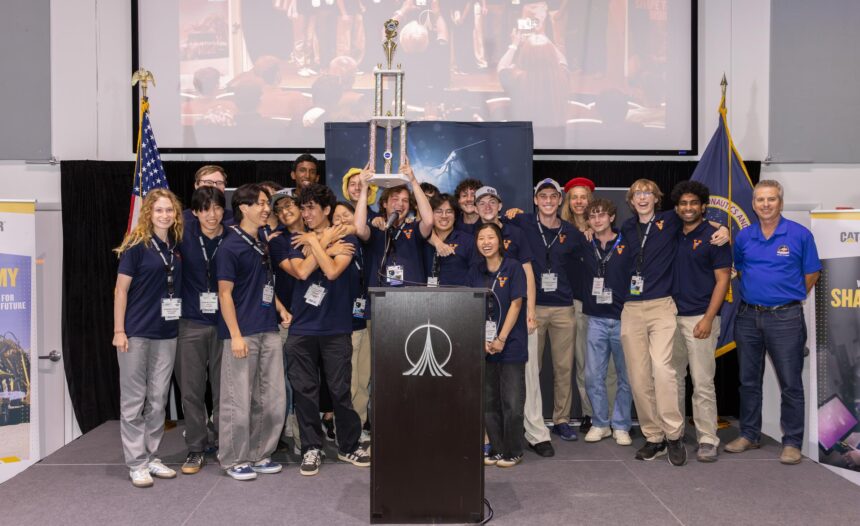
NASA’s 2026 Lunabotics Challenge showcased the ingenuity of student engineers in developing technologies crucial for a permanent Moon Base. College students from across the nation demonstrated robotic technologies and systems engineering expertise at the Kennedy Space Center Visitor Complex in Florida, aiming to build and sustain long-term lunar infrastructure.
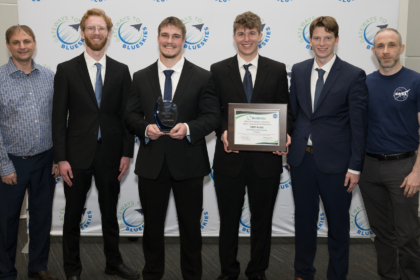
The University of Virginia secured the Off World Grand Prize, achieving the highest overall score by successfully completing all competition events. Robert Mueller, lead judge and senior technologist at NASA Kennedy’s Swamp Works, emphasized that this award recognizes comprehensive system performance rather than a single metric, mirroring the demands of actual lunar missions.
The annual Lunabotics Challenge is a rigorous two-semester competition where higher-education students apply NASA’s systems engineering principles to design, build, and test prototype lunar construction robots. The 2026 competition began last September, with teams submitting detailed plans and specifications. Following an initial qualifying round at the University of Central Florida’s Exolith Lab, where robots were tested on excavation and berm construction, the top 10 teams advanced to the finals held at NASA Kennedy.
Judging criteria extended beyond berm size to include robot weight, communication performance, energy consumption, and autonomy. These metrics were assessed across four main categories: STEM industry plan, systems engineering paper, presentations and demonstrations, and robotic construction. The University of Virginia team notably demonstrated resilience when a wheel detached during their first finals run, reconfiguring their robot to continue the competition on three wheels.
“When we saw the wheel break in the arena, we thought that was it,” said Craig Kalkwarf, mechanical lead for the University of Virginia team. “But we came so prepared. We had metal wheels ready to swap out. We had a plan. We ultimately got the win, and part of that was planning for anything — and it worked out.”
A core aspect of the challenge involves students utilizing NASA’s Systems Engineering Process. This year’s competition highlighted exceptional systems engineering prowess, with teams overcoming various obstacles, including robot mobility issues and equipment damage, while still achieving significant construction milestones.
The number of fully autonomous robots competing significantly increased from 12 last year to 27 this year, indicating a trend toward greater automation in lunar exploration technologies. This heightened level of autonomy contributed to more efficient operations within the Artemis Arena, a specialized test bed designed to simulate lunar terrain.
Rich Johanboeke, project manager for the competition, noted the substantial increase in excavated material compared to previous years, attributing it to students’ innovative design iterations and advancements. “This speaks to how teams have evolved previous design iterations and how much innovation we’re seeing from these students. It’s an exciting time!”
The Lunabotics Challenge, occurring shortly after NASA’s Artemis II mission, underscores the technological advancements necessary for establishing a sustainable human presence on the Moon. Autonomous robots capable of manipulating lunar soil are vital for protecting landing sites, supporting power systems, and constructing future lunar outposts.
“This might be the first thing NASA does on the Moon Base — robotically building a berm using a local resource, the lunar soil,” Mueller stated. He added that NASA is closely observing and learning from these student teams in preparation for future missions like IPEx (Infrastructure Pilot Excavator), designed to efficiently excavate and transport lunar regolith.
The competition not only celebrates student ingenuity but also advances critical technologies and engineering approaches for lunar exploration. For students, Lunabotics offers an immersive, industry-level problem-solving experience, while for NASA, it serves as a vital platform for finding novel solutions and recruiting the next generation of engineers and innovators.
Andrew Ebert, a mechanical engineering student from the College of DuPage, whose team won the award for building the biggest berm, expressed his aspiration to work at NASA, calling it “the coolest thing you can do in engineering.”
The creativity, resilience, and technical skills displayed by the student teams are directly influencing NASA’s strategy for a sustainable Moon Base. The expertise gained through Lunabotics is expected to be highly impactful as lunar construction begins in the coming years.
“These students might be working for NASA by the time we start building on the Moon,” Mueller concluded.
Award Winners for NASA’s 2026 Lunabotics Challenge:
- Off World Grand Prize – Overall Excellence: University of Virginia
- Lunabotics Construction Award: 1st place: College of DuPage; 2nd place: University of Virginia; 3rd place: Michigan Technological University
- Caterpillar Autonomy Award: 1st place: The University of Alabama in Huntsville; 2nd place: University of Virginia; 3rd place: University of Utah; 4th place: Purdue University; 5th place: Iowa State University; 6th place: College of DuPage
- Lunabotics Efficient Use of Communications Power Award: Iowa State University
- Systems Engineering Paper: 1st place: The University of Alabama; 2nd place: University of Virginia; 3rd place: University of Illinois in Chicago
- Nova Award for Stellar Systems Engineering by a First Year School: Laredo College, Northwestern University
- Systems Engineering Leaps & Bounds Award: Virginia State University
- Rocket Award for Accelerating Systems Engineering Mastery: University of Illinois in Urbana-Champaign
- Presentations and Demonstrations: 1st place: New Mexico Institute of Mining and Technology; 2nd place: The University of Alabama; 3rd place: Colorado School of Mines; Honorable Mention: Michigan Technological University
- Presentations and Demonstrations First Steps Awards: Carnegie Mellon University