

In the mid-20th century United States, racial segregation was deeply entrenched. Laws mandated separate facilities based on race, the military remained divided, interracial marriage was prohibited, and many housing developments enforced ‘whites-only’ policies. Amidst this pervasive discrimination, a unique housing development emerged, challenging the status quo.
Parkway Village, established in 1947, was conceived by the United Nations and the City of New York to address a critical post-World War II housing shortage, particularly for the influx of diplomats and UN staff. This initiative was revolutionary, as it directly confronted the discriminatory housing practices prevalent at the time. Many New York housing developments, like Stuy-Town and Fresh Meadows, openly practiced racial segregation. However, the UN insisted on a non-discriminatory housing solution for its diverse international staff, a significant challenge in an era where securing housing was often impossible for Black individuals.
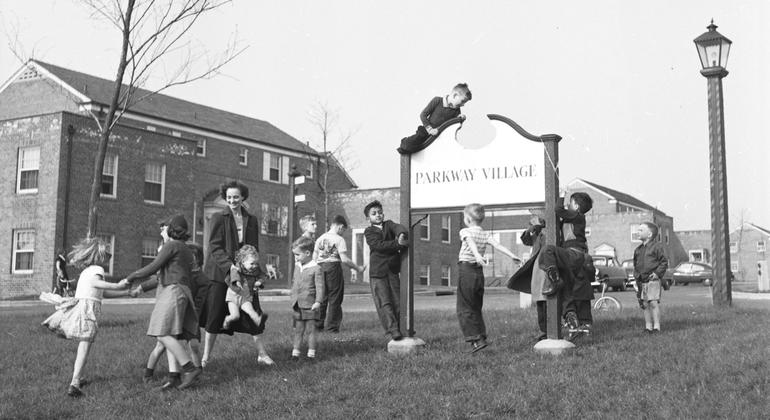
Located in Queens, Parkway Village was built on 34 acres of undeveloped land, featuring 687 apartments spread across a low-rise, community-focused design. With ample green space and on-site educational facilities, it was described as ‘the country in the city.’ This communal atmosphere fostered interaction among residents from over 50 countries. Early resident and later UN staff member, Carlos Figueroa, recalled friendships with children from diverse backgrounds—Europe, the Middle East, Asia, Africa, Latin America, and the Caribbean. Growing up together, they shared cuisines, learned about each other’s cultures, and even picked up bits of different languages.
By 1952, nearly 500 United Nations families called Parkway home. Figueroa remarked on the enlightening experience of seeing children from traditionally rival nations, such as Indians and Pakistanis, or Arabs and Jews, playing together, attending the same schools, and learning to cooperate and understand one another. This environment stood in stark contrast to the segregated world outside.
Parkway Village became a haven not only for UN staff but also for prominent figures like Nobel Peace Prize winner Ralph Bunche, the first Black person to receive the award for his mediation in the Arab-Israeli conflict. The village symbolized the UN’s early commitment to combating racial discrimination worldwide. Rula Hinedi, head of UN tour guides, highlighted Parkway Village as a clear intention to put the UN’s anti-discrimination principles into practice when the organization decided to permanently locate in New York.
While Parkway Village stands as a historical testament to the fight for racial equality, the UN’s independent human rights expert, Dr. Ashwini K.P., notes that progress has been made over the past 80 years, with a global consensus emerging against overt racism. However, she cautions that discrimination continues to manifest in various forms, impacting access to education, healthcare, economic opportunities, and political power. Eliminating racial discrimination, she emphasizes, requires sustained political will, accountability, and a genuine commitment to equality.