

From UN Radio to UN News
World Radio Day, observed annually on February 13, commemorates the 80th anniversary of UN Radio’s first broadcast. Stories gathered from around the globe highlight radio’s persistent importance in areas affected by conflict, natural disasters, or significant digital divides. In these challenging environments, radio serves as a reliable source of information, reassurance, and connection, reaching audiences where other communication channels fail.
The enduring role of radio is intrinsically linked to the history of the United Nations. Eighty years ago, following World War II, UN Radio commenced broadcasting from New York, delivering news and feature programs in five languages, and often transmitting proceedings of the Security Council. Over the decades, the legacy of UN Radio evolved into the multimedia platform known as UN News. This platform now publishes in 10 languages, connecting with audiences in over 170 countries, and providing breaking news, interviews, and in-depth coverage of global challenges.
Despite technological advancements, the core principle of delivering dependable information, especially through audio formats, remains paramount.
Rebuilding Radio Broadcasting in Gaza
The mission of radio is particularly critical in conflict zones. Before October 7, 2023, Gaza hosted 23 local radio stations. The subsequent war has destroyed all of them. Rami Al-Sharafi, director of Zaman FM, is leading a determined effort to re-establish broadcasting amidst widespread destruction. Zaman FM has resumed transmissions, becoming the only station broadcasting on FM frequencies from within Gaza following the devastation.
The need for reliable broadcasting is immense, especially as Gaza grapples with disease outbreaks, educational system collapse, and disrupted public services.
A Crucial Tool for Peacekeeping
In other conflict-affected regions, radio acts as a stabilizing force. Radio Okapi, established in 2002 as part of the UN peacekeeping mission in the Democratic Republic of Congo (MONUSCO), has become a trusted voice. Broadcasting in French and four national languages, it provides vital information in areas plagued by violence and displacement.
Listeners describe Radio Okapi as instrumental in promoting peace through reliable and impartial reporting. It serves as a key channel for civic participation, allowing war victims to share their experiences with authorities and actively countering hate speech to foster social cohesion. Programs like “Inter-Congolese Dialogue” are credited with helping to achieve peace.
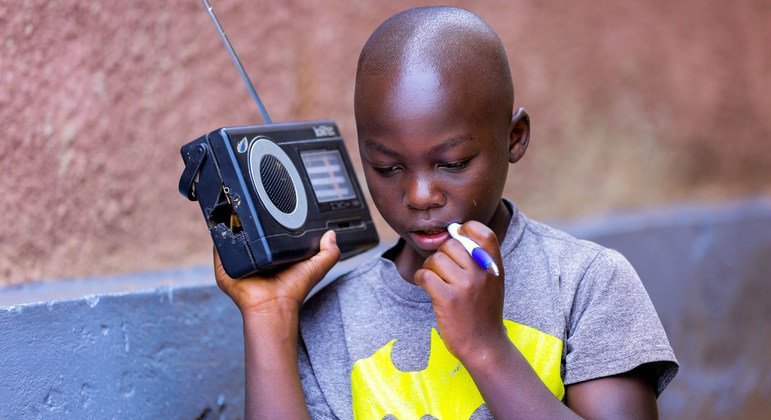
For refugees, like Bahati Yohane in Uganda, Radio Okapi has been a lifesaver, providing crucial security information during escalating violence in the DRC. In the Central African Republic, UN mission MINUSCA supports Guira FM and local broadcasters to enhance access to trusted information. Initiatives to distribute radios have improved information flow and reduced rumors that can disrupt community relations.
UNESCO also supports radio stations in fragile environments, ensuring they can continue to deliver life-saving information during crises. In Afghanistan, the agency supports 10 stations reaching 20 million listeners with guidance on basic services.
Lifesaving Information in Emergencies and Beyond
Beyond conflict zones, radio’s strength is evident during climate-related emergencies. When storms and floods disrupt phone and internet services, radio often remains the last dependable link. In Mexico, amateur radio operators were recognized as national heroes after the 1985 earthquake when conventional communication systems failed. The Mexican Federation of Radio Amateurs coordinates the National Emergency Network, transmitting vital information during natural disasters.
During Hurricane Otis in 2023, operators quickly established communication systems, reporting on affected areas and accessibility. Radio also serves as a powerful platform for accessibility and inclusion. Radio Udaan in India, operated by visually impaired presenters, reaches listeners globally, addressing disability rights, education, and social inclusion.
The Enduring Power of the Human Voice
While artificial intelligence is rapidly transforming the audio landscape, the unique human element remains irreplaceable. Professor Sun Shaojing of Fudan University notes that AI-generated voices are becoming common, but they often lack the emotional depth and empathetic dimensions crucial for reporting on human suffering and needs.
Even in outer space, radio is fundamental. Radio waves facilitate space exploration, Earth monitoring, and navigation. As space exploration expands, particularly with plans for lunar bases, the need for protected radio spectrum becomes increasingly critical to avoid interference with scientific observation. The International Telecommunication Union (ITU) is working on regulatory frameworks to balance communication needs with the protection of scientific spectrum, especially on the Moon.
A Signal That Endures
From war-torn regions and disaster-stricken areas to efforts promoting accessibility, technological innovation, and the vastness of space, radio consistently proves its enduring value. In a world saturated with rapid technological advancements, these invisible waves serve as a vital reminder that simple communication methods often possess the greatest power to inform, protect, and unite.