

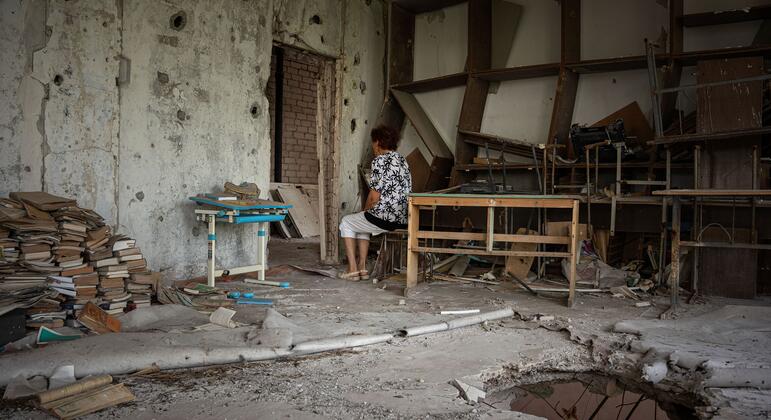
Rosemary DiCarlo, Under-Secretary-General for Political and Peacebuilding Affairs, informed the UN Security Council that the conflict in Ukraine has reached a critical point, describing it as “nearly 1,500 days of death, destruction and despair.” She reiterated the UN’s consistent call for an immediate ceasefire.
Since the conflict began, official figures indicate 15,364 civilians have been killed, including 775 children, with over 42,000 others injured. However, the actual numbers are presumed to be higher.
“The suffering and destruction caused by the war in Ukraine can never be justified. The longer the war exists, the deadlier it becomes, with growing risks to regional and international security,” DiCarlo stated.
Rising Death Toll and Energy Sector Impacts
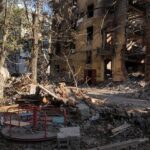
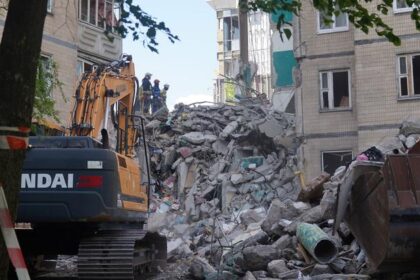
DiCarlo reported that in February alone, at least 188 civilians were killed and 757 injured, marking a 45 percent increase compared to the same period last year. Attacks have persisted into the current month, with deadly assaults reported in Kharkiv, Kyiv, Donetsk, Kherson, and Zaporizhzhia. There are also indications of an increase in strikes targeting railway and other transportation infrastructure.
“Over the winter, damage to Ukraine’s energy infrastructure brought the country’s energy grid to the brink of total collapse,” she told ambassadors. Authorities report that approximately 60 percent of gas production capacity has been destroyed and all power stations are damaged, leading to ongoing disruptions in electricity, heating, and water supply nationwide. In the southern city of Odesa, energy, industrial, and port facilities have sustained damage, with the latest incident on March 19 involving drones hitting apartment buildings, reportedly injuring four people.
Ukrainian Drone Attacks Reported
Concurrently, Russia has reported Ukrainian attacks impacting civilians and civilian infrastructure within its territory. This includes what is described as the largest drone attack targeting Moscow to date, occurring between March 14-16, during which at least 250 drones were reportedly intercepted. No civilian casualties were reported from this specific incident.
“In Russian regions bordering Ukraine – Kursk, Belgorod and Bryansk, as well as the southern Krasnodar region – local officials have reported civilian casualties and damage to infrastructure from alleged strikes,” DiCarlo noted, adding that the UN is unable to independently verify these reports.
Nuclear Risks and Regional Impact
Military activity near Ukraine’s nuclear facilities continues “with potentially devastating consequences.” Recent events also highlight the significant regional ramifications of the war. Damage to the Novodnistrovsk hydroelectric plant on March 7 resulted in an oil spill and widespread water pollution of the Nistru River in neighboring Moldova, prompting a 15-day environmental alert. Moldovan airspace has also been repeatedly violated by drones, according to officials.
US Diplomatic Efforts Welcomed
Concluding her remarks, DiCarlo emphasized the imperative of a full, immediate, and unconditional ceasefire. She welcomed diplomatic initiatives led by the United States over the past year aimed at advancing peace.
“As the most significant initiative to date to help restore momentum towards a peaceful resolution, these efforts require sustained commitment and support,” she stated. DiCarlo stressed that the objective must be a just, lasting, and comprehensive peace aligned with the UN Charter, international law, and relevant UN resolutions, while upholding Ukraine’s sovereignty, independence, and territorial integrity.
‘Sustained Pattern’ of Infrastructure Damage
UN Emergency Relief Coordinator Tom Fletcher also briefed the Council, warning about the escalating bloodshed and strikes on energy and vital infrastructure. “These attacks reflect a sustained pattern of damage to the systems on which civilians depend to survive, with humanitarian aid increasingly stepping in to fill the gaps left by the deterioration of essential services,” he said.
Fletcher noted the conflict’s increasing characterization by the use of advanced technologies and called for an investigation into a March 20 drone strike in Donetsk Oblast. During this incident, a clearly marked humanitarian van used for evacuating elderly individuals came under fire, resulting in the deaths of two women and injuries to two evacuees.
Call for Humanitarian Support
Fletcher also shared positive developments, reporting that the UN and its partners reached nearly one million people in January, providing essential aid including food, cash assistance, medical care, shelter, and protection. He concluded by making three specific requests to the Council: to insist on the upholding of international law to protect civilians and critical infrastructure; to ensure rapid, safe, and unimpeded humanitarian access to all those in need; and to provide greater financial support for the $2 billion humanitarian plan aimed at assisting 3.6 million people this year.
“Nearly three quarters of that plan is still unfunded, so please fund the response so that we can deliver life-saving aid at the scale and the speed needed,” he urged.