

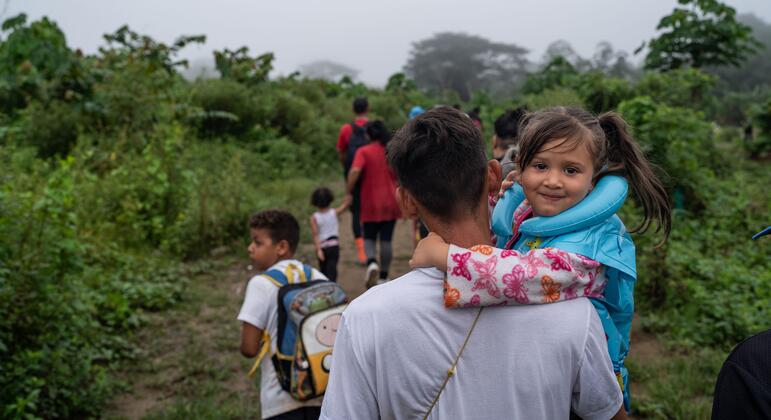
Approximately 300 million people worldwide have relocated from their home countries for various reasons, including education, employment, family reunification, or other opportunities. These migrants significantly contribute to both their host societies and their homelands, sending an estimated $1 trillion in remittances annually, a figure that surpasses Official Development Assistance (ODA) and Foreign Direct Investment (FDI) combined.
‘An Inevitable Human Reality’
UN General Assembly President Annalena Baerbock shared these insights during a meeting where Member States convened to assess the implementation of the Global Compact for Safe, Orderly and Regular Migration, a voluntary international agreement established in 2018. Ms. Baerbock emphasized that migration, a phenomenon that has existed for millennia, is often mistakenly viewed as new and is frequently politicized, with discussions focusing on irregular movements, border pressures, or strained social welfare systems. She stated, “Migration is an inevitable human reality.” The critical question, she added, is not about the inherent nature of migration but rather “whether we manage it well and manage it together,” given that every nation currently functions as a country of origin, transit, or destination, and often all three simultaneously.
Progress and Setbacks in Migration Management
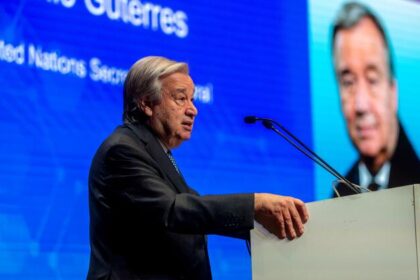
The International Migration Review Forum, held every four years, has seen meaningful progress since the adoption of the Global Compact, according to UN Secretary-General António Guterres. He noted that Member States have taken concrete actions to broaden regular migration channels, enhance labor mobility, improve search-and-rescue operations, upgrade data systems, and support safer returns and reintegration. However, his recent report highlighted significant setbacks: over the past four years, at least 200,000 individuals were trafficked, predominantly women and girls, and in just two years, over 15,000 people died or disappeared along migration routes. Furthermore, families and children continue to face detention, and numerous workers remain vulnerable to exploitation and lack labor protections.
Simplifying Regularization Processes
Natividad Obeso, an advocate for migrants and refugees in Argentina, underscored the necessity for simpler and more humane regularization processes. Speaking in Spanish, she asserted, “Migrant documentation shouldn’t be a privilege. It should be an accessible right, because when there are no papers, there is detention, fear and criminalisation.” Amy Pope, Director General of the International Organization for Migration (IOM), detailed the wide-ranging benefits of well-managed migration, including filling labor shortages, addressing demographic changes, stimulating economic growth, and fostering development through remittances and skills transfer. She stressed that these outcomes are not accidental but require extensive cooperation across borders, sectors, and institutions to establish trustworthy systems. The Secretary-General echoed this sentiment, stating that the international community must improve collective efforts, as no single country can manage migration alone. He outlined six key action points to fulfill the Global Compact’s commitments.
Six Action Points for Effective Migration Governance
Firstly, migration governance must be founded on dignity, humanity, and rights. This includes ending discriminatory practices, ensuring due process, and halting the detention of children and families. Secondly, migration must be made safer, necessitating enhanced cooperation to aid migrants in distress and ensure safe, dignified returns, upholding the principles of “no refoulement, no disappearances, no torture.” Thirdly, decisive action is needed against smugglers and traffickers, treating human smuggling and trafficking with the same severity as drug trafficking. The Secretary-General called for concerted state efforts to dismantle these criminal networks by cutting off financial flows, strengthening cross-border law enforcement, and holding perpetrators accountable. Fourthly, the focus is on creating “real and workable” regular migration pathways for students, workers, families, and those seeking safety and protection. Additionally, opportunities in countries of origin must be expanded through increased investment in education, skills development, and decent work, particularly for young people. Finally, nations must invest in improved cooperation, especially concerning refugees, as individuals fleeing conflict and those seeking opportunities increasingly travel together. The second International Migration Review Forum is set to conclude after four days of meetings, round tables, and policy debates addressing the challenges in implementing the Global Compact and its alignment with international sustainable development efforts.