

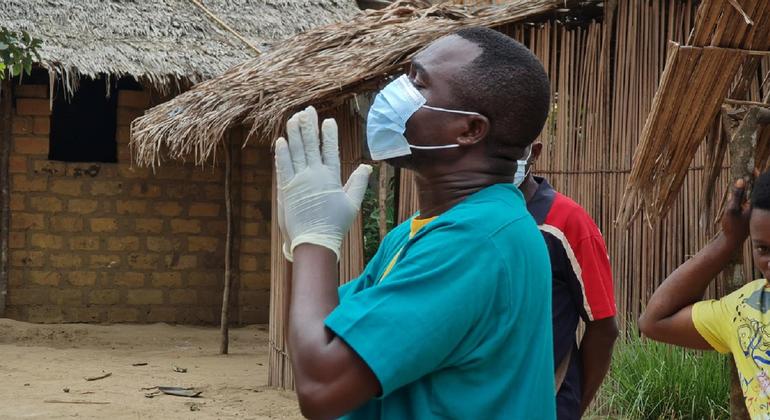
The head of the World Health Organization (WHO) has called for urgent action to combat the Ebola virus and enhance global pandemic preparedness. This appeal comes as Ugandan authorities reported three new cases of the Bundibugyo strain of Ebola on Saturday. This particular strain currently has no known cure or vaccine.
The newly confirmed cases include a Ugandan health worker, a driver, and a national from the neighboring Democratic Republic of the Congo (DRC) who sought medical care in Uganda. These additions bring the total number of confirmed Ebola cases caused by the Bundibugyo virus in Uganda to five, according to WHO Director-General Tedros Adhanom Ghebreyesus, who shared the update via social media.
The WHO is collaborating with the Africa Centres for Diseases Control and Prevention (Africa CDC) and other partners in both the DRC and Uganda. The joint effort aims to contain the outbreak, provide support to those affected, and coordinate response activities. Earlier on Friday, the WHO elevated the national risk assessment for the DRC to “very high,” while maintaining that the global risk level remains low.
Cross-border collaboration essential
In Kampala, Uganda, the WHO convened a two-day high-level ministerial meeting focused on cross-border coordination for the Bundibugyo Ebola outbreak response. Ministers from South Sudan, the DRC, and Uganda attended the meeting.
Dr. Marie Roseline Belizaire, WHO Africa’s Director of Emergency Preparedness and Response, emphasized the critical need for strengthened and sustained cross-border collaboration to effectively contain the outbreak. She cautioned that response delays could lead to severe consequences and highlighted the importance of robust surveillance and preparedness systems, stating that “time saves lives” during outbreaks.
Sustained financial contribution
The Director-General also urged Member States to increase their assessed financial contributions to the WHO. This, he stated, is crucial for ensuring the organization remains strong, independent, and capable of responding to future global emergencies. He further stressed that global agreements must be translated into practical actions that protect communities, swiftly contain outbreaks, and guarantee healthcare access for vulnerable populations.
“Every nation is healthier and safer when all nations are healthier and safer,” he concluded.