

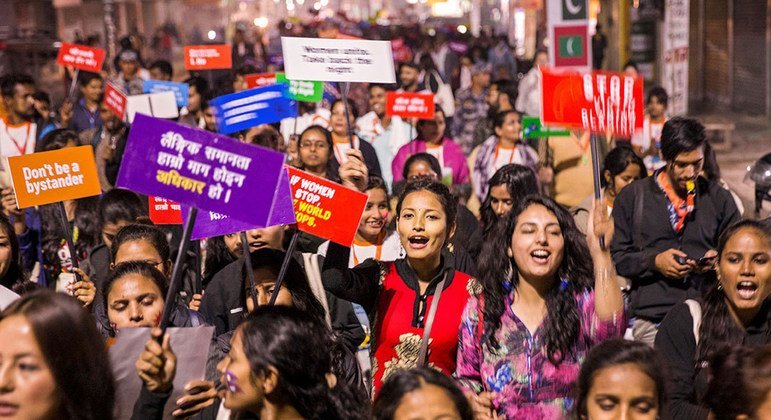
The 70th session of the Commission on the Status of Women (CSW70), running from March 9 to 19, is centering its discussions on ensuring and strengthening access to justice for all women and girls. This focus includes promoting inclusive legal systems, eradicating discriminatory laws, and addressing structural barriers that hinder women from claiming their rights.
A Question of Power
At the session’s opening, Secretary-General António Guterres highlighted that despite significant progress over decades, inequality remains deeply entrenched. He stated, “We still live in a male-dominated world and a male-dominated culture,” emphasizing that gender equality is fundamentally a “question of power.” Guterres noted that women globally possess only 64 percent of the legal rights afforded to men, and justice remains an elusive goal for millions. He pointed to discriminatory laws, patriarchal norms, conflict, climate change, and widening inequality as intensifying challenges.
“Justice for women and girls must be a cornerstone of the world we seek to build,” he urged delegates.
Change is Possible
UN Women Executive Director Sima Bahous cautioned that progress towards equality is occurring too slowly, warning that the global disparity in legal protections for women and girls could take centuries to bridge. She asserted that the assembled Member States and partners represent “the most powerful of constituencies,” with sufficient power to enact transformative change in lives.
Bahous also noted the upcoming election of a new UN Secretary-General, expressing UN-Women’s pride in serving and working with a “Madam Secretary-General.”
Advancing Women’s Rights Since 1946
Established in 1946, the Commission on the Status of Women (CSW) serves as the UN’s primary intergovernmental body for promoting gender equality and the empowerment of women and girls. Annually, it convenes governments and civil society to assess global progress, set international standards, and agree on policy recommendations for advancing women’s rights. The CSW played a crucial role in developing the Beijing Declaration and Platform for Action in 1995, a landmark framework for achieving gender equality.
Why Progress Falls Short
President of the General Assembly Annalena Baerbock stated that the debate should shift from the importance of women’s rights to the reasons behind incomplete progress. “After 70 sessions of this Commission on the Status of Women, and 30 years since the Beijing Declaration, we no longer need to debate why women’s rights matter,” she said. “The real question is: why are we still not delivering?” Baerbock reiterated that women globally hold only about two-thirds of the legal rights of men, and many countries lack laws for equal pay or protection against child marriage.
Justice Must Work for Every Woman, Every Girl
Lok Bahadur Thapa, President of the Economic and Social Council (ECOSOC), echoed concerns about the slow pace of gender equality, stressing that legal reforms alone are insufficient. “Equality is not achieved simply by adopting laws alone,” he stated. “It is achieved when justice systems work in practice – for every woman and every girl.” Thapa highlighted the CSW’s central role in the UN system, facilitating collaboration among governments, civil society, and international partners to advance gender equality and inform broader development efforts, including the High-Level Political Forum on Sustainable Development and future reviews of progress towards the Sustainable Development Goals (SDGs).
Outcome Adopted
The Commission adopted its outcome document, the Agreed Conclusions, on the theme of access to justice for women and girls. This text was approved by a vote of 37 in favor to one against (United States), with six abstentions, deviating from the Commission’s usual consensus-based adoption of such outcomes. The United States had proposed eight amendments, arguing the document contained “ambiguous language promoting gender ideology” and references to sexual and reproductive health that could imply abortion rights. These amendments were rejected.
Commission Chair Maritza Chan Valverde of Costa Rica noted extensive consultations had occurred to reflect diverse Member State views, stating, “The text represents the most balanced outcome achievable at this stage.”
What Happens Next
As the session continues, delegates are expected to discuss concrete measures to enhance legal protections for women and girls and ensure justice systems are accessible, responsive, and inclusive. The Secretary-General underscored the critical importance of this work, urging governments and societies to close the persistent gaps limiting global equality.