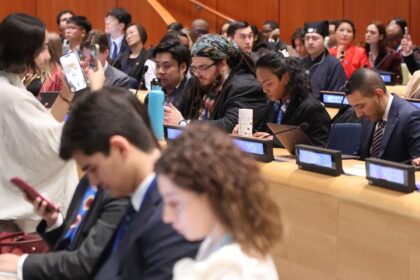



The United Nations Commission for Social Development concluded its session at UN Headquarters in New York, held from February 2nd to 10th. This marked the commission’s first meeting since the Second World Summit for Social Development in Doha last year. The gathering convened ministers, senior UN officials, civil society representatives, and youth leaders to discuss the crucial step of translating global commitments into coordinated, inclusive, and equitable national policies.
Understanding the Commission for Social Development
The Commission for Social Development serves as the UN’s principal intergovernmental body for social development issues and operates as a functional commission of the Economic and Social Council (ECOSOC). Established in 1946, it has played a significant role in shaping global policy frameworks concerning poverty eradication, employment, and social protection and inclusion. Its work has guided follow-up actions for landmark agreements, including the 1995 Copenhagen Declaration and the recent 2025 Doha Political Declaration.
Historically, the Commission has driven progress in areas such as universal social protection, decent work for all, and international focus on vulnerable groups like persons with disabilities, older persons, youth, and families. Its recommendations have influenced national policies, contributed to the development of social protection floors, and strengthened the connection between social development and the Sustainable Development Goals (SDGs).
The Commission typically convenes annually at UN Headquarters in New York, usually in February.
A Post-Doha Era for Social Policy
This year’s session prioritized the theme of ‘advancing social development and social justice through coordinated, equitable and inclusive policies.’ Discussions centered on concerns that fragmented policymaking hinders progress in poverty eradication, decent work, and social inclusion. General Assembly President Annalena Baerbock emphasized that social development is foundational to peace and a vital investment in stability, stating that ending hunger and poverty is both a moral duty and a security imperative, as deprivation can fuel conflict and instability.
From Commitments to Action: The Doha Declaration’s Impact
Deputy Secretary-General Amina Mohammed highlighted the shift initiated by the Doha Political Declaration, which moves beyond incremental progress towards more ambitious and coordinated action. She noted the strong engagement from over 700 non-governmental organizations (NGOs) registered for the session and urged governments to match this enthusiasm with concrete implementation.
Navigating a Changing World: Policy Coordination in Focus
Throughout the session, speakers underscored the necessity of enhanced policy coherence, urging the alignment of employment strategies with universal social protection, inclusive education and health systems, and just transition measures. Emerging social challenges, including demographic shifts, labor market disruptions, and the social implications of digital transformation and artificial intelligence, were also examined. Speakers acknowledged that while new technologies present risks, they can also accelerate SDG progress if governed inclusively and equitably.
Youth Mental Health Takes Center Stage
Youth perspectives were a significant focus, reflecting the Commission’s commitment to inclusion. The launch of the ‘World Youth Report on Youth Mental Health and Well-being’ shed light on the increasing pressures faced by young people, stemming from poverty, inequality, climate stress, conflict, and digital harms. Youth delegates and advocates shared their experiences, describing how future uncertainty impacts their trust and well-being, and called for preventive, community-based, and youth-responsive strategies.
Key Resolutions Endorsed
The session concluded with Member States endorsing two draft resolutions. The first addresses ‘advancing social development and social justice through coordinated, equitable and inclusive social policies.’ The second focuses on the social dimensions of the New Partnership for Africa’s Development. These resolutions reinforce commitments made at the 1995 Copenhagen Summit and the 2025 Doha Summit, stressing the importance of translating global pledges into concrete national actions. The outcomes of this session will inform future UN processes, including the High-Level Political Forum on Sustainable Development, ECOSOC’s work, and the General Assembly’s review of social development commitments in 2031.