


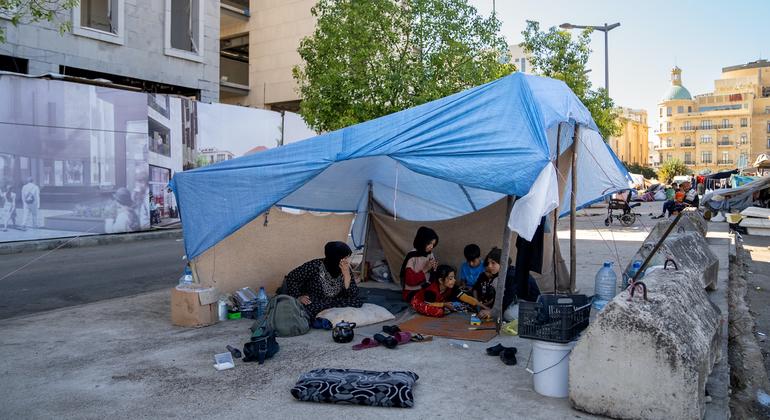
The Thirteenth Session of the World Urban Forum (WUF13) commenced on Sunday, addressing critical questions about making cities safer and more resilient, alongside enhancing housing affordability.
While many countries have shown progress over the last decade, with approximately 160 adopting or developing national urban policies and over two-thirds implementing housing affordability programs, these efforts are deemed insufficient by the UN Human Settlements Programme (UN-Habitat). Globally, more than 1.1 billion people reside in slums or informal settlements, with over 120 million individuals having entered such conditions in the past decade.
Recovery from War and Destruction
Discussions during the opening sessions of the week-long event focused on solutions including expanded social housing programs, improvements to informal settlements, and protection for vulnerable populations. Special attention was directed towards countries undergoing recovery from war and destruction. Bashar Al Sebaai, the mayor of Homs, Syria, highlighted the urgent need for not only ideas and expertise but also financing to restore basic services and infrastructure in his war-torn city. “400,000 returned to the city after the war,” he stated to UN News. “They came back to severely damaged neighbourhoods. Solid waste, infrastructure, electricity…it’s very hard to find solution to all these problems.”
Climate Change and Cities
Millions living in precarious housing are disproportionately affected by floods, heatwaves, and other extreme weather events exacerbated by the man-made climate crisis. The construction sector’s significant contribution to global greenhouse gas emissions was noted, with low-carbon construction, resilient urban planning, and climate-sensitive upgrading of informal settlements on the forum’s agenda. The opening day in Baku was notably marked by heavy rainfall, necessitating urgent measures to drain flooded roads, with local residents observing a recent increase in such intense weather events.
Homelessness: A Crisis Across Nations
Lance Jay Brown, founder of the Consortium for Sustainable Urbanization, pointed out the homelessness crisis in wealthy nations like the United States, stating, “When we have a homeless population of hundreds of thousands of people in the streets in the United States, and we’re considered to be wealthy…In New York, it looks like a crisis right now.” He observed that while the global population has nearly quadrupled in his lifetime, securing affordable housing for low-income communities has become increasingly challenging. Brown expressed hope that the discussions in Baku would lead to practical solutions for the global housing crisis.
UN News is covering the Summit in Baku throughout the week.