

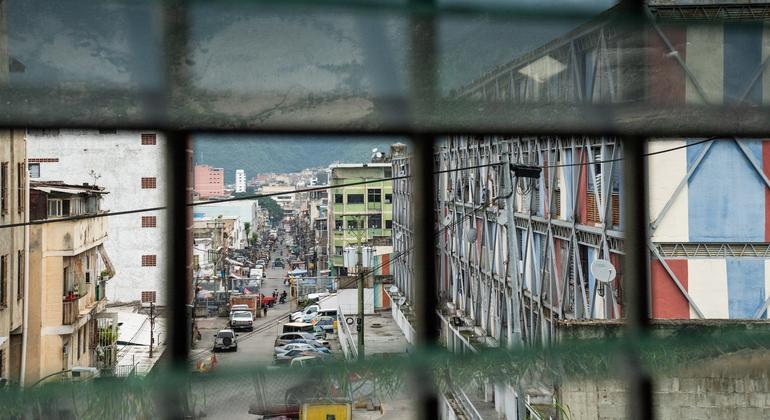
The structures responsible for years of persecution in Venezuela have not been dismantled, and no state policies have been announced to initiate such a process, according to the International Fact-Finding Mission for Venezuela. In a statement released on Wednesday, the mission, established to assess alleged human rights violations in Venezuela since 2014, highlighted that the extensive legal and institutional machinery facilitating gross human rights violations and international crimes remains intact.
Since the assumption of power by Nicolás Maduro on January 3, investigators appointed by the Human Rights Council have documented at least 87 new politically motivated detentions, indicating a continuation of the practice of silencing dissent under the current government. Independent expert María Eloisa Quintero stated, “New instances of human rights violations are a sober reminder that the extensive legal and institutional machinery that has facilitated the commission of gross human rights violations and international crimes remain intact.”
No Signs of Change in Leadership Accountability
Government and military officials previously identified by a UN probe as responsible for crimes against humanity continue to hold their positions. Alex Neve, another expert member of the mission, noted, “There are no signs that the current authorities intend to bring those individuals to justice.” Ms. Quintero emphasized that Venezuela cannot be considered to be on a path to human rights reform unless the repressive apparatus is dismantled.
Prisoner Releases Amidst Ongoing Concerns
While an amnesty law adopted on February 20, aimed at providing clemency to those jailed for political protests or criticism of public figures, was welcomed by the UN commission, concerns remain. Between Maduro’s arrest and early March, international media reports indicated that approximately 621 political prisoners were released. However, a significant number of individuals are still detained for political reasons, and there is apprehension regarding the transparency of the release process.
The Mission pointed out that the amnesty legislation was enacted without inclusive public consultation and lacks essential mechanisms for truth, accountability, and reparation. “It is incumbent on the authorities to provide detailed information on the number and identity of prisoners and those released. We call for the immediate release of all remaining political detainees, including dozens of foreign and dual nationals,” the Mission urged. Investigators also expressed concern over the continued mobilization of armed civilian groups and ongoing harassment of opposition figures and journalists.
Crucial Moment for Victims and Accountability
The mission stressed the importance of international community’s sustained focus on Venezuela to ensure genuine institutional reform and an end to the culture of fear. “This is also a crucial moment for victims,” investigators underscored, referencing the over 8.7 million Venezuelans living abroad. Ms. Quintero added, “Now more than ever it is necessary to advance this investigative work and identify the patterns, actors, institutions and alleged perpetrators associated with these violations.”