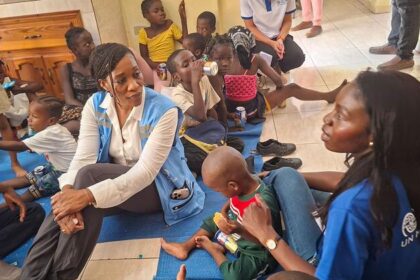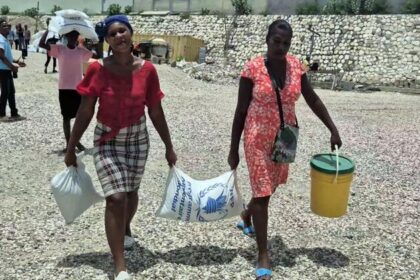


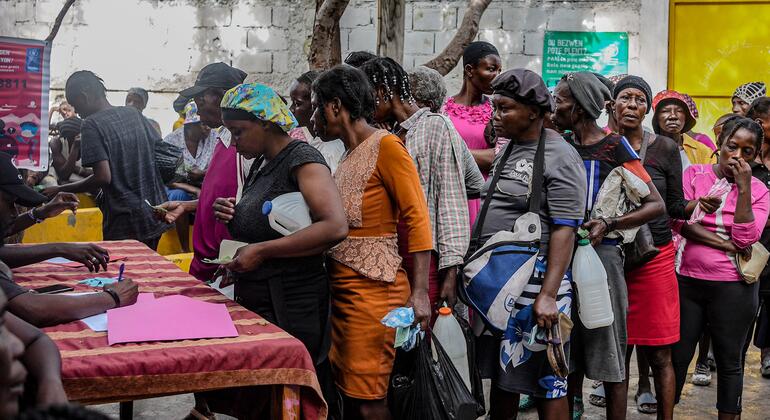
At least 1.4 million people have been forced to flee their homes in Haiti’s capital, Port-au-Prince, due to escalating gang violence. William O’Neill, the UN’s Special Rapporteur on the situation of human rights in Haiti, described the situation as an “unprecedented level of internal displacement.”
Speaking to journalists at the UN Headquarters in New York on Monday, O’Neill stated, “The ongoing human rights crisis is causing immense suffering for the Haitian people, especially the most vulnerable.”
Up to 90 percent of Port-au-Prince and surrounding areas are reportedly controlled by at least 26 gangs, with approximately half of their members being children under 18.
These groups extort the population through violence, engaging in acts such as rape, murder, and kidnapping for ransom. They are also battling weakened Haitian security forces for territorial control.
Shifting Frontlines
O’Neill noted that thousands are “trapped in gang-controlled areas or shifting frontlines,” facing “invisible borders.”
These borders become even more pronounced for young women and girls: “They are discriminated against because they are girls, they live in gang-controlled neighborhoods, and they are poor. One girl told me, ‘I just want to live well and safely because this is my country.'”
Haiti is grappling with a deepening humanitarian crisis exacerbated by ongoing violence, frequent extreme weather events like floods and droughts, and earthquakes. The country also faces political uncertainty, having not had an elected president since the assassination of Jovenel Moïse in 2021. Elections are hoped to take place within this year.
‘A Difficult But Hopeful Moment’
Special Rapporteur O’Neill’s mandate involves monitoring human rights developments in Haiti and assisting the Haitian Government, national human rights institutions, and civil society organizations in ensuring, promoting, and protecting human rights.
He expressed “deep concern” to UN correspondents regarding “corruption, impunity, and the weakness of accountability mechanisms,” adding that the country is facing “a difficult but hopeful moment.”
O’Neill concluded, “If we can help Haiti address insecurity, fight corruption and impunity, and protect human rights, then everyone will prosper.”