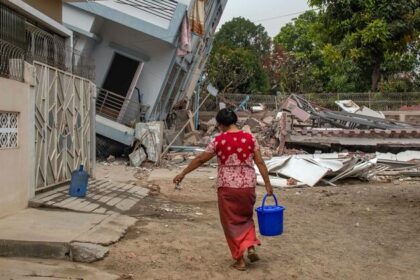


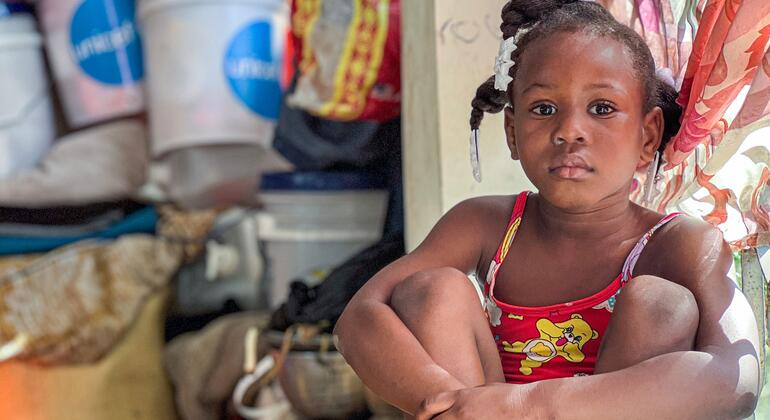
Haiti is facing a severe humanitarian crisis, with armed groups controlling significant parts of the capital, Port-au-Prince. This has led to the displacement of over 1.4 million people and severely restricted access to essential services like food, healthcare, water, and education. Malnutrition rates among children are alarmingly on the rise, and humanitarian efforts are severely hampered by ongoing insecurity and blocked access routes.
According to the UN, approximately six million individuals out of Haiti’s population of 11.4 million require some form of humanitarian assistance in 2026. The UN’s 2026 Humanitarian Response Plan aims to secure $880 million to support 4.2 million of these vulnerable people, covering critical needs such as emergency food, shelter, protection, health, and education.
Without adequate funding, essential life-saving operations, including nutrition support for children and protection services for women and girls, cannot reach everyone in need. UN agencies emphasize that sufficient donor funds are crucial not only for saving lives but also for stabilizing communities fractured by violence and displacement.
The violence has resulted in the displacement of 1.4 million people, representing 12% of the population. This mass displacement has left countless children without access to education, healthcare, or safety.
UN’s Urgent Appeal for Haiti
Nicole Boni Kouassi, the UN’s most senior humanitarian official in Haiti, stressed the critical need for substantial funding. She stated that the high level of funding is essential “to preserve the life and dignity of every Haitian, and to keep hope alive for younger generations.”
In August 2025, UN Secretary-General António Guterres addressed donors, remarking that “Haiti remains shamefully overlooked and woefully underfunded.”
Reduced Essential Services
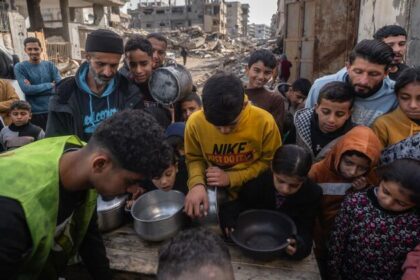
- Significant cuts have been made to food security services, leaving many without regular food assistance amid rising food insecurity nationwide.
- Access to drinking water has been curtailed, with reductions in water distribution and WASH (water, sanitation, and hygiene) services.
- Primary healthcare services, including community-level health support and clinical services, have been scaled back.
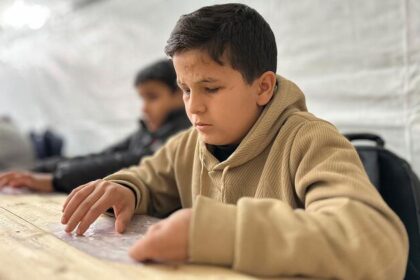
- Humanitarian support for education has been reduced, impacting children already affected by school closures and displacement.
- Protection services have been restricted, affecting programs for gender-based violence, child protection, and support for survivors.
Challenges in Funding Haiti’s Humanitarian Response
Despite the immense needs, Haiti’s humanitarian appeal remains one of the world’s least funded crises. In 2025, the UN sought $908 million but only received 24% of its target. Factors contributing to this shortfall include competing global crises, donor fatigue, and a lack of attention compared to other emergencies like those in Sudan, Ukraine, and Gaza.
Funding shortfalls also jeopardize critical operations, such as humanitarian air services, which are often the sole means of reaching isolated communities. Consequently, aid agencies are forced to prioritize the most urgent cases, leaving many in need without assistance.
Regional and International Consequences of Underfunding
Failing to adequately fund Haiti’s humanitarian response poses a risk of broader instability extending beyond its borders. The UN’s International Organization for Migration (IOM) has warned that unchecked violence, mass displacement, and a lack of basic services could fuel irregular migration, increase pressure on neighboring countries, and undermine regional economic and security cooperation.
Prolonged instability also heightens the likelihood of secondary crises, such as public health emergencies and cross-border crime, with ripple effects across the Caribbean and the Americas. In this context, donor engagement is viewed as an investment in regional resilience.
The Path Forward: Haiti’s 2026 Humanitarian Response Plan
In late 2025, the UN launched Haiti’s 2026 Humanitarian Response Plan, urging governments and partners to increase their commitments to preserve life and dignity amid the ongoing violence and deprivation. If funding and access improve, aid agencies aim to expand food support, restore basic services, enhance protection for vulnerable groups, and foster more resilient pathways toward long-term recovery.
However, without increased financial backing and security enhancements, millions of Haitians face increasingly dire conditions, and humanitarian needs are expected to intensify. As of early February, the 2026 appeal was funded at less than 4%.