

Yemen’s Special Envoy Hans Grundberg informed the 15-member Council that despite the continuation of a truce signed between Houthi rebels and the government in 2022, the conflict remains unresolved, with the Yemeni people bearing the cost of this uncertainty. “What we hear from Yemenis is that entrenched frontlines across the country are depleting resources, deepening fragmentation, and accelerating the militarization of society – even forcing students and teachers to join armed groups to survive economically,” Grundberg stated. “As long as the conflict in Yemen is not resolved, the risk of further instability continues, far beyond the country itself, should regional tensions reignite.” He emphasized that parties must utilize this window of regional de-escalation to revitalize a political process capable of bringing a sustainable end to the conflict in Yemen.
Call for Release of Detained UN Staff
The Special Envoy reiterated his call for the release of 73 UN personnel, mostly arbitrarily detained by Houthi militants since 2024. Grundberg highlighted the UN Secretary-General’s recent statement, which underscored that these detentions violate international law, cause profound suffering to families, and impede the UN’s ability to assist millions in need. He noted the Security Council’s condemnation of the detentions earlier this month and its demand for the unconditional, safe, and immediate release of those held. “The United Nations will continue to do everything it can to secure their release,” Grundberg affirmed, urging the Security Council to sustain its efforts “until our colleagues are free.”
UN Aid Chief: Every Funding Cut Has a Human Cost
UN humanitarian chief Tom Fletcher echoed these calls, drawing attention to the deteriorating humanitarian situation and stressing that acute hunger will continue to rise, leading to loss of life if urgent action is not taken. A recent analysis by a leading UN-backed global food security platform revealed that approximately half the population in government-controlled areas of Yemen, or five million people, face high levels of acute food insecurity. The crisis is projected to deepen if international aid cuts persist. Fletcher told the Council, “The hunger crisis is not just empty plates; it is stolen lives and futures.” He pointed out that over 2.2 million children under five are acutely malnourished, with many facing lifelong consequences without sustained support. “Needs are increasing, but support is decreasing. Every funding cut has a human cost: a missed meal, untreated malnutrition, a community deprived of aid,” stated Fletcher, head of the UN humanitarian agency OCHA.
Three Demands for the Security Council
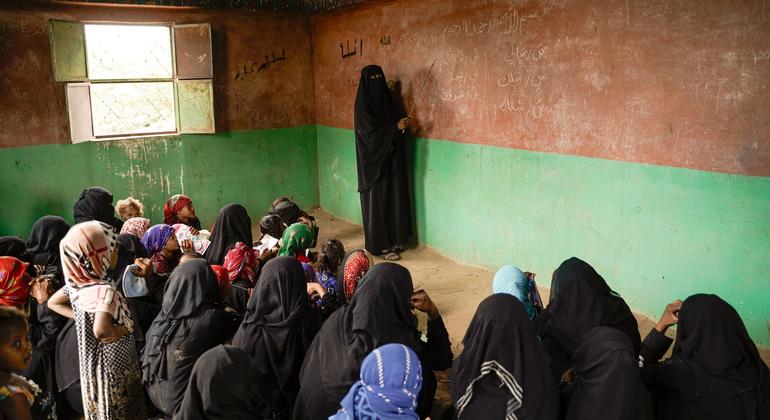
Fletcher reported that OCHA’s crisis response director is currently in Yemen, receiving direct information from communities where families are trapped in repeated displacements, children are out of school, diseases are spreading, women and girls face violence and deprivation, and livelihoods are fragmented due to conflict, floods, and drought. “Local partners are stepping up, but they cannot do more without sustained funding,” he said. Fletcher presented three demands to the Council: ensure the release of detained colleagues, provide funds for the response (as the humanitarian appeal is less than 15% funded, forcing OCHA to scale down operations and leave people behind), and support peace efforts. “Humanitarian aid can mitigate, but only with great difficulty. It cannot end this crisis. Aid can keep people alive. It cannot give Yemenis the future they deserve. Only a political solution, owned by the people of Yemen and supported by this Council, can do that,” Fletcher concluded.