

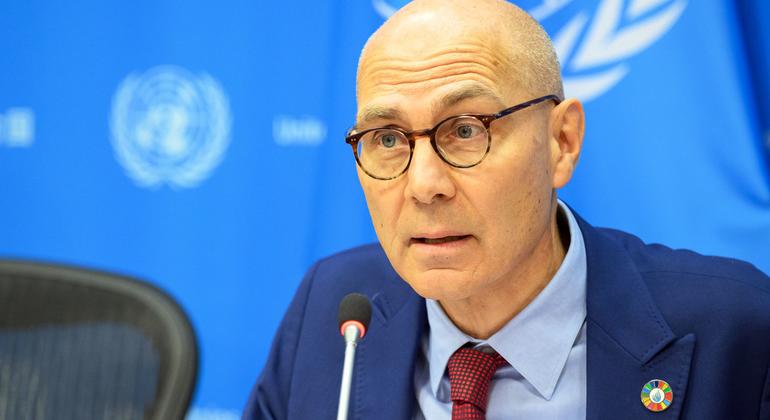
The United Nations High Commissioner for Human Rights, Mr. Türk, has warned that the situation in the Democratic People’s Republic of Korea (DPRK) constitutes a ‘human rights crisis’ that the international community must address accordingly. His office, OHCHR, continues to document severe human rights violations in the country, some of which may be classified as crimes against humanity.
Concerns Over Military Spending
Mr. Türk expressed significant concern over the DPRK’s extreme prioritization of security and military investments, which he stated comes at the expense of essential social services and sustainable development. He emphasized the need for comprehensive accountability, including non-judicial measures, for the long-standing grave violations that have affected the nation for decades.
Truth and Justice Efforts
During a press conference in Seoul, Republic of Korea, Mr. Türk shared accounts from individuals who have escaped the DPRK. These escapees are striving to build new lives in South Korea while enduring daily anxieties and longing for their families left behind.
The Human Rights Office is actively engaged in preserving and analyzing information crucial for any future efforts aimed at establishing truth, justice, and accountability. The UN Human Rights Office in Seoul is also dedicated to ensuring that the suffering of victims and their families is not forgotten, utilizing methods such as memorialization and truth-telling initiatives.
Encouraging Engagement
Despite the challenges, Mr. Türk noted that the UN is seeking engagement with DPRK officials whenever opportunities arise, citing discussions on the rights of people with disabilities in the context of their participation in UN human rights treaty body reviews in Geneva. He described these as small but significant steps toward fostering dialogue and building confidence.
Furthermore, Mr. Türk pointed to the upcoming arrival of a women’s football team from the DPRK as an encouraging development. However, he stressed the urgent need for measures to facilitate the exchange of letters, resume family contacts and reunions, and clarify the whereabouts and fate of individuals who have disappeared or been abducted.