

United Nations Secretary-General António Guterres has issued a stark warning, stating that escalating wars and deepening geopolitical divisions are causing a “dangerous erosion” of the global order. Speaking at a high-level Security Council debate convened by China, Guterres emphasized that the UN Charter, designed as humanity’s “survival guide,” is under immense pressure.
UN Charter Under Strain
Guterres highlighted that the world is currently experiencing the highest number of conflicts since the UN’s inception. He addressed ministers and diplomats, noting that the Charter’s core principles, including sovereignty, territorial integrity, and the prohibition of the use of force, are increasingly being “challenged or ignored.” He lamented that “violations go unanswered” and “impunity is spreading.”
The UN Charter, signed in 1945, serves as the foundational document for the United Nations and the post-World War II international system. It outlines principles for state relations and established the UN’s six principal organs. Despite amendments, Guterres suggested that global institutions must evolve to reflect contemporary geopolitical realities, not those of 1945.
Interconnected Global Crises
The Secretary-General pointed to a confluence of global crises that are testing the international system. These include growing geopolitical mistrust, escalating military spending, advancements in artificial intelligence and autonomous weapons, human rights violations, widening inequality, and the worsening climate crisis. Guterres stressed that these seven challenges are interconnected and are straining the Charter itself.
Security Council Inaction and Global Conflicts
Guterres also criticized the Security Council’s divisions, which he believes undermine its effectiveness in responding to global crises. “Too often, this Council fails to act with unity and purpose,” he stated, adding that divisions within the Council have repercussions extending far beyond the chamber.
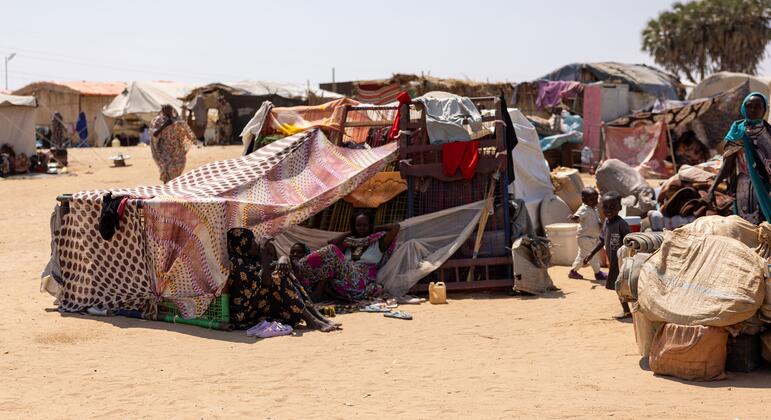
He specifically referenced ongoing conflicts in Ukraine, the Middle East, and Sudan, urging for de-escalation. Guterres expressed deep concern over potential escalations, particularly regarding strikes on Ukrainian defense targets and Israel’s announced expansion of operations in Lebanon. He emphasized the imperative to avoid further escalation in conflicts that have already exacted a devastating toll on civilians.
Global Arms Race and Call for Reform
Beyond active conflicts, Guterres warned of a destabilizing global arms race, occurring concurrently with reductions in development and humanitarian aid. He noted that global military spending has reached record levels while resources for essential needs are being slashed.
In his address, Guterres called for a restoration of confidence in multilateral institutions through diplomacy, accountability, and reform. He urged Member States to increase investment in conflict prevention and mediation, uphold international law “without selectivity” or “double standards,” and reform global institutions to better represent current geopolitical landscapes. He specifically cited the lack of permanent African representation on the Security Council as a “historic injustice” impacting its legitimacy.
Concluding his remarks, Guterres made a direct appeal to Council members to move beyond rhetoric and take collective action to safeguard international peace and security, stating, “The world is watching – and demanding action, not just words.”