

Ahead of World Migratory Bird Day on May 9, UN News spoke with Catherine Quayle, Communications Director at the Wild Bird Fund in New York. This year’s theme, ‘Every Bird Counts, Your Observations Matter,’ emphasizes the critical need to protect migratory birds and their essential ecosystems.
Quayle highlighted that even in urban environments, migratory birds are part of daily life. “If you live anywhere with trees and a bit of green, even in the middle of Manhattan, you can hear birds when you wake up. Their songs change over the year. You don’t even need to leave home to witness the ecological diversity outside your window,” she explained. Birds often migrate at night, and Quayle suggests looking up in the early morning or evening to spot them without leaving home.
New York City lies on the Atlantic Flyway, a major bird migration route. Quayle noted that while billions of birds may be in the air over the US during peak migration, as many as a million can pass over New York City in a single night, largely unnoticed due to the timing.
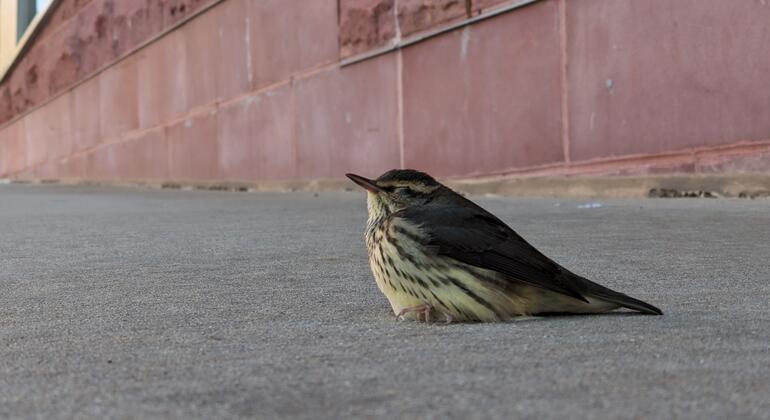
Habitat loss is a significant challenge for migrating birds, disrupting their access to crucial food sources. Quayle stated, “If that habitat has been taken down, built over, paved, or logged, many more birds will not survive when they arrive at their wintering or breeding grounds.” Another major threat in New York City is window collisions, exacerbated by modern architecture’s extensive use of glass. “Highly glazed surfaces and all-glass windows are very popular, and that is just very dangerous for birds,” she added.
Skyscrapers, with their bright lights attracting birds and reflective glass surfaces, pose a particular risk. However, residential homes also contribute significantly to collisions, often due to reflections near feeders or trees. Quayle mentioned that while fewer birds are affected individually in homes, the cumulative impact is substantial.
To aid bird conservation, Quayle recommended simple daily actions. “You can keep your outdoor lights off at night so the skies stay darker and birds aren’t attracted to the light,” she advised. Planting native species in gardens is another effective way to support local insect and bird populations.
Quayle shared a personal rescue story involving a scarlet tanager that narrowly escaped being hit by a car after colliding with a glass skybridge. She emphasized the importance of these interventions, noting, “It would certainly have been hit if I hadn’t picked it up.”
For those new to birdwatching, Quayle suggested starting by simply noticing the birds around them. “As you pay attention, your curiosity will grow. You might pick up binoculars or join a bird walk,” she encouraged. She recalled her own transformative experience 25 years ago in Central Park, which ignited a lifelong passion for birdwatching.