


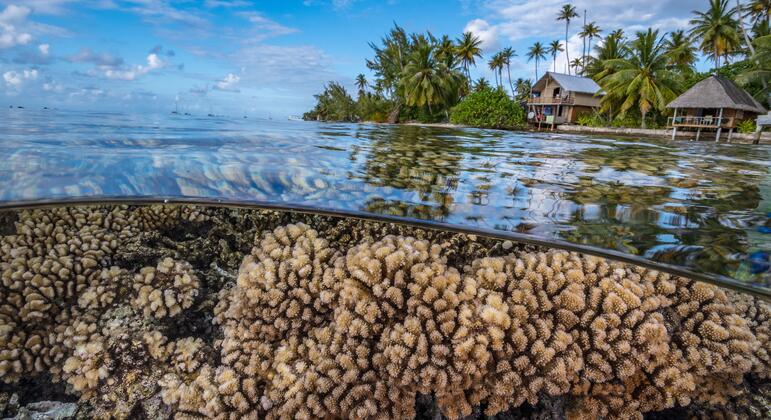
Oceans Crucial for Global Well-being, Yet Facing Unprecedented Threats
Oceans, vital to planetary health and human future, are under immense pressure from numerous threats jeopardizing their future well-being, according to a comprehensive assessment.
Nearly five years of work by approximately 550 experts from 86 nations culminated in a 1,600-page evaluation detailing the challenges facing the oceans. This scientific guide, titled the World Ocean Assessment, provides critical information for humanity to protect and sustain the planet.
Oceans Impact Everyone, Everywhere
- The ocean shapes daily life even for those living far from coastlines.
- It stabilizes the climate by absorbing a significant portion of the planet’s excess heat and harmful greenhouse gases. Without its cooling effect, more extreme weather events would occur, threatening food systems, supply chains, and insurance markets.
- The ocean provides essential food supplies. When fish stocks collapse or supply chains are disrupted by climate impacts or illegal fishing, prices for not only seafood but also many other foods relying on global trade and coastal economies will rise.
- The ocean contributes significantly to mental and physical health benefits, provides crucial medicinal compounds, and generates a substantial part of the oxygen we breathe.
- It generates trillions of dollars in value, supporting global trade, tourism, and employment.
Oceans Under Intensifying Pressure
Human activities are reshaping marine ecosystems. With the global population reaching 8.2 billion in 2024, 37% of people live within 100 km of a coast.
This concentration has inevitably intensified human and economic activities in vulnerable coastal areas, leading to increased resource extraction, infrastructure expansion, waste discharge, and habitat degradation.
Simultaneously, offshore developments are escalating with wind farms, deep-sea oil infrastructure, and expanding seabed cables and pipelines altering habitats further from the coast.
Climate Change Transforms Conditions
Data on ocean warming and sea-level rise paint a stark picture.
- The rate of sea-level rise, driven by melting glaciers and thermal expansion of water, has more than doubled from 1.9 mm/year pre-2015 to 4.3 mm/year in 2023.
- Arctic temperatures are rising four times faster than the global average.
- Hypoxic (or dead) zones, where oxygen levels are too low for most marine life to survive, now cover 4.5 million km².
- 16% of the total increase in ocean temperatures since 1955 occurred after 2018.
Biodiversity Declines in Nearly All Marine Habitats
Marine life is under severe strain, reflected in the approximately 80% decline in coral reefs in the Caribbean since the 1970s. Up to 90% of global coral reefs could disappear if warming exceeds 1.5°C above pre-industrial levels.
Critical coastal ecosystems like mangroves and seagrasses continue to shrink.
Species from plankton to marine mammals are shifting towards the poles as temperatures rise, while non-native species spread more easily under changing environmental conditions.
Pollution is Pervasive and Increasing
Marine pollution is intensifying.
An estimated 52 million tons of plastic waste enter the ocean annually, contributing to an estimated 24 trillion microplastic particles that affect over 4,000 marine species.
Chemical pollution is also rising, with over 4,000 pharmaceutical and personal care compounds detected in seawater.
On a positive note, some legacy pollutants like mercury have decreased in a few regions.
Ocean Food Systems Under Threat
Marine food systems are a vital source of nutrition and livelihoods, providing 20% of the animal protein consumed by humans.
Mariculture continues to expand, becoming a $90 billion global industry. Additionally, 121 million people participate in marine recreational fishing, contributing to local economies and well-being.
However, the stability of these systems is increasingly at risk:
- In 2021, 37% of fish stocks were overfished.
- Illegal, unreported, and unregulated (IUU) fishing generates an estimated $8-17 billion in illicit revenue annually, removing an estimated 8-14 million tons of fish.
- Disease outbreaks, pollution, and climate stress continue to challenge the long-term sustainability of mariculture and fisheries.
Ocean Economy is Vast but Not Yet Sustainable
The ocean economy is valued at $1.5 trillion annually and is projected to exceed $3 trillion by 2030.
Coastal and marine tourism provides employment for 174 million people.
Rising sea levels are already threatening the tourism industry in places like the Caribbean.
Studies are underway to understand the ongoing impacts and sustainability of oil and gas production at sea, and the shipping sector, which transports over 80% of global trade and contributes to global greenhouse gas emissions.
Governance and Knowledge Gaps Remain
International cooperation on ocean governance is gaining momentum, but 57 global agreements related to ocean protection result in a fragmented approach.
Achieving a sustainable ocean economy requires equitable and distinct inclusion of Indigenous peoples’ knowledge and traditional practices. Without these, ocean health, community well-being, and sustainable, equitable development will be harder to attain.
As of 2025, only 27% of the seabed has been mapped, and deep-sea ecosystems, biological processes, and cumulative impacts remain insufficiently understood, highlighting significant gaps in ocean knowledge.
Solutions Exist, but Systemic Change is Needed
Despite mounting pressures, solutions are available, including nature-based approaches, emission reductions, and expanded marine protected areas.
However, even the full restoration of ocean ecosystems would only account for about 2% of global climate mitigation targets, underscoring the need for systemic change.
The next decade is decisive: without rapid, coordinated global action, ocean health will continue to decline, threatening climate stability, biodiversity resilience, food security, livelihoods, and the well-being of billions.