

Escalating conflicts in the Middle East are intensifying pressure and instability on Afghanistan’s already fragile economy. Georgette Gagnon, an official with the UN Assistance Mission in Afghanistan (UNAMA), highlighted the surge in commodity prices while briefing the Security Council ahead of the expected renewal of the UN mission’s mandate later this month.
Gagnon noted that the trade route through Iran is becoming increasingly uncertain due to ongoing hostilities, with the closure of the Pakistan border adding further strain. She emphasized that the country’s isolation from the international community impedes solutions to issues such as economic self-sufficiency, security cooperation, counter-terrorism commitments, human rights concerns, and the ongoing humanitarian crisis. She warned that failure to address these problems could render Afghanistan a source of regional and global instability through migration, terrorism, and narcotics.
Border Clashes and Humanitarian Aid
Unresolved border disputes between Afghanistan and Pakistan have led to active clashes along their shared frontier, including airstrikes on Afghan cities. Gagnon urged an immediate cessation of hostilities to ensure the unimpeded flow of humanitarian aid, warning of “punitive humanitarian and economic costs.” She added, “There is still more that needs to be done for the de facto authorities to demonstrate to the world that they are serious about their counter-terrorism commitments.”
Deepening Humanitarian Crisis and Aid Shortfalls
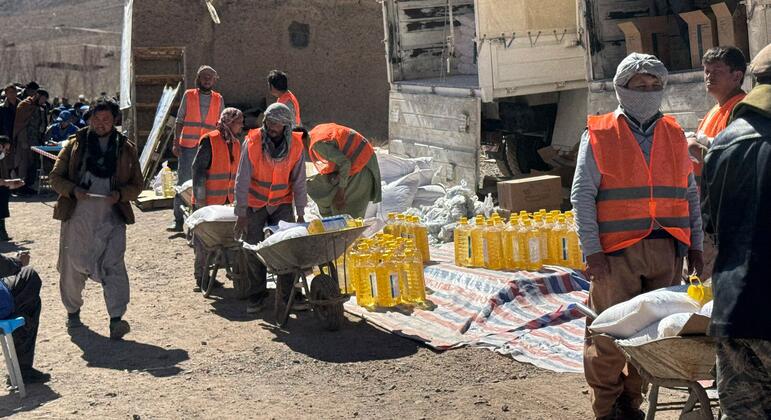
Afghanistan has seen the return of over five million Afghans from neighboring countries since September 2023, with no significant reduction in international aid and no apparent social collapse. Gagnon stated that the humanitarian crisis is being worsened by substantial funding cuts, increased needs due to large-scale refugee returns, and policies from the de facto authorities that prioritize ideological rigidity over welfare. Years of economic decline and recurrent climate shocks have eroded families’ coping capacities, leading to new waves of displacement. Existing restrictions on women and girls further compound these challenges, with the exclusion of women from the workforce depleting the country’s vital human capital in the medium to long term.
Humanitarian partners aim to reach 17.5 million Afghans with a funding appeal of $1.71 billion, which is currently only 10% funded. A six-month ban on female UN staff is hindering aid delivery and access to Afghan women. Gagnon called on the de facto authorities to lift these restrictions and allow UN national female staff to return to their offices.
Grave Concerns from Security Council Members
Several Council members expressed deep concerns about the situation of women and girls in Afghanistan, their rights, and humanitarian aid in the face of ground realities. The U.S. Ambassador, holding the rotating presidency for March, stated that the “intransigence” of the Taliban in ignoring the needs of the Afghan people since taking power in 2021 necessitates careful consideration by the international community regarding the utility of international aid and engagement in Afghanistan. Afghanistan’s UN Ambassador remarked, “After five years, the status quo in Afghanistan is neither acceptable nor sustainable,” adding that this reality will not bring peace, stability, or prosperity.
Aid Must Never Be Politicized
Iran’s UN Ambassador stated, “Humanitarian aid must never be politicized,” urging donors to provide increased, predictable, and flexible funding for life-saving humanitarian operations. Gagnon concluded by reminding the Council of a commitment to an Afghanistan that is “at peace with itself and its neighbors, reintegrated into the international system, and fulfilling its international obligations for the benefit of the Afghan people.”