

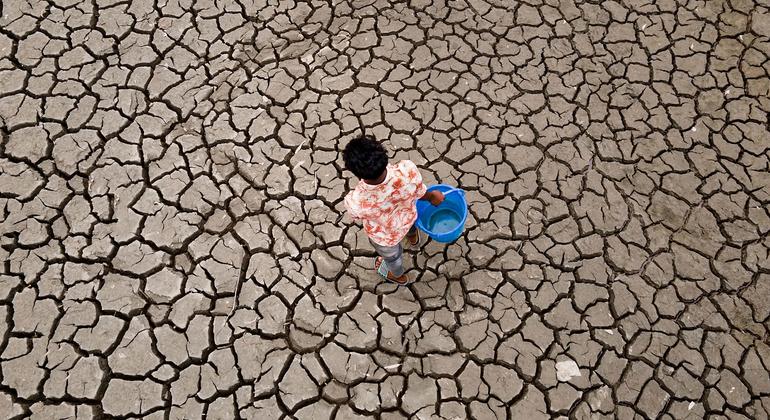
A new report from the UK Met Office, released by the World Meteorological Organization (WMO), indicates a significant likelihood of record-breaking global temperatures in the coming years. The report states there is an 86% chance that at least one year between 2026 and 2030 will surpass 2024 as the hottest year on record. Furthermore, there is a 91% probability that average global temperatures will temporarily exceed 1.5 degrees Celsius above pre-industrial levels within this five-year period.
The 1.5°C threshold is a critical benchmark established by the Paris Agreement. Scientists caution that exceeding this level for extended durations elevates the risks of extreme weather events, ecosystem collapse, food insecurity, and population displacement. However, the report clarifies that temporary breaches do not jeopardize the Paris Agreement’s long-term climate objectives, which are based on warming sustained over decades.
These forecasts highlight the escalating pace of global warming and the growing frequency of extreme heat occurrences. Annual global temperatures from 2026 to 2030 are projected to be between 1.3°C and 1.9°C above the 1850-1900 average. The report also estimates a 75% chance that the average warming across the entire five-year period will exceed 1.5°C.
“There is an El Niño predicted for the end of 2026, which increases the chances of the following year, 2027, being the next record-breaking year,” said Leon Hermanson, the report’s lead author.
Arctic Warming Accelerates
Alarming projections also indicate that the Arctic will continue to warm at a rate significantly faster than the rest of the planet. Over the next five northern hemisphere winters, temperatures in the Arctic are forecast to average 2.8°C above the 1991-2020 baseline, which is more than three-and-a-half times the projected global average increase for the same period.
Scientists also anticipate continued reductions in Arctic sea ice, particularly in the Barents Sea, Bering Sea, and Sea of Okhotsk. The loss of sea ice exacerbates warming by diminishing the Arctic’s capacity to reflect sunlight and disrupts polar ecosystems, weather patterns, and local livelihoods.
Shifting Rainfall Patterns
The report also identified widening shifts in global rainfall patterns, consistent with a warming climate. Between 2026 and 2030, higher-than-average rainfall is expected in regions such as the Sahel, northern Europe, Alaska, and Siberia. Conversely, drier conditions are predicted for the Amazon region and parts of the subtropics. Wetter conditions are also likely at higher northern latitudes during upcoming winter seasons.
These forecasts are designed to assist governments, regional climate centers, and national weather agencies in planning for risks that are evolving from distant projections into the near-term climate outlook.
The report was developed by the UK Met Office, serving as the WMO Lead Centre for Annual to Decadal Climate Prediction.