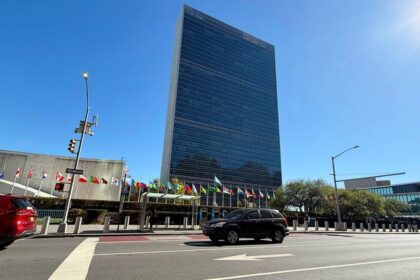


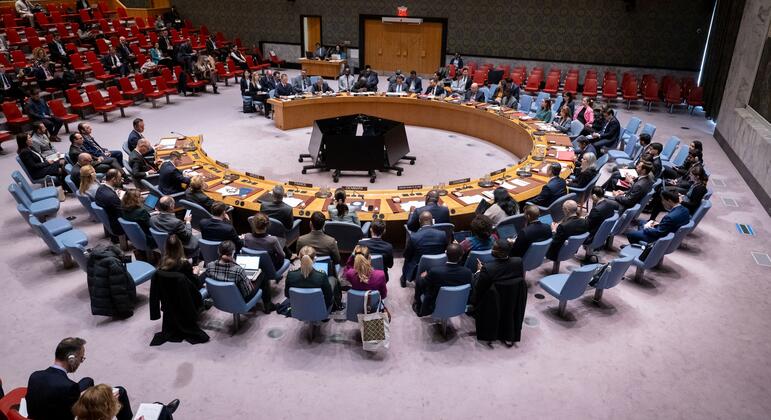
Peter Due, Special Representative and Head of the UN Interim Administration Mission in Kosovo (UNMIK), informed the Security Council on Thursday that while the December 2025 elections saw broad participation, the current momentum is facing challenges. During his first briefing in the chamber, Mr. Due highlighted that the process to elect a new President remains incomplete after a year of political deadlock.
Building Trust on the Ground
Mr. Due, who assumed his role three months ago, emphasized that the return of Kosovo Serb mayors in the north represents a positive development. However, he cautioned about ongoing “challenges,” including administrative gaps and language barriers.
“These are not merely technical issues,” he stated, advocating for continued engagement. UNMIK is concentrating its efforts on community-level dialogue, guided by Resolution 1244 (1999).
“Trust among communities, and between communities and institutions, allows progress, dialogue and cooperation to take root,” Mr. Due stressed. The mission is currently managing a UN-wide liquidity crisis, having reduced encumbered positions by nearly 30 percent. Despite these financial constraints, Mr. Due affirmed the mission’s crucial role in fostering an inclusive culture where every community feels represented in the path forward.
Diverging Perspectives: Belgrade vs. Pristina
The Security Council debate revealed a significant divergence between Serbia and Kosovo regarding the UN’s continued role in Kosovo.
- Serbia: Foreign Minister Marko Ðurić defended UNMIK as a vital “key guarantee of peace” and a protector of Serb rights in Kosovo. He warned against any reduction in the UN presence, stating, “The oppression of a community does not happen overnight… Serbia is not part of the problem. We are part of the solution.”
- Kosovo: Foreign Affairs Minister Glauk Konjufca asserted that UNMIK’s mandate is “completed.” He accused Belgrade of playing a “disruptive role” and attempting to hinder the region’s integration into Euro-Atlantic structures. Konjufca added, “The focus should not be on having the United Nations in Kosova through UNMIK, but on admitting Kosova into the United Nations.”
International Divisions Emerge
Council members expressed differing views on whether the mission has fulfilled its purpose.
The United States representative argued that there is “no justification for treating Kosovo in 2026 as though it were still the Kosovo of 1999.” The US described UNMIK as an “overfunded peacekeeping mission without peacekeepers” that has “reached the end of the road.” In contrast, the European Union emphasized a long-term perspective, urging both parties to commit to EU-facilitated reforms. The EU representative noted that progress toward normalization is an “essential condition” for both Serbia and Kosovo’s aspirations, concluding, “The future of both Serbia and Kosovo is firmly embedded within the European Union.” The session concluded with appeals for both sides to choose “patience over provocation” as the Council considers a potential strategic review of the UNMIK mission, which has been a defining factor in the region’s security for over 25 years.