

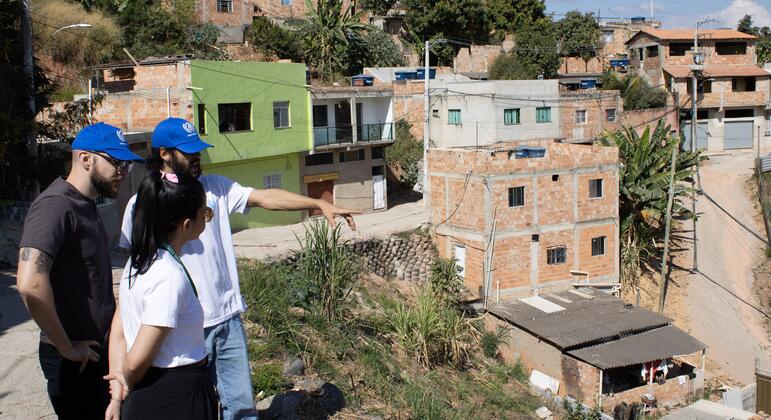
A significant new United Nations report highlights that efforts to address housing crises in areas like favelas and informal settlements are more than isolated successes. The report argues that with the appropriate tools, alleviating the global housing crisis, which affects billions, may be achievable.
Released by UN-Habitat and launched at the 13th World Urban Forum (WUF13) in Baku, Azerbaijan, the report emphasizes a more comprehensive role for the UN system. It aims to assist countries in moving beyond temporary fixes towards sustainable, long-term housing solutions grounded in human rights, climate resilience, and community involvement.
UN as Coordinator, Advocate, and Partner
UN-Habitat asserts that the UN’s role extends beyond merely raising awareness; it involves actively helping governments, cities, and communities develop practical solutions. The report underscores housing’s critical importance to sustainable development, advocating for increased political prioritization through the New Urban Agenda. This framework sets global standards for urban planning and advances the urban dimensions of the Sustainable Development Goals (SDGs).
Anacláudia Rossbach, UN-Habitat Executive Director, stated, “Adequate housing represents one of the most powerful entry points for accelerating sustainable and inclusive development.” The UN’s multifaceted role includes assisting governments in policy development, advocating for housing as a human right, coordinating international cooperation, supporting climate-resilient urban planning, and backing community-led upgrading projects.
The report champions a collaborative approach, emphasizing partnerships with local communities over top-down strategies. This is illustrated through various case studies:
- Assisting governments in developing housing policies.
- Promoting housing as a fundamental human right.
- Coordinating international cooperation efforts.
- Supporting climate-resilient urban planning initiatives.
- Backing community-driven upgrading projects.
Successful Case Studies in Housing Solutions
Thailand: Community-Driven Upgrading
Thailand’s Baan Mankong program is presented as a prime example of participatory housing development. Instead of relocating residents, it provides infrastructure funding and facilitates collective land agreements, enabling communities to enhance their housing in situ. This approach challenges the notion that informal settlements are inherently failures of urban development, though the report notes potential disparities due to reliance on community savings groups.
Jordan: Inclusive Urban Spaces
In Amman, projects have focused on rehabilitating public spaces, such as creating a climate-resilient park near the Al-Hussein refugee camp. These initiatives aim to foster better relations between displaced populations and host communities while improving living conditions for everyone, with particular attention to the needs of women and girls. The report advocates for viewing displaced individuals not as temporary outsiders but as urban residents with rights to services and housing.
Brazil: Upgrading Instead of Eviction
Brazil’s favela programs demonstrate a move away from eviction and slum clearance, policies that often exacerbated poverty and social exclusion. UN-Habitat promotes “in situ upgrading,” which involves improving infrastructure like roads and sanitation without displacing residents. This adaptable approach allows for tailored solutions, from housing improvements in São Paulo to drainage projects in Recife and infrastructure development in Rio de Janeiro’s Complexo do Alemão.
Climate-Resilient Housing and Human Rights
The report places housing at the forefront of the climate crisis, noting that buildings contribute significantly to global greenhouse gas emissions. It stresses the urgent need for climate-resilient housing as a global priority. Examples include community-led projects in Cambodia and innovative governance in the Philippines, where residents co-plan and build their homes. Tanzania’s rapid electrification efforts, which have increased access to cleaner energy, are also highlighted.
Furthermore, the UN frames housing as a human rights issue, urging governments to strengthen protections against forced evictions and recognize diverse land tenure systems. The report concludes that effective housing policy must encompass rental housing, cooperatives, and community-led initiatives, emphasizing that progress hinges on collaboration between governments, international organizations, and residents.