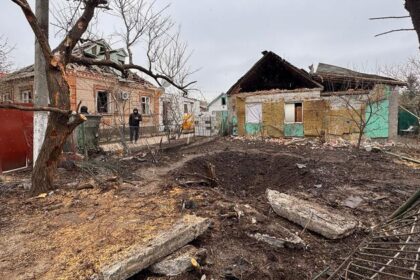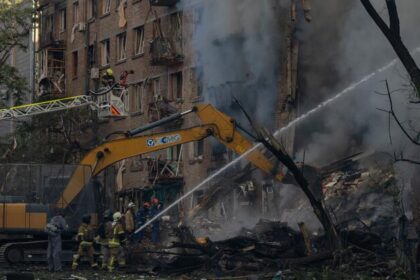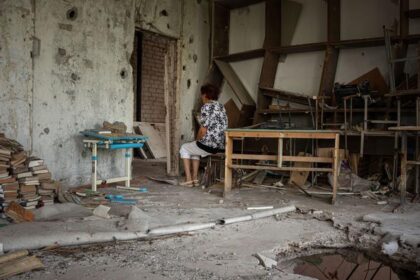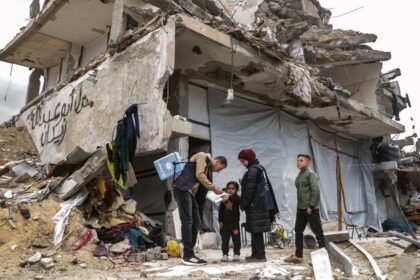


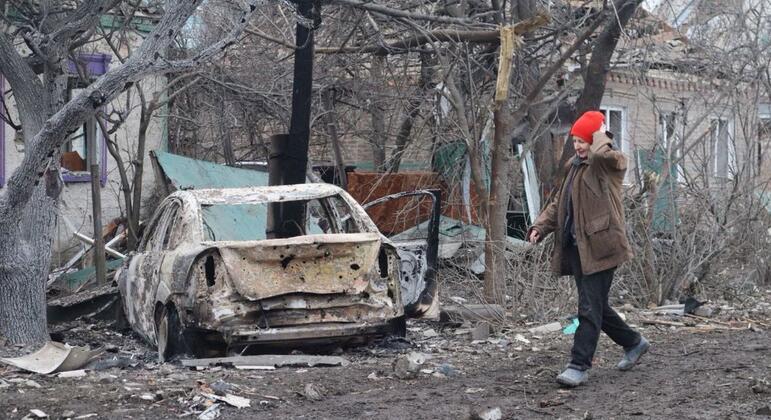
The UN Human Rights Office has issued a stark warning regarding the escalating danger in Ukraine, with Deputy High Commissioner for Human Rights, Nada Al-Nashif, reporting a significant increase in civilian casualties, particularly in frontline regions. In the first two months of the current year, 60 percent of all civilian casualties occurred in these areas, and nearly half of those killed were elderly individuals.
During an update to the Human Rights Council in Geneva, Al-Nashif identified “attacks involving short-range drones” as the primary cause of death and injury in both Ukrainian government-controlled areas and Russian-occupied territories. UN data indicates that in 2025, such attacks resulted in at least 580 civilian deaths and 3,000 injuries. This trend has accelerated in the initial two months of the current year, with 107 civilians killed and 430 injured, marking a near-doubling of the casualty rate. A significant 95 percent of these casualties targeted government-controlled territory.
Frontline Victims and Humanitarian Crisis
Residents in Russian-occupied frontline areas, such as the Oleshky district in Kherson region, describe “frequent drone attacks.” Al-Nashif highlighted that the presence of landmines along roads makes evacuation “extremely difficult and dangerous,” leaving many trapped near the frontline and facing severe humanitarian needs, including food shortages.
The Deputy High Commissioner also noted the intensified attacks by Russian forces on Ukraine’s energy infrastructure this winter. Strikes on systems that heat residential buildings have caused “severe hardship for civilians.” Ukraine has reportedly lost over half its electricity generation capacity, leading to power outages of up to 22 hours a day in some regions. Hundreds of thousands of civilians were left without heating for extended periods, even in sub-zero temperatures. While unconfirmed reports suggest similar attacks on energy facilities in Russian-controlled areas, the UN Children’s Fund (UNICEF) warned that children have endured “the toughest winter” of the war due to disruptions in electricity, heating, and water infrastructure.
UNICEF Programme Specialist Anne Grandjean reported that children lost an estimated 79 to 88 percent of their effective learning time between mid-January and mid-February.
Plight of Captured Soldiers and Human Rights Abuses
Longstanding concerns about the “widespread” ill-treatment of captured soldiers by Russia were also emphasized. Al-Nashif stated that “over 96 percent of the Ukrainian prisoners of war that we interviewed said they were subjected to torture and ill-treatment” during captivity since Russia’s full-scale invasion in February 2022. The UN official urged Russia to “stop this war” and halt extrajudicial executions, torture, ill-treatment, and other violations against prisoners of war and civilian detainees, calling for full compliance with international law.
Ukraine was also called upon to “safeguard prisoners of war from torture and ill-treatment” and to end discrimination against individuals compelled to leave Russian-occupied territory.
International Response and Reactions
Ukraine’s Permanent Representative to the UN in Geneva, Yevhenii Tsymbaliuk, responded by underscoring Russia’s “deliberate strategy to terrorize civilians” in regions like Donetsk, Luhansk, Kherson, Zaporizhzhia, and Crimea. He accused Russia of aiming to suppress dissent and punish those who refuse to comply with its policies.
The Russian delegation dismissed the UN update, urging the Deputy High Commissioner to “stop upholding the Kyiv regime” and alleging a “war on dissenters, bloggers, journalists, enemies of Zelensky.”
Many of the 47 Member States of the UN Human Rights Council also commented. Germany’s delegation expressed being “appalled by Russia’s increased targeting of civilian life,” citing widespread and systematic missile and drone attacks. China’s delegation reiterated its commitment to “promoting talks for peace and advancing political settlement of the Ukraine crisis.”