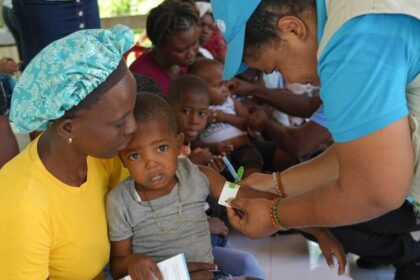


Since the outbreak of war in Sudan in April 2023, nearly 600,000 Sudanese refugees have arrived in Uganda, many undertaking arduous journeys across multiple countries. These individuals, arriving with minimal possessions but carrying heavy memories, are striving to rebuild lives shattered by conflict.
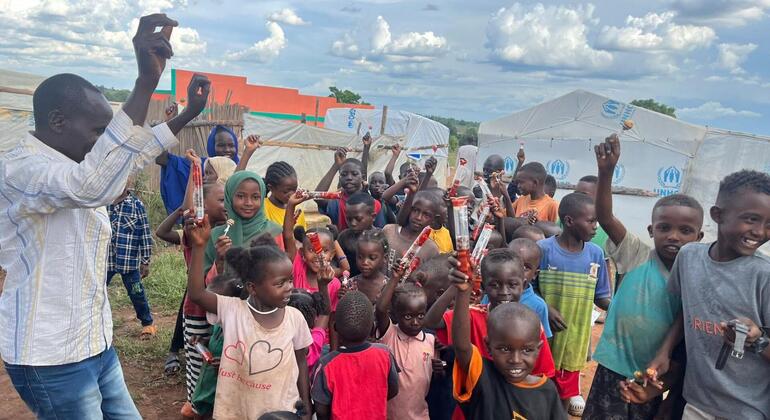
Kriandongo camp, located approximately 275 kilometers from Kampala, serves as a refuge not only for Sudanese fleeing violence but also for those from South Sudan, Burundi, Kenya, the Democratic Republic of Congo, and Rwanda. The surrounding host community also resides in the area. What unites these diverse groups is a shared experience of loss and the fundamental need to start anew.
UN News visited the camp to witness daily life firsthand and to understand the most pressing challenges faced by its residents since their displacement.
From Engineering Halls to Refugee Tents
Hussein Hashim Taiman, a civil engineer with a master’s degree, once held a significant position with the African Union-United Nations Hybrid Operation in Darfur (UNAMID). Today, his reality is vastly different. Residing in a tent, he now leads the Sudanese refugee community in Kriandongo, one of Uganda’s largest refugee settlements.
He fled Omdurman with his children in May 2023, embarking on a perilous journey through South Sudan before reaching Uganda. He describes the experience as fraught with fear, harassment, and abuse. “Here, when you complain, you find that someone else’s misfortune is greater than yours, so you try to forget your own to help ease theirs,” he shared. “We draw strength from each other. Sometimes we sit together as professionals and talk about our past. I am now living in a tent, but this is what war does.”
The situation remains challenging, with aid diminishing and tents, originally intended for short-term use, now serving as long-term shelters for over three years. Healthcare services are strained, education is inconsistent, and even basic necessities like water and food are managed through community efforts.
Hussein warns of the potential long-term impact on an entire generation and appeals to the United Nations and the international community for increased attention to the plight of Sudanese refugees in Uganda.
Food Security: A Matter of Survival
In response to these dire circumstances, community-driven initiatives have emerged. Community kitchens, initially a response to an urgent need, have become a vital lifeline, preventing starvation among refugees in Kriandongo.
Currently, twenty such kitchens operate within the camp, effectively reducing hunger and fostering social cohesion among the Sudanese residents. Mutasim Mohamed Ahmed, originally from Nyala in South Darfur, transitioned from a career in international trade to managing the camp’s community kitchens after arriving in Uganda in 2023.
“These kitchens were set up after the World Food Programme cut food rations,” he explained. “We saw malnutrition among residents. There were deaths and miscarriages because of hunger.” His work has been transformative: “Working in community kitchens taught me to be human. You see people hungry here, and if you don’t have humanity inside you, you can’t feel this. I feel it for my Sudanese people, they are my own flesh and blood.”
‘We Survived to Help Others’
Dr. Widad Makki, a former university professor and director of the Special Education Department in Khartoum State, now resides in Kampala. Despite the distance, she regularly travels to Kriandongo camp, driven by a personal commitment to support its residents.
Having fled her home amidst intense bombardment, she recounts the harrowing experience of moving her children through streets filled with gunfire, smoke, and destruction. “It was difficult to move my children through the gunfire, the smoke, the burning cars and the bodies in the streets,” she told UN News. “I used to ask them to cover their faces so they would not see.”
Through her work with the Al-Malam Darfur for Peace and Development organization, Widad actively supports the community kitchens and provides meals for refugees. “We survived and arrived safely in Uganda, and now we are helping our Sudanese brothers and sisters in the camps,” she stated. Her primary concern remains the protracted nature of the war: “Our biggest fear is that this war will last a long time. There are so many challenges here: education, rent, living costs, no income, no jobs. We dream every day that the war will stop so we can return to Sudan.”
Refugee Doctors Rebuilding Careers
In Kampala, some Sudanese professionals are finding opportunities to rebuild their careers. Dr. Abdul Jabbar Ahmed Adam, an internal medicine specialist, now practices at Gombe Hospital, treating patients from diverse backgrounds.
Having arrived in Uganda in 2023 from the Ibn Sina Gastroenterology Hospital in Khartoum, he notes the welcoming reception. “Uganda received us warmly. The work here is good and there is no discrimination. We haven’t felt like strangers, we feel just as we did in Sudan.” He highlights the contribution of Sudanese medical professionals to Uganda’s healthcare system, noting a shortage of staff. “Uganda has good hospitals, but there is a shortage of staff. That is where Sudanese doctors have contributed. Patients come to us from many different nationalities.” He emphasizes that not all refugees rely solely on aid, pointing to the presence of skilled professionals, traders, and individuals with diverse expertise.
The ‘White Heart’ Hotel: A Symbol of Hope
Ibrahim Zakaria Yahya settled in Biale, near Kriandongo, even before the latest influx of refugees. After leaving South Darfur in 2007 and arriving in Uganda in 2008, he eventually established himself in Biale. He recalls the initial hardships but gradually built a successful business through trading, farming, and property development.
Three years ago, he opened The White Heart hotel, a name chosen to symbolize a call for reconciliation and overcoming the bitterness of war. “I chose that name as an invitation to purify hearts and consciences, to overcome the bitterness Sudanese people have lived through during repeated wars,” he explained. “Anyone who comes here should come with a pure heart. We fled from war, and we need to coexist here so we can one day return home safely.”
Ibrahim expresses gratitude for Uganda’s hospitality, stating, “They welcomed me with open arms. I never felt like a refugee. I am only a refugee on paper, I have the same rights as citizens, and I even own land I was unable to own in Sudan.” Despite finding stability, he longs for peace and the opportunity to return to Sudan with the thousands still in Kriandongo.
For those within the camp, hope remains a crucial anchor. While the future is uncertain, services are limited, and anxiety is prevalent, particularly among the youth, resilience persists. Until the war concludes, life in Kriandongo continues, marked by its simplicity, hardships, and enduring human stories.