

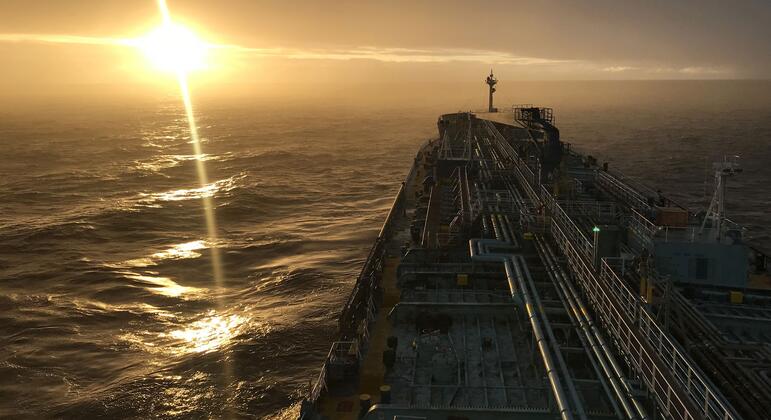
Three sailors have been killed in a recent attack on the Palau-flagged tanker MT Settebello off the coast of Oman. The United States stated that the assault was conducted as part of its operations to enforce maritime security.
The escalating tit-for-tat attacks between the United States and Iran pose a threat as negotiations aimed at ending the conflict have been suspended. The US President has vowed on social media to “hit Iran very hard” and “take complete control of the oil and gas markets.”
A spokesperson for the UN Secretary-General issued a statement conveying the Secretary-General’s “deep concern about the ongoing escalation.” António Guterres urged all parties to return to the full implementation of the ceasefire, warning that any further deterioration could lead to “a full resumption of conflict with unpredictable consequences for the region and the world, particularly for the most vulnerable countries.”
Attacks Deemed ‘Absolutely Unacceptable’
According to the UN’s maritime agency, the latest incident brings the total number of confirmed seafarer deaths since the crisis began on February 28 to 14. The agency has verified 46 attacks on international shipping in and around the Strait of Hormuz during this period.
Arsenio Dominguez, Secretary-General of the International Maritime Organization (IMO), strongly condemned the attacks, calling them “absolutely unacceptable.” Dominguez stated, “I strongly condemn any action from any party that jeopardizes the lives of seafarers and the security of international shipping.”
Increased Risks for Seafarers
Beyond the immediate loss of life, the UN maritime agency warns that thousands of civilian seafarers are facing increased risks. It is estimated that approximately 20,000 seafarers are currently on commercial and offshore vessels in the Gulf region. The IMO notes that many operate under constant security threats and significant psychological pressure, with some crew members being held captive by parties to the conflict.
‘Global Food Security Risk’
While the Strait of Hormuz is often viewed through the lens of energy markets, the consequences of escalating conflict extend far beyond oil. The Director-General of the UN Food and Agriculture Organization (FAO), Qu Dongyu, stated that the closure and disruption of the waterway pose a “global food security risk.”
Qu highlighted that roughly 35% of global crude oil exports, 20% of liquefied natural gas (LNG) exports, 20-30% of global fertilizer exports, and about half of global sulfur exports pass through this narrow maritime corridor. “These flows are vital for global food production,” he emphasized.
At the outset of the crisis, the FAO warned that the most significant danger was not an immediate food shortage, but a “delayed shock” to fertilizer supplies and agricultural production. One hundred days later, these concerns are becoming increasingly apparent. Farmers in Africa, Asia, and Latin America are facing higher production costs and difficult decisions regarding fertilizer use, crop selection, and investment. This situation could translate into weaker harvests and higher food prices in the coming months.
Food Prices Begin to Climb
Signs of this pressure are already emerging. The FAO reported that its cereal price index increased by 2.6% in May compared to April, and is nearly 5% higher than a year ago. Wheat prices saw a monthly increase of 3.4% and are up 7.8% compared to May 2025, while rice prices rose by 2.7%.
The agency has called on governments to keep trade open, avoid export restrictions on agricultural inputs, protect food corridors, and secure alternative logistics routes. It also promotes more efficient fertilizer use, precision agriculture, and alternative crops.
Aid Workers Also Affected
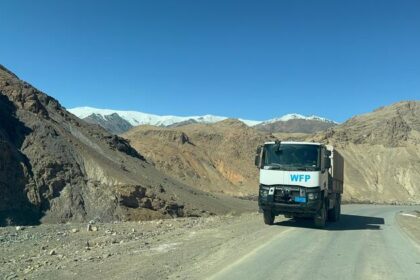
A logistics bulletin from the UN World Food Programme (WFP) dated late May indicates that the crisis has disrupted regional transportation corridors, ports, airspace, border crossings, and fuel supply chains across the Middle East and beyond. The impacts are particularly felt in Afghanistan, Lebanon, the occupied Palestinian territories, Syria, and Yemen, as well as Iran, with disruptions also affecting humanitarian operations in East Africa. Fuel prices have sharply increased in many countries. Since the crisis began, diesel prices have risen by over 62% in Lebanon and 44% in Yemen, while gasoline prices in Pakistan have surged by more than 60%.
A Crisis With Global Ramifications
More than 100 days after the onset of hostilities, disruptions in the strait continue to have economic and humanitarian consequences far beyond the Middle East, impacting commercial shipping routes, aid corridors, farms, food markets, fuel prices, and households worldwide.
On Thursday, Secretary-General Guterres urged all parties to return to the full implementation of the ceasefire and to avoid any further escalation. Guterres called on the US and Iran to “redouble their efforts towards a peaceful, comprehensive, and lasting settlement that advances regional and international peace and security.”