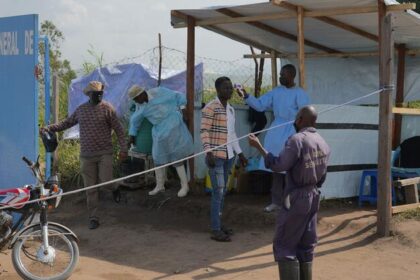


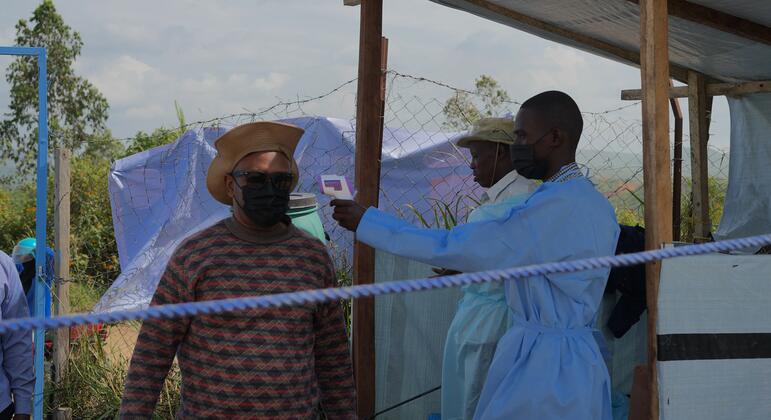
The World Health Organization (WHO) has emphasized the critical role of early diagnosis and community support in combating the rare Bundibugyo strain of the Ebola virus. The UN health agency stated on Friday that the disease spreads through close personal contact, as investigations into potential treatments and vaccines continue.
WHO Technical Officer Anaïs Legand explained to journalists in Geneva, “This is a disease you get when you look after someone, your spouse, your partner, your child, or your mother. You contract it when you want to help someone who has symptoms, and that’s a terrible situation.” Legand stressed the importance of warning families and friends against touching sick relatives.
Mortality Risk Ranges from 30% to 50%
Legand underscored the vital need for prevention and early access to care against this potentially fatal illness. Based on previous outbreaks, she noted that the mortality rate “ranges from 30% to 50%,” adding, “that is a very high proportion.” While acknowledging that “five out of 10 people will likely die,” she stated that more can be done to promote recovery. The WHO expert said, “we can scale up optimized intensive care. We can support communities to recognize symptoms for early diagnosis, so they can get the level of care they need.”
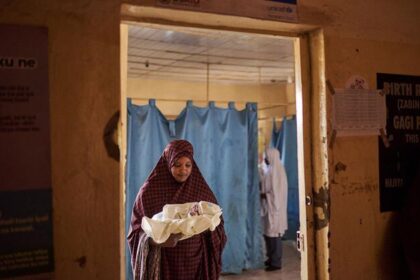
Legand indicated that Ebola outbreaks can only be controlled when communities are “fully engaged” in the response, citing the case of a recently recovered patient discharged from the hospital in the Democratic Republic of Congo (DRC) as an example of full recovery.
Contact Tracing Efforts
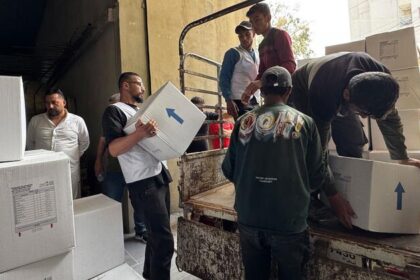
The WHO has convened experts to review potential treatments and vaccines, identifying several products for further evaluation. Legand revealed that for confirmed cases, there are three candidate therapeutics prioritized in clinical trials: the monoclonal antibodies MBP 134 and maftivimab, and the antiviral remdesivir. For prevention, oral antiviral obeldesivir is prioritized in a clinical study as post-exposure prophylaxis for individuals who have been in contact with confirmed cases. The WHO expert added that two candidate vaccines have been identified for evaluation once doses are available. The organization is urgently scaling up “care capacity” in close collaboration with the governments of the DRC and Uganda.
Access Challenges Persist
Legand noted, “This outbreak is happening in a very complex context,” highlighting that 1.2 million people in the affected Ituri province alone require humanitarian assistance, with ongoing conflict and food insecurity hindering interventions. “Our problem on the ground is not necessarily a resource problem,” Legand stated, emphasizing, “it is an access problem.” The airport in Bunia, the capital of Ituri province, remains closed, and although the DRC government has permitted humanitarian flights, operational constraints persist. “I received a call one day from my team reporting that there was no fuel,” the WHO expert said.
Tedros on the Ground
WHO Director-General Tedros Adhanom Ghebreyesus arrived in the DRC on Friday, stating in the capital, Kinshasa, that he was there to show the community “they are not alone.” He urged the numerous armed groups operating in the war-torn eastern region to declare a ceasefire to enable health workers to reach those in need and halt the spread of the disease.
The DRC initially informed the WHO about the outbreak of Bundibugyo virus disease on May 15. As of Thursday, 125 confirmed cases, including 17 deaths, have been reported across the provinces of Ituri, North Kivu, and South Kivu. Additionally, there are over 906 suspected cases, including more than 223 deaths, under investigation as testing capacity increases.
Uganda has recorded 7 confirmed cases and 1 death as of Thursday. The WHO stated that there is no evidence of community transmission in the country at this stage.
No Travel Restrictions Imposed
While advising individuals from affected areas who may have been exposed to Ebola not to travel, the UN health agency does not recommend travel or trade restrictions with the DRC or Uganda based on current information.