

At a bustling urban expo in Baku, interactive digital displays showcased advanced urban planning solutions, including flood simulations, sophisticated subway control systems, and detailed virtual models of entire city districts. This exhibition offered a vision of future urban living, driven by artificial intelligence, integrated digital infrastructure, and real-time data analysis, reflecting the concept many governments now refer to as the “city of the future.”
Smart City Implementation in Practice
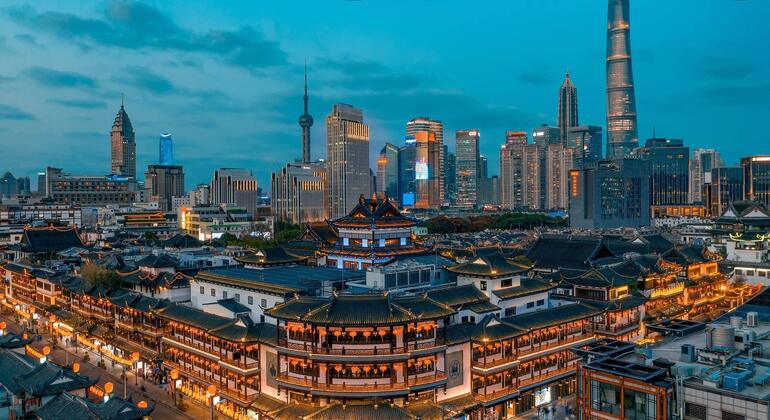
Shanghai stands as a prime example of ambitious smart city development. At the China Pavilion during the thirteenth session of the World Urban Forum (WUF13) in Baku, officials presented their “Unified Management with One Network” platform. This extensive system leverages big data and artificial intelligence to integrate critical urban functions such as transportation, infrastructure management, emergency response, and public services.
Shanghai has also prioritized reducing the digital divide. Its “One-stop Government Service” portal provides residents with online access to over 3,500 public services.
The city’s transportation network further illustrates its forward-thinking approach. The Shanghai Metro, one of the world’s largest, with over 800 kilometers of track and more than 400 stations, utilizes AI-driven monitoring, 5G communications, and predictive weather management technologies to enhance safety and minimize service disruptions.
Several lines are already operating with fully automated, driverless trains. AI systems continuously monitor tunnels for structural integrity, detecting issues like cracks and water leaks, while vast amounts of passenger data are analyzed in real-time to prevent network-wide disruptions.
A notable example is the Lingang Starry Sky Sponge Park. This 54-hectare park combines a celestial-themed landscape with advanced flood control infrastructure. Featuring permeable pavements, underground filtration systems, and intelligent drainage, the park can absorb, purify, and reuse up to 15,000 cubic meters of rainwater daily.
Prioritizing People in Urban Development
Anacláudia Rossbach, Executive Director of UN-Habitat, highlighted that cities are currently facing numerous challenges, including housing shortages, informal settlements, climate impacts, and growing inequality. She emphasized the need to maximize available technologies, as cities are at the forefront of climate change, conflict, and rapid urbanization.
However, Rossbach stressed that technology alone is insufficient. “The most important thing of our work is that smart cities really need to be people-centered,” she stated, underscoring that human rights, inclusion, and equity must be central to digital transformation efforts.
She also pointed out the risks associated with digital exclusion. The COVID-19 pandemic exposed how a lack of connectivity and digital access could cut off residents of informal settlements from essential services, education, and remote work opportunities.
Ensuring Equitable Benefits
While cities increasingly adopt artificial intelligence and digital infrastructure, some researchers urge caution against an overemphasis on technology itself. Gynna Millan, an architect and urban researcher from Colombia, noted that a smart city is often perceived as technology-driven. She warned that technology could either empower citizens or serve as “a tool for control,” depending on its application.
For many cities in the Global South, particularly those with informal settlements lacking basic infrastructure or reliable internet, the critical question is not the availability of advanced technology, but whether it genuinely enhances the quality of daily life.
AI Integration in Urban Governance
Artificial intelligence is transitioning from pilot programs to integral components of daily urban governance. Dmitri Atov, an advisor to the Moscow city government, stated, “AI is no longer just a buzzword. AI is a game changer for cities.”
Yining Zhao, a project officer at the UN International Telecommunication Union (ITU), identified five key technological trends shaping urban environments, citing remarks from Dr. Okan Geray of the Global Initiative on AI and Virtual Worlds:
- ‘World models’: AI systems designed to simulate urban and infrastructure behavior under real-world conditions.
- ‘Agentic AI’: Autonomous digital agents capable of independent planning and action.
- AI in the physical world: The deployment of robots, drones, and intelligent machinery.
- Immersive virtual environments: Digital realms for professional, educational, and collaborative activities.
- ‘Digital twins’: Virtual replicas of cities used for real-time scenario testing.
Moscow currently operates one of the world’s most extensive digital-twin systems. Updated biannually with aerial photography, it incorporates over 9,000 analytical layers to model traffic, infrastructure, and future development plans.
Addressing Underlying Risks
As cities become more interconnected, their vulnerability increases. Azerbaijani authorities report that cybersecurity is becoming a critical aspect of urban development with the expansion of smart technologies. Aytaj Khalafli, representing Azerbaijan’s state cybersecurity agency, emphasized that cyberattacks are not merely technical issues but require cybersecurity to be integrated into urbanization planning from the outset.
Her agency is responsible for protecting critical infrastructure, monitoring threats, and conducting security assessments across government systems. Khalafli cautioned that a successful cyberattack could lead to widespread disruption, noting that transportation systems have already experienced such incidents.
Throughout the discussions in Baku, UN experts consistently highlighted the importance of trust, transparency, and security evolving in tandem with technological innovation. Nicholas You, Executive Director of the Guangzhou Institute for Urban Innovation, remarked, “Trust today is no longer just a luxury – it’s infrastructure.”
Smart Cities: Who Benefits?
UN officials maintain that the future success of smart cities will not be determined by the scale of data centers, the number of sensors, or the speed of AI systems. Dmitry Maryasin of the UN Economic Commission for Europe (UNECE) stated, “‘Smart’ does not always mean introducing digital technologies or even innovation. Sometimes it is about good planning, setting priorities, and understanding how infrastructure is interconnected.”
He cited examples such as urban greening initiatives, the transformation of highways into public spaces, and the promotion of “active mobility,” which prioritizes pedestrians and cyclists. Ultimately, the focus should be less on how technologically advanced cities can become, and more on ensuring they are designed to serve their residents effectively.