

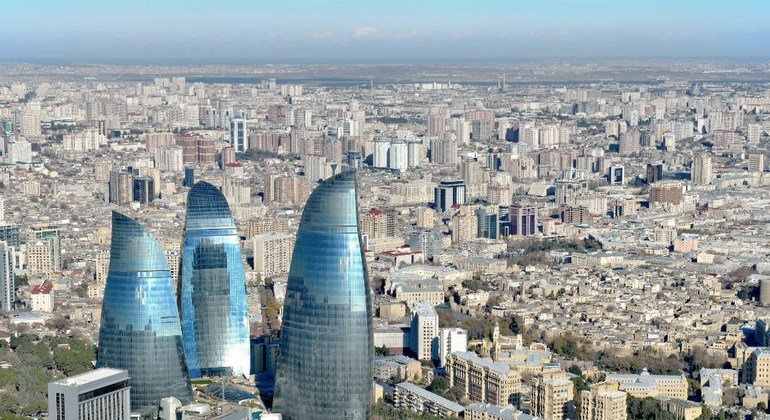
‘Baku Call to Action’ Addresses Global Housing Crisis
The 13th World Urban Forum (WUF13), concluding in Baku, has adopted the ‘Baku Call to Action,’ a roadmap for addressing the global housing crisis. Developed with input from 176 countries, the call outlines a unified approach to housing challenges.
- Holistic Housing Systems: The initiative emphasizes viewing housing as an interconnected system, linking homes with land, infrastructure, transportation, services, and economic prospects, rather than focusing solely on construction.
- Integrated Solutions for Pressures: It calls for tackling interconnected issues such as rising costs, land speculation, displacement, weak governance, and climate impacts through people-centered and integrated strategies.
- Housing and Climate Justice Linked: The call recognizes the inseparable nature of housing and climate justice, highlighting that vulnerable communities disproportionately face environmental risks like floods and extreme heat.
- Scaling Up Resilient Housing: A key focus is on expanding climate-resilient housing solutions, including nature-based approaches, retrofitting existing structures, upgrading informal settlements, and enhancing disaster preparedness.
- From Commitments to Action: The plan stresses the importance of translating commitments into tangible outcomes through strengthened multilevel governance, increased financing, improved data collection, and greater support for community-led initiatives.
Cities and Housing Crucial for 2030 Agenda
UN Deputy Secretary-General Amina Mohammed stated at the WUF13 closing ceremony that achieving the 2030 Agenda is impossible without sustainable urbanization and adequate housing. She urged for the creation of inclusive, resilient cities that provide safe housing and opportunities for all, leaving no one behind.
The Forum saw record participation, with over 57,000 attendees from 176 countries, including more than 3,000 online participants. Organized by UN-Habitat and the Government of Azerbaijan, WUF13 hosted 11 heads of state, 88 ministers, and 130 mayors, featuring 579 events and an Urban Expo that attracted over 74,000 visits. Approximately 865 journalists covered the event.
Mohammed underscored that the housing crisis intersects with major global challenges like poverty, inequality, climate change, and conflict. “Adequate housing leads to clean water and sanitation. Energy to cook a meal, or heat and light a room. It’s about affordability. Safety. Security of tenure,” she said, adding that cities reflect humanity’s priorities.
Cooperation Amidst Global Tensions
Despite a challenging global climate marked by undermining UN Charter principles and declining trust, Mohammed emphasized cooperation as essential for tackling large-scale challenges. She highlighted the critical role of local governments in crisis response and service delivery.
UN-Habitat Executive Director Anacláudia Rossbach described the Forum’s message as powerful and unified, stressing the urgency of action. “We are at a decisive moment for the future of housing. We can no longer afford the luxury of inaction,” she stated, noting that housing systems are strained by inequality, speculation, weak governance, urbanization, displacement, and the climate crisis. Rossbach reiterated that housing is a human right, not merely a commodity.
Financing and Governance Key to Delivery
Discussions at the Forum highlighted the need for practical solutions to match political commitments. Francine Pickup, representing the UN Development Programme (UNDP), identified access to financing as a critical challenge, particularly for smaller cities. She cited a project in Punjab, Pakistan, that combined public subsidies, concessional financing, and private investment to expand housing access for low- and middle-income families.
Pickup also stressed the importance of governance, stating, “Governments need capacities to plan, and then to execute.” UNDP and the European Union have been supporting municipalities in Eastern Partnership countries to develop citizen-centered solutions and attract investment.
Stefan Priesner, UN Resident Coordinator in India, described India’s urban transformation as a significant development journey, with the UN system supporting various aspects from affordable housing to data-driven urban planning.
Baku Passes the Baton for Future Forums
Anar Guliyev, Chairman of Azerbaijan’s State Committee for Urban Planning and Architecture, noted that WUF13 would be remembered for bringing housing back to the global political agenda. The next World Urban Forum, WUF14, is scheduled to be held in Mexico in 2028, with invitations extended for hosting the 2030 Forum.
With the 2030 deadline for the Sustainable Development Goals approaching, Mohammed urged for accelerated progress. “The next decade of the New Urban Agenda cannot look like the last one,” she warned, calling for greater ambition, financing, climate action, and political urgency.