

UN Intensifies Ebola Response in DRC as National Risk Soars
The United Nations World Health Organization (WHO) has elevated the national risk assessment for the Democratic Republic of Congo (DRC) to ‘very high’ due to the escalating Ebola outbreak, while maintaining that the global risk remains ‘low.’ As of Friday, the DRC has confirmed 82 cases and seven deaths. However, the WHO estimates the actual scale of the outbreak is significantly larger, with nearly 750 suspected cases and 177 suspected deaths reported.
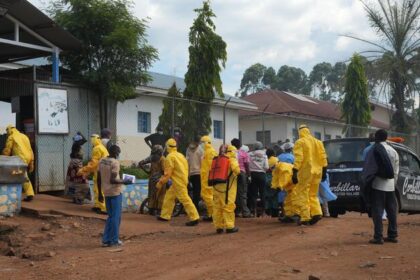
The current outbreak is occurring in a challenging environment characterized by intensified fighting, mass displacement, and deep-seated mistrust of external authorities, exacerbated by rumors and misinformation. In a striking incident on Thursday, an angry mob set fire to a hospital in Ituri province after authorities refused to release the body of a deceased family member due to contamination fears.
UN System Rallies Support for Ebola Outbreak
- WHO designates Ebola risk in DRC as ‘very high,’ with regional risk at ‘high’ and global risk at ‘low.’
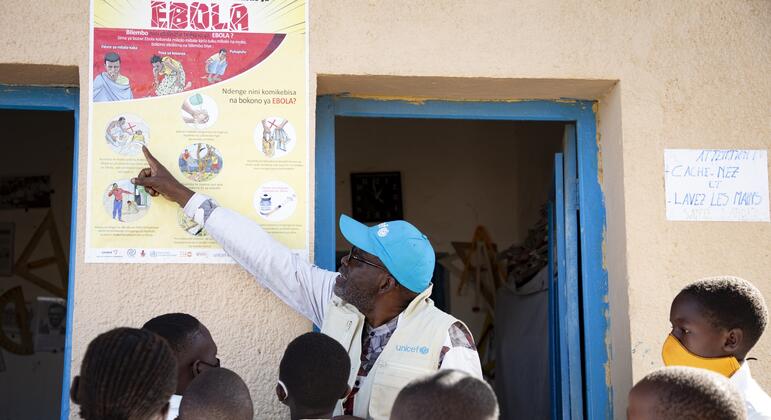
- WHO has deployed 22 international staff, and UNICEF has sent an emergency response team to Bunia.
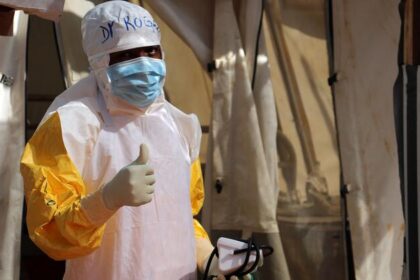
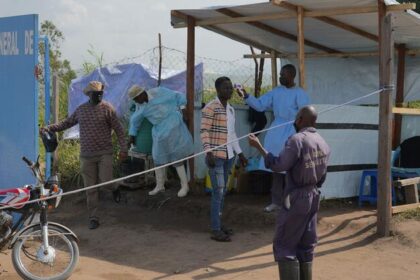
- Health teams are actively engaged in contact tracing, supporting treatment centers, and conducting risk communication and community engagement.
- The UN relief chief has allocated up to $60 million for response efforts in the DRC and neighboring countries, with WHO releasing $3.9 million.
- WHO and the Africa CDC are establishing a continental incident management support team.
- MONUSCO is airlifting nearly 30 tons of essential emergency supplies, including medicines, tents, and protective equipment.
- The UN peacekeeping mission is also operating an air bridge and deploying vehicles to enhance logistical capabilities.
- WHO and partners are preparing for clinical trials of experimental Ebola treatments and potential vaccines targeting the Bundibugyo strain.
- Red Cross volunteers are conducting door-to-door awareness campaigns and promoting safe and dignified burial procedures.
Ebola Cases Surface in Uganda, Americans Transferred
Two Ebola cases, linked to travel from the DRC, have been confirmed in Uganda, including one fatality. Two American nationals, one a doctor and the other a high-risk contact, have been transferred to Europe for treatment and monitoring.
The current outbreak is attributed to the Bundibugyo strain of Ebola, for which no approved vaccines or therapeutics are currently available. This strain has only been recorded in two previous outbreaks: Uganda in 2007 and the DRC in 2012.
Conflict Hinders Response Efforts
The outbreak is concentrated in the Ituri and North Kivu provinces, regions historically affected by armed violence and humanitarian crises. “Across both provinces, around four million people need urgent humanitarian assistance, two million are displaced and ten million face acute hunger,” stated Tedros. Recent escalations in fighting have displaced over 100,000 people, significantly hampering health operations.
Emergency Funding Allocated Amidst Challenges
UN Emergency Relief Coordinator Tom Fletcher announced the allocation of up to $60 million from the Organization’s Central Emergency Response Fund to support the response in the DRC and neighboring countries. “These are tough operating environments for lifesaving work,” Fletcher noted. “We face conflict and high population movement.” He emphasized the critical need for unimpeded access for frontline responders, especially in areas controlled by armed groups, stating, “It is essential that there is no obstruction.”
Misinformation and Distrust Complicate Containment
Aid agencies have highlighted that misinformation and community distrust pose significant threats to containment efforts. Gabriela Arenas of the International Federation of Red Cross and Red Crescent Societies (IFRC) noted that many communities still bear the trauma of past Ebola epidemics. “They remember the fear. They remember the rumours spreading to villages,” she told reporters. “They remember neighbours disappearing into treatment centres.” While some residents are actively seeking information and treatment, others still believe that “Ebola is fabricated.” The IFRC is deploying Red Cross volunteers for door-to-door awareness campaigns and to support safe burial practices. “During an Ebola outbreak, trust and community acceptance can mean the difference between containment and wider transmission,” Arenas stated.
Women Face Disproportionate Risk
Social dynamics are contributing to women being disproportionately affected by the outbreak, as seen in previous Ebola epidemics. “Women are more likely to be infected in the first place,” said Sofia Calltorp, UN Women’s Chief of Humanitarian Action. During the 2018–2019 Ebola outbreak in the DRC, women and girls constituted approximately two-thirds of reported cases. Calltorp explained, “This is because Ebola transmission follows social realities. The virus spreads along the lines of caregiving, domestic labour, frontline health work and burial practices.” Pregnant women face heightened risks, and quarantine measures can potentially increase the incidence of gender-based violence.
Intensified Containment Measures and Research
The WHO has deployed 22 international staff to the field and allocated $3.9 million from its contingency fund, while a continental incident management team is being established in collaboration with the Africa Centres for Disease Control and Prevention. The agency and its partners are also expediting work on experimental vaccines and therapeutics for the Bundibugyo strain. Tedros indicated that WHO’s research advisory group has recommended prioritizing two monoclonal antibodies for clinical trials, alongside testing the antiviral drug obeldesivir for high-risk contacts. He underscored the paramount importance of restoring confidence: “Building trust in the affected communities is critical to a successful response, and is one of our highest priorities.”