

United Nations Secretary-General António Guterres has sharply criticized the international community’s inability to collectively manage safe migration, presenting his latest biennial report on the Global Compact for Safe, Orderly and Regular Migration to Member States. The report reveals that in 2024, an estimated 304 million people, or 3.7 percent of the global population, were migrants. Children constituted between 12 to 14 percent of this total, numbering approximately 37 to 42 million.
Guterres Highlights Crisis in Management, Not Migration Itself
Addressing ambassadors, Guterres stated, “Migration is not a crisis. The crisis is the failure to manage it together.” He emphasized that the Global Compact highlights the impossibility of any single nation managing migration effectively, particularly amidst global challenges like climate change, demographic shifts, and economic transformations. Despite human mobility significantly shaping the world, the Secretary-General observed that the global response has frequently been characterized by “fear, division, and rank opportunism.” He noted that migrants are often instrumentalized for political gain, leading to devastating human consequences, dehumanized in public discourse, and denied their fundamental rights and dignity, despite their substantial contributions to economies and societies.
Declining Safe Pathways and Rising Dangers for Migrants
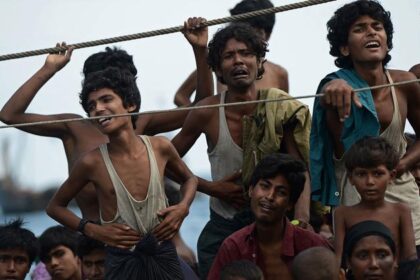
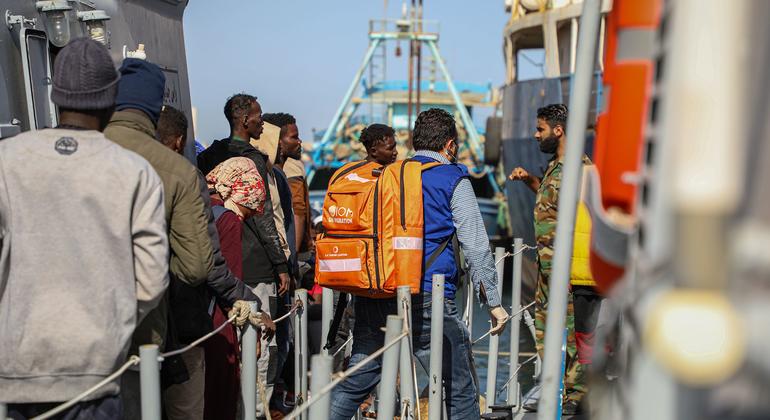
This critical situation unfolds as safe and regular migration channels, such as labor schemes and family reunification, become increasingly restricted. This forces individuals to rely on smugglers and undertake perilous journeys. The report indicates that over 48,000 migrants have died or gone missing in transit since the Compact’s adoption. This figure was released shortly after the UN migration agency (IOM) affirmed that sea crossings, like those in the central Mediterranean, remain among the deadliest routes. “It is a moral outrage that thousands of men, women and children die or go missing every year because no safe alternative exists,” Guterres declared.
Focus on Victims and Prosecution of Criminal Networks
The Secretary-General insisted that migrants are victims, not criminals, and that the true culprits are the “ruthless smuggling and trafficking networks” that exploit desperation and failed cooperation. He called for these networks to be prosecuted and brought to justice. While acknowledging that many countries have made progress, including expanding regular pathways and improving search-and-rescue operations, Guterres stressed that “progress is uneven – and far below what today’s realities demand.” He advocated for migration governance that is rights-based, gender-responsive, child-sensitive, respects national sovereignty, and is grounded in human dignity.
Call for Collective Action and a New Migration Narrative
To achieve effective migration management, Guterres urged countries to work collectively on two fronts: expanding and simplifying clear pathways for regular migration, and ensuring development cooperation in countries of origin that invests in education, skills, and decent job creation. “We must now translate vision into accelerated action for safe, orderly and regular migration,” he stated, calling for enhanced cooperation to save lives, strengthen communities, combat smuggling and trafficking, end child immigration detention, align migrant skills with labor market needs, and counter negative narratives with facts and humanity. The upcoming International Migration Review Forum in May is seen as a crucial opportunity to drive decisive, measurable action. Guterres concluded by asserting that humane and cooperative migration governance is not only possible but essential for a stable, peaceful, and prosperous world, urging nations to “make the Global Compact real – in every region, on every route, for every migrant.”