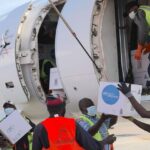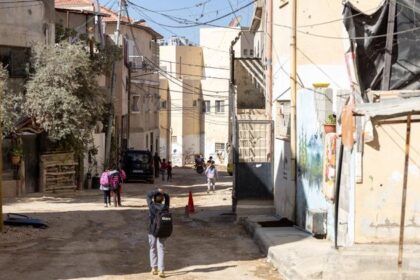


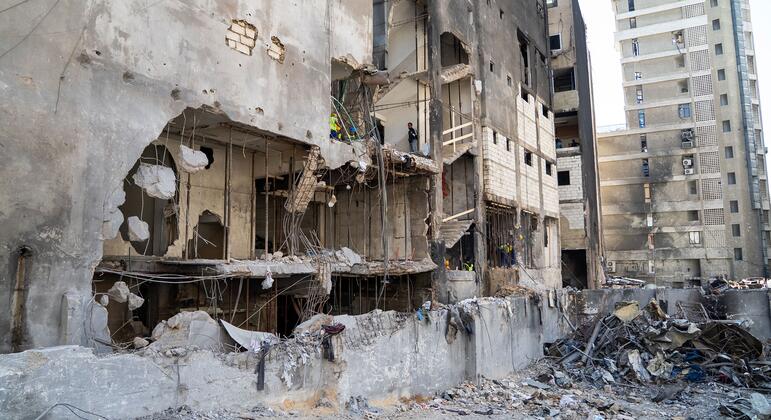
Thousands fled the southern suburbs of the capital, Beirut, on Monday following threats from Israel of new attacks targeting Hezbollah militants. The United Nations Refugee Agency (UNHCR) reported families packing belongings and leaving by car, motorcycle, and on foot. UN spokesperson Stéphane Dujarric called for an end to hostilities by all parties, condemning civilian casualties and emphasizing the importance of a diplomatic resolution.
As the UN Security Council prepared for an emergency session to discuss escalating hostilities, humanitarian organizations reported ongoing evacuations from southern cities including Tyre and Sidon. Lebanon’s Special Coordinator Jeanine Hennis-Plasschaert is continuing efforts to de-escalate tensions and reinforce ceasefire agreements. Plasschaert described southern Lebanon as “ablaze” and Beirut roads as “clogged with people fleeing their homes.” She added, “escalation has its own logic” and “any attempt to control or manage it is a high-stakes gamble, with people who have already lost so much paying the price.”
High Risk, Heavy Toll
The crisis in Lebanon has persisted since March as part of broader regional unrest. According to data from the UN Office for the Coordination of Humanitarian Affairs (OCHA), 3,412 people have lost their lives and over 10,000 have been injured since the hostilities began. At least 88 people were reported killed over the past weekend. Healthcare services have also been impacted by attacks; the World Health Organization (WHO) recorded five attacks in the last three days, resulting in one health worker killed and 19 injured.
A US-mediated ceasefire agreement, which took effect on April 17, has not been fully implemented and has been extended twice between Lebanon and Israel. UN agencies, including the UNHCR, have been supporting the government’s emergency response, providing protection services, emergency cash assistance, and shelter support to hundreds of thousands.
Deepening Humanitarian Emergency
However, the UN World Food Programme (WFP) reported that Lebanon is facing a deepening humanitarian emergency with increased displacement and food insecurity as hostilities enter their third month. Over a million civilians have been displaced, and 1.24 million people across the country are not getting enough to eat. The WFP highlighted the critical importance of humanitarian access, a stable supply chain, and predictable financing.
Rising Food Costs
While food items are available in Lebanon, their costs have surged alongside the escalating conflict. Vegetable prices have increased by 20%, and bread prices by approximately 15%. Although markets in Beirut and other areas remain open, over 80% of markets in southern Lebanon and Nabatiyeh are no longer functional. Most recently, a shipment of 250 metric tons of flour to Lebanon via Jordan is supporting approximately 10,000 families in need.
Hot Meals, Food Parcels, and Emergency Cash
To date, the WFP has delivered hot meals, ready-to-eat food, and food parcels to over 700,000 people. They have also provided support in shelters to more than 215,000 displaced individuals, in host communities to 85,500 people, and in hard-to-reach areas. The UN agency has provided emergency cash assistance to nearly half a million Lebanese through national systems and over 100,000 Syrian refugees. Since the start of the hostilities, 24 humanitarian convoys have been sent to communities facing access restrictions, though more than half of those requested have experienced delays or cancellations. Humanitarian organizations are set to launch a new emergency appeal on Friday to scale up assistance in Lebanon over the next three months.