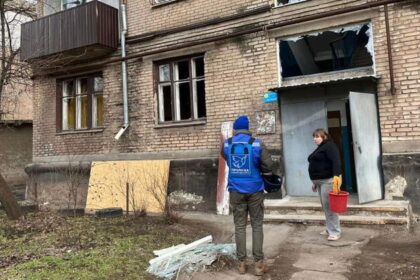


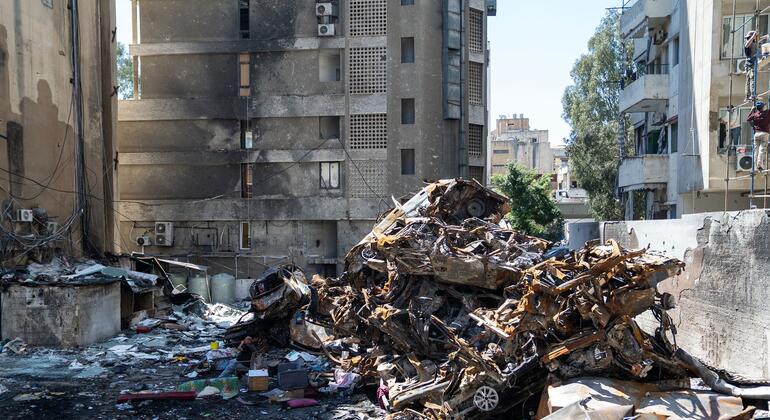
The United Nations peacekeeping force in Lebanon (UNIFIL) reported approximately 670 projectile movements on Wednesday, marking the highest number since hostilities ceased on April 17. The mission also noted increased Israeli military activity, including armored vehicle movements and strikes north of the Litani River. UN Spokesperson Stéphane Dujarric urged all parties to respect the cessation of hostilities and avoid targeting civilians and infrastructure, condemning the loss of civilian lives.
Families Displaced Amid Renewed Violence
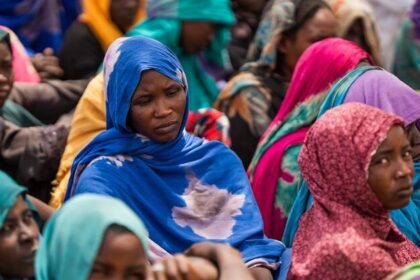
Renewed violence has led to new waves of displacement, with evacuation orders affecting hundreds of thousands south of the Zahrani River in the past 48 hours. Collective shelters in Tyre and Saida are reportedly full. The UN aid coordination office (OCHA) warned that families are again being forced to flee under “intolerable” conditions.
Israel ‘Severs Ties’ with UN Chief Over Sexual Violence Report Inclusion
The UN Spokesperson stated that the door remains open to Israel following its decision to “sever all ties” with the Secretary-General’s office. The Israeli Foreign Ministry announced the move in response to Israel’s reported inclusion on a list of state and non-state actors responsible for sexual violence in conflict in the UN chief’s upcoming annual report to the Security Council. Israel’s UN Ambassador Danny Danon called the inclusion, alongside Hamas militants, a “new low.” The Foreign Ministry described the alleged inclusion as “shameful and absurd” and “yet another example of the UN’s long-standing, institutionalised hostility towards Israel.” UN Spokesperson Stéphane Dujarric emphasized that engagement is “always a better solution than disengagement.”
Haiti Faces Worsening Internal Displacement Crisis
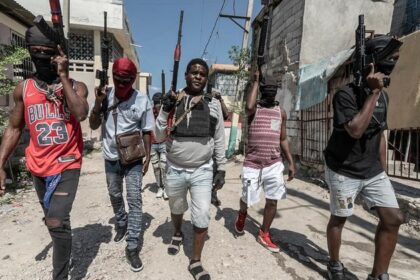
Internal displacement in Haiti continues to rise, with nearly 1.5 million people uprooted nationwide as of May. Since December 2025, violence has displaced nearly 95,000 additional people, including over 300,000 in the Port-au-Prince area due to armed clashes in Cité Soleil. Fighting in the Artibonite department is also contributing to new displacement, with nearly 80 percent of those forced from their homes now living outside the capital. The UN migration agency (IOM) reports that while over 165,000 have returned to their communities, conditions remain too unstable for sustainable reintegration.
Strained Resources and Underfunded Humanitarian Plan
Most displaced families are living with host communities or in precarious conditions, straining limited resources. Urgent needs include food, shelter, healthcare, water, and sanitation. Humanitarian partners continue to provide assistance despite insecurity, access constraints, and funding shortages. The $880 million Humanitarian Response Plan for Haiti is only 23 percent funded.
UN Experts Warn France on Severe Prison Overcrowding
Independent torture prevention experts have urged France to urgently address severe prison overcrowding, warning that conditions in some facilities may constitute inhuman or degrading treatment under international law. The UN Subcommittee on Prevention of Torture concluded its first visit to France, inspecting 18 places of detention from May 17-23. Suzanne Jabbour, head of the delegation, stated that prison overcrowding is a pressing challenge that “directly undermines the fundamental rights of prisoners.”
Calls for Structural Reforms and Follow-Up Mechanisms
The experts called on French authorities to implement sustainable reforms and create a formal mechanism to follow up on recommendations from France’s national prison monitoring body. Jabbour stressed that “recommendations only matter if they lead to action.” The Subcommittee will submit a confidential report with findings and recommendations to France and encourages the government to authorize its publication. Independent rights experts are not UN staff and do not receive salaries.