

The conflict in Ukraine has ushered in a new era of landmine development, with advanced technologies like 3D printers being utilized to produce basic landmine models near the battlefield. These can then be easily assembled, filled with explosives, and deployed by drones, marking a significant shift in deployment methods.
A majority of mines currently used in Ukraine are laid remotely via artillery, rockets, helicopters, or drones. This trend is compounded by the introduction of more sophisticated landmines, making detection a significantly more complex and dangerous undertaking for demining teams.
Paul Heslop, Head of the UN Mine Action Service (UNMAS) in Ukraine, highlighted the growing threat: “We’re also seeing much more high-tech mines being deployed,” leading to a “much more complicated and dangerous task” for deminers. These advanced mines are equipped with sensors designed to detect approaching personnel or vehicles, triggering detonation. Some even possess magnetic influence capabilities, reacting to the magnetic field of detection equipment.
“The piece of technology you’re using to find the mine may actually activate the mine,” Mr. Heslop explained, underscoring the perilous nature of modern demining efforts.
As the International Day for Mine Awareness and Assistance in Mine Action approaches on April 4, the primary challenge remains an arms race: clearing land faster than the technology to deploy new mines is developed. The UN mine specialist emphasized the urgency of finding ways to outpace these advancements.
Drone Use: A Tool, Not a Complete Solution
Deminers are concentrating on preventative measures and seeking innovative solutions to safeguard civilian lives and mitigate the impact of landmine contamination on communities. One strategy involves exploiting vulnerabilities in current landmine deployment tactics. With an increasing number of mines being laid remotely, many do not penetrate the ground deeply, making them more susceptible to detection by drones and advanced sensor technology compared to manually buried mines.
Remotely controlled technologies, including drones and robots, can then be employed to neutralize these threats by emitting small charges or flares. However, despite these technological strides, the global increase in conflict has led to a faster rate of mine planting than demining efforts can match.
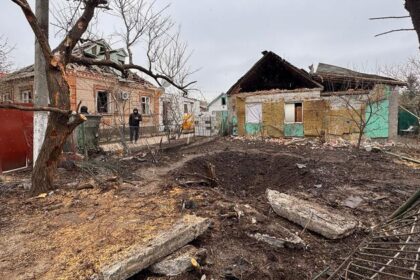
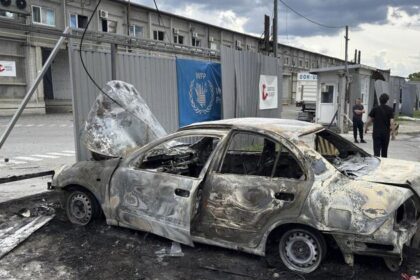
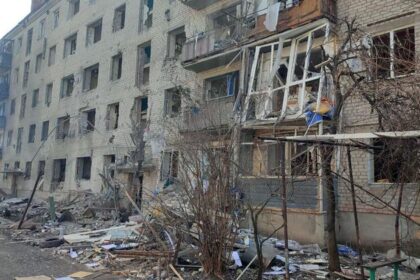
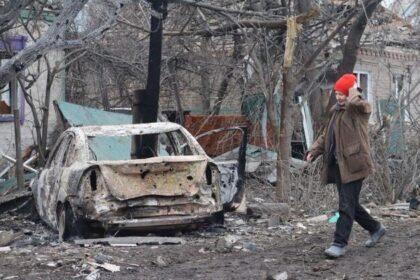
“Since 2015, there is more contamination being created each day than is being cleared,” stated Mr. Heslop. UNMAS estimates that over 20% of Ukraine’s land, encompassing 139,000 square kilometers and affecting over six million people, is contaminated by mines or unexploded ordnance, resulting in economic losses exceeding $11 billion annually.
Beyond the immediate threat to life, many mines, particularly anti-personnel types, are designed to maim. Ukraine alone has over 60,000 war amputees. The psychological impact of landmines, known as ‘perceived contamination,’ is also a significant factor, rendering land unusable and inaccessible due to the fear of hidden dangers, profoundly affecting millions of civilians.
What is the Priority?
Effective prioritization is crucial for humanitarian mine clearers aiming to restore normalcy to areas that may require decades of attention. Traditionally, mine action success was measured by quantifiable outputs like the number of mines cleared or square meters surveyed. However, the ultimate goal is broader.
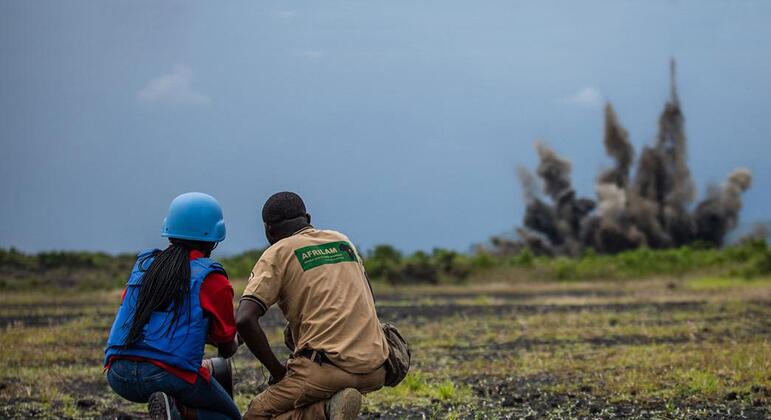
“I think the other thing you’ve got to remember in mine clearance, or in humanitarian mine clearance, the goal is not necessarily to clear the mines; the goal is to show that the land can be used for more productive purposes,” Mr. Heslop stated. Humanitarian deminers focus on two approaches: either proving land is mine-free and safe for use, or confirming a high probability of mines to initiate clearance operations.
Challenges arise, especially in ‘high metal areas’ like battle zones, where artillery fire disperses numerous metal fragments, making it difficult for sensors to distinguish between mines and shrapnel. This detection uncertainty renders mine action an inherently inefficient process, according to Mr. Heslop. To address this, new technologies are being developed that detect explosives or plastic casings rather than relying solely on metal detection.
Sometimes, the Old Ways Are the Best
Mr. Heslop advises deminers to avoid dogmatic approaches, stressing that a significant hurdle lies in overcoming ingrained mindsets. He suggests combining new technologies with older, sometimes overlooked, techniques to enhance efficiency in demining and detection.
An example is the integration of AI, high-resolution cameras, and drones with mine rollers. This combination aims to build confidence among civilians, such as farmers, who rely on the land. AI and sensors can verify if a field is mine-free, after which rollers can be used to assure farmers of the land’s safety for tractor use.
“It’s a combination of going back to old ideas and seeing if we can use them, looking at new ideas and new technologies,” he concluded.
Artificial Intelligence, a Booster
In areas with a high likelihood of mines, pairing AI with advanced scanning technology can significantly narrow down detection zones, reducing the area requiring intensive search. This efficiency makes AI particularly valuable for cutting costs and expediting the return of land to productive use.
Furthermore, AI can support data-driven decision-making by rapidly processing vast amounts of information to prioritize areas for clearance, maximizing impact in a fraction of the time that manual analysis would require from experienced mine action leaders.
Communication Technology Aiding Prevention
While technology contributes to the increased danger of landmines, innovation also enhances the effectiveness of communicating mine awareness. “Today, if you see something dangerous, you can take a picture, you can send it, and somebody will look at it and go, ‘Yeah, that’s a hazardous item, we’ll dispatch a team,’ or ‘No, that’s a car spare part… it’s an oil filter or an air filter,’” Mr. Heslop noted.
He cited a program in Afghanistan that, thanks to accessible technology for civilians, reached over five million people, far exceeding its initial target of 200,000. “I think the improved communications from new technology and the ability to respond is much better than it was 30 years ago,” he added.