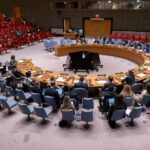


Georgette Gagnon, the UN’s Special Representative on Women and Girls, has briefed the UN Security Council on her recent visit to Afghanistan, highlighting the escalating challenges faced by the country’s population. Gagnon noted that while the de facto authorities have consolidated control without significant armed or political opposition, this apparent stability masks deeper risks.
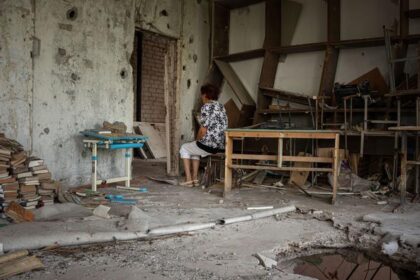
“There is an increasing control by the de facto authorities with no clear end state in sight,” she stated. Demographics and economic pressures are major concerns, with approximately 5.9 million Afghans having returned since 2023 and an additional 2.8 million expected this year. However, opportunities are limited, and communities are strained. Afghanistan continues to be one of the world’s largest humanitarian crises, with 21.9 million people requiring assistance in 2026.
Women and Girls Face Growing Restrictions
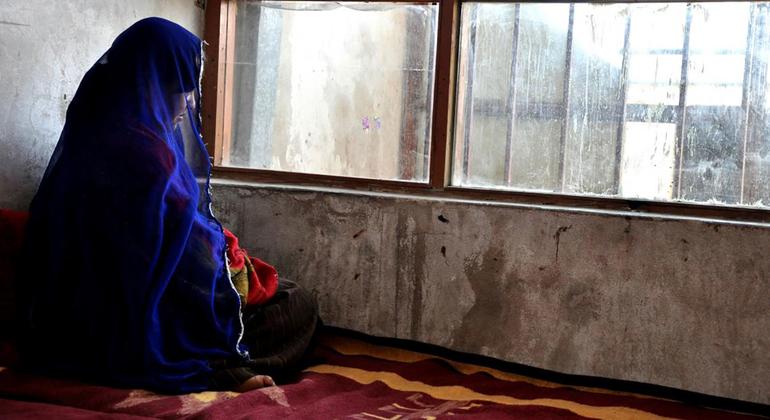
Gagnon warned of “serious and escalating restrictions” on women and girls with long-term consequences. Around 3.8 million girls aged seven to 18 are out of school. “Every year, approximately 250,000 more girls are permanently excluded from secondary education pathways, creating a generation of lost talent and potential,” she said, adding that the growing restrictions harm Afghanistan’s economy and weaken sectors like health and education. She called for a reversal of restrictions affecting women, including the exclusion of female personnel from UN facilities.
Edem Wosornu, Director of the UN Office for the Coordination of Humanitarian Affairs (OCHA) Operations and Advocacy, cautioned that humanitarian conditions are deteriorating under pressure from conflict, hunger, climate shocks, and underfunding. “Afghanistan continues to be one of the world’s largest and most complex humanitarian crises. Almost half of the country is in need of assistance,” he stated.
Wosornu reported that conflicts on the Afghanistan-Pakistan border earlier this year displaced over 100,000 people, leaving vulnerable communities without aid for weeks. “Hunger is increasing in Afghanistan,” he said, noting that 4.7 million people face severe food insecurity, a 50 percent increase from the same period last year, and 3.7 million children suffer from acute malnutrition. He also mentioned that some families resort to desperate measures like selling their daughters to survive, and restrictions on women continue to undermine humanitarian operations.
Institutionalized Oppression
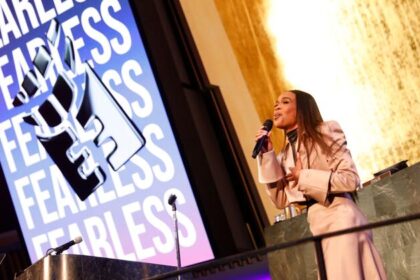
Metra Mehran, a civil society representative and founder of the Afghanistan Justice Organization, described an institutionalized system of gender oppression in Afghanistan. “Since August 2021, the Taliban have issued over 230 decrees,” she stated, arguing that authorities are systematically stripping women and girls of fundamental rights, including education, employment, movement, and public life participation. “The Taliban have even criminalized the voice and face of women.”
She highlighted a new Penal Code that legalizes violence against women and formalizes discrimination. “Men have effectively become the property of their wives,” Mehran asserted, warning that women who resist restrictions face arrest, violence, and intimidation. She also emphasized that states and international institutions have an obligation to act under international law. “This is not just our fight. It is a test of our global system. A test of multilateralism. And a test of whether the principles spoken in these halls truly mean anything in practice,” she concluded.
UNAMA’s Gagnon stressed the necessity of continued engagement, despite limited progress. “Even as progress toward an end state is incremental, sustained and uninterrupted dialogue, coupled with principled and pragmatic engagement, is essential,” she said.