

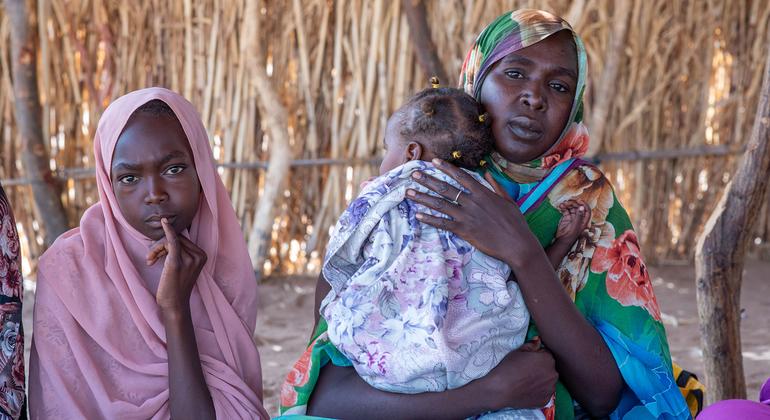
A recent assessment reveals that three-quarters of women in Sudan feel unsafe due to the ongoing conflict, according to Fabrizia Falcione, UNFPA Country Representative in Sudan. Briefing journalists in New York, Falcione presented findings from 95 focus group discussions involving approximately 1,000 women and girls across 16 of Sudan’s 18 states.
The assessment indicated that 76 percent of women aged 25 to 49 reported feeling unsafe not only within displacement camps but also in external locations such as markets, water points, firewood collection areas, roads, and streets. This sense of insecurity is particularly acute at night, especially when accessing latrines within the camps.
“No matter where, they feel unsafe, and it’s not about a few incidents or a few locations,” Falcione stated from Khartoum.
Displacement, Violence, and Danger
The conflict in Sudan, now in its fourth year, continues with fighting between the Sudanese Armed Forces (SAF) and the Rapid Support Forces (RSF). Falcione noted that many women she has met across the country, including in northern states, Khartoum, White Nile, and Blue Nile states, have endured months of shelling and active conflict.
Numerous women have been displaced multiple times and have experienced or witnessed significant violence against their families and communities. Falcione highlighted that the path to safety is fraught with peril, as women face harassment, sexual violence, physical violence, and shortages of food and water.
Describing visits to displacement camps, where women and children form the vast majority of residents, Falcione recounted how women, including pregnant individuals, are forced to navigate the camps at night in complete darkness to reach latrines, with no lighting provided.
Reporting incidents of gender-based violence remains a significant challenge due to stigma, fear of retaliation, financial constraints, and the distance from service providers.
Women’s Needs and Priorities
When asked about the most pressing needs of Sudanese women, Falcione reported that three-quarters identified economic empowerment and livelihoods as their main priority. Her missions also confirmed women’s strong desire to return to their homes.
“They ask for three things,” Falcione said. “Basic services and access to health; access to schools, particularly for their children, and livelihood opportunities.” She emphasized that Sudanese women seek opportunities for income generation to support their families, rather than solely relying on aid.
However, the extent to which these needs can be met is uncertain, given the current funding levels for the protection and health sectors, which stand at 14 percent and 11 percent, respectively. Falcione expressed concern that despite the recognition of a protection and health crisis disproportionately affecting women and girls, funding has not kept pace with the identified needs.
Safe Spaces and Support Services
UNFPA operates 88 safe spaces for women and girls across Sudan, providing a sanctuary where they can find the courage to speak about their experiences, seek help, and receive essential services. Despite their critical role, these operations face challenges in sustainability due to funding shortages.
Falcione shared a testimony from a young girl who found solace and a sense of normalcy in these safe spaces, being able to spend time with friends as she did before the war. “I think that this is a very important message that the world should hear,” Falcione concluded, appealing to the international community not to abandon the people of Sudan.